Order Management for Tailoring shops
Track a confirmed order through fulfilment and billing.
Does this function belong in your operation?
Use when sales, operations and billing share confirmed orders.
A customer confirms goods or work.
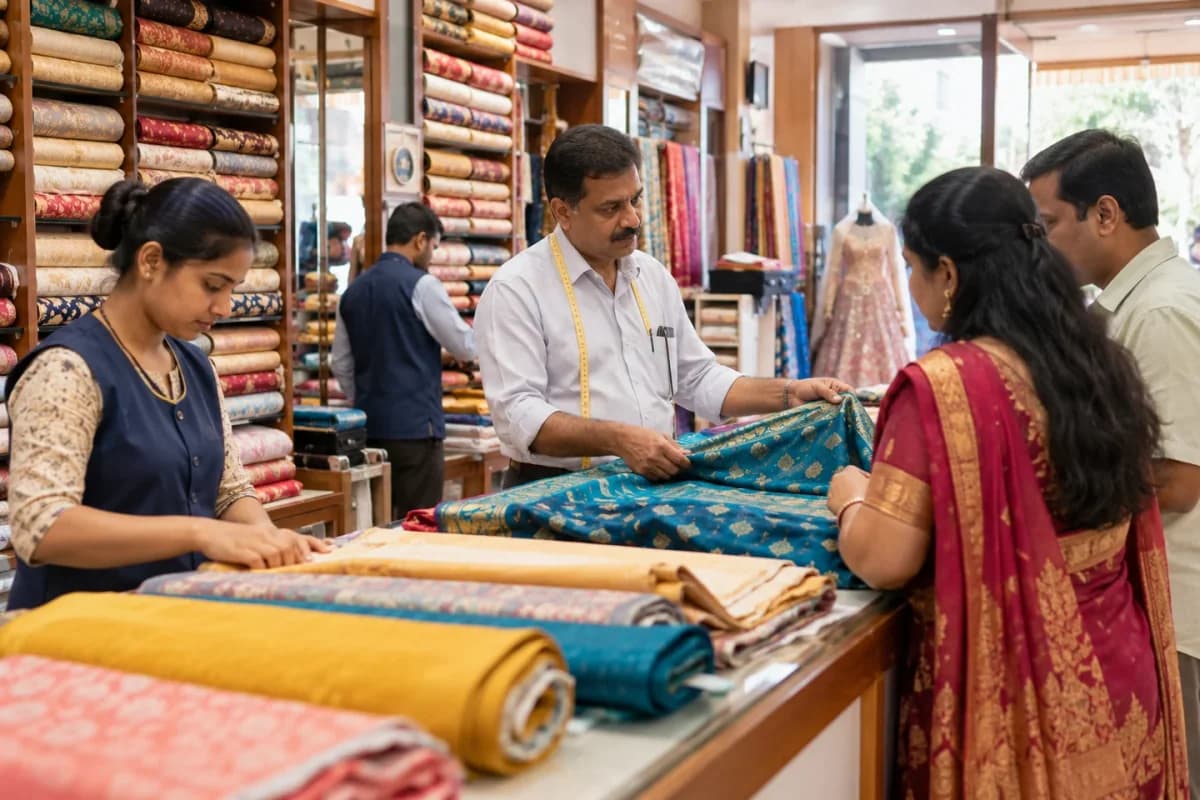
A trouser and two shirts for one customer sit as lines on a single order, each with fabric, style and promised date. Changes before cutting are noted. Front-desk staff see what is due this weekend.
Bring the records the workflow depends on.
- Order lines
- Commercial terms
- Fulfilment rules
Outputs to check
- Confirmed order and revision record
- Outstanding fulfilment list
- Delivered and billed reconciliation
Follow the order management workflow.
Use this sequence to compare your current process with the proposed module. Agree the owner, permission and exception at each step.
Who uses the module, and who approves?
Keep responsibilities distinct even when one person holds more than one role.
Decide how exceptions are handled.
These business rules belong in configuration and testing. A normal transaction alone does not demonstrate that the workflow is ready.
Can this work independently?
Orders can be entered from an accepted customer instruction without CRM. Stock, production, service delivery and invoicing connect through order-line references. Each owns its execution record; an order status should reflect their confirmed outcomes rather than assume delivery from a planned date.
Systems and records it connects with
- Quote and proposal management: Commercial proposal versions and acceptance details.
- Stock tracking and alerts: Item-location quantities and authorised stock movements.
- Invoice management: Issued invoice references, line amounts and outstanding balances.
- Accounting software: Posted financial entries and reconciliation references.
Configure, test and introduce the workflow.
- Walk us through an order from call to payment. A note shows the steps and the documents.
- Decide which changes need approval. A test order can then be taken, with your own staff at the keys. Share orders still pending. The trial import shows quantities dispatched and pending for the storekeeper to check.
- Sales and the store team practise a part delivery. A note for the counter follows. New orders go through the system from the date you agree. Changes from the opening week are reviewed together. Habits settle quickly.
Check the result before rollout.
Apply these checks to a sample from the agreed workflow, then repeat with an exception. Keep the expected result beside the test record.
- Partial fulfilment leaves correct balances.
- Term changes follow approval.
- Billing follows approved quantities.
How the business operates.
A tailoring shop makes one garment at a time for one body. Chest, waist, shoulder and sleeve figures are written once, then needed again when the customer returns for a jacket or a child outgrows a uniform.
The records that hold the operation together.
- Customer measurements. Save measurements by garment type, with posture notes and fit preferences, so a returning customer is not measured from scratch and a child’s growth can be compared year to year.
- Orders and delivery dates. Book each garment with style details, fabric source, trial date and promised date, and see which days of the week are already overloaded before a new date is promised.
- Fabric and trims stock. Log customer cloth by length received, and count lining, buttons, zips, threads and interfacing on the shelves, with reorder levels on the items that run out first.
- Cutting and stitching board. Show every open garment by stage, from cut to pressed, with the assigned tailor and the days left, so the stitching room works to a list and not to shouted requests.
Operational bottlenecks to check
Measurements cannot be found
The figures sit in a book kept by year. When the page is missed, the cutter measures again and the fit differs from the last jacket the customer liked. That is a lost sale.
Customer cloth is not counted in
Cloth arrives in a bag with a slip. Nobody writes the length. So a shortfall after cutting turns into a question of who is at fault.
How work flows across this business
This module sits within a wider operating process. Use the sequence to identify the other teams and records affected by a change.
1. Order taking
The customer is found by phone number, or a new record is made. Garment type, style notes, fabric source and the trial and delivery dates are entered, and the advance is taken. A slip is printed.
2. Measurement
The cutter records the measurements against the garment type, for instance chest, waist, shoulder, sleeve length and inseam. Posture notes and fit preferences are kept with them.
3. Cutting
Fabric is checked in, cut and tagged to the order number. Lining, buttons, zips and interfacing are issued from the shop shelves against the same order.
4. Stitching and trial
The piece goes to a tailor, and the trial fitting is booked. Changes asked for at the trial are written on the order and sent back for correction.
5. Finishing
Buttonholes, hems, pressing and tagging are marked done. The garment moves to the ready rail and the customer is told it can be collected. The slip follows.
6. Delivery and alteration
The balance is taken and the delivery slip is printed. A later alteration is opened as a small order linked to the original garment.
Industry reports to connect with
- Orders due by day, with the garment count per tailor
- Garments late against the promised date, by stage
- Customer fabric received, cut and returned as leftover
- Pieces completed by each tailor and finisher, with the rate and advances
Questions before implementation.
When should tailoring shops consider order management?
Use when sales, operations and billing share confirmed orders. A customer confirms goods or work.
What should we bring to the requirements discussion?
Bring anonymised examples of Order lines; Commercial terms; Fulfilment rules. Show who creates, checks and changes each record. Use only records from an activity that meets the suitability conditions above.
Does this replace our existing business software?
The starting point is your current system and the gap you need to close. Track a confirmed order through fulfilment and billing. Configuration, a connected module or a custom build are evaluated against that gap before a replacement is proposed.
What is outside this module?
Stock, production and carrier connections need agreed scope.
How are scope, price and rollout decided?
The proposal follows a review of your records, user roles, branches and existing software. Data migration, connections, training and support are scoped separately where needed. Partial fulfilment leaves correct balances. Use this check when reviewing the first working version.
Related functions for tailoring shops.
Discuss order management for your business.
Tell us which workflow needs attention and which systems your team uses. The next step is a requirements discussion and a written scope.
What happens after you share your requirements
- We review your brief and the systems you already use.
- We clarify the workflow, missing information and the work to consider first.
- The proposed scope sets out the deliverables, responsibilities and dependencies.
- Review the scope and commercial terms before deciding whether to proceed.
Start with your requirements
Describe your current process, the people involved and the change you need. Start with the details you know; we can clarify the rest together.
Share your requirements