Business solutions for Tailoring shops
Explore software for work such as “Blouse stitching, including bridal and designer blouses”. Review each business function below, including when it fits and what to check before implementation.
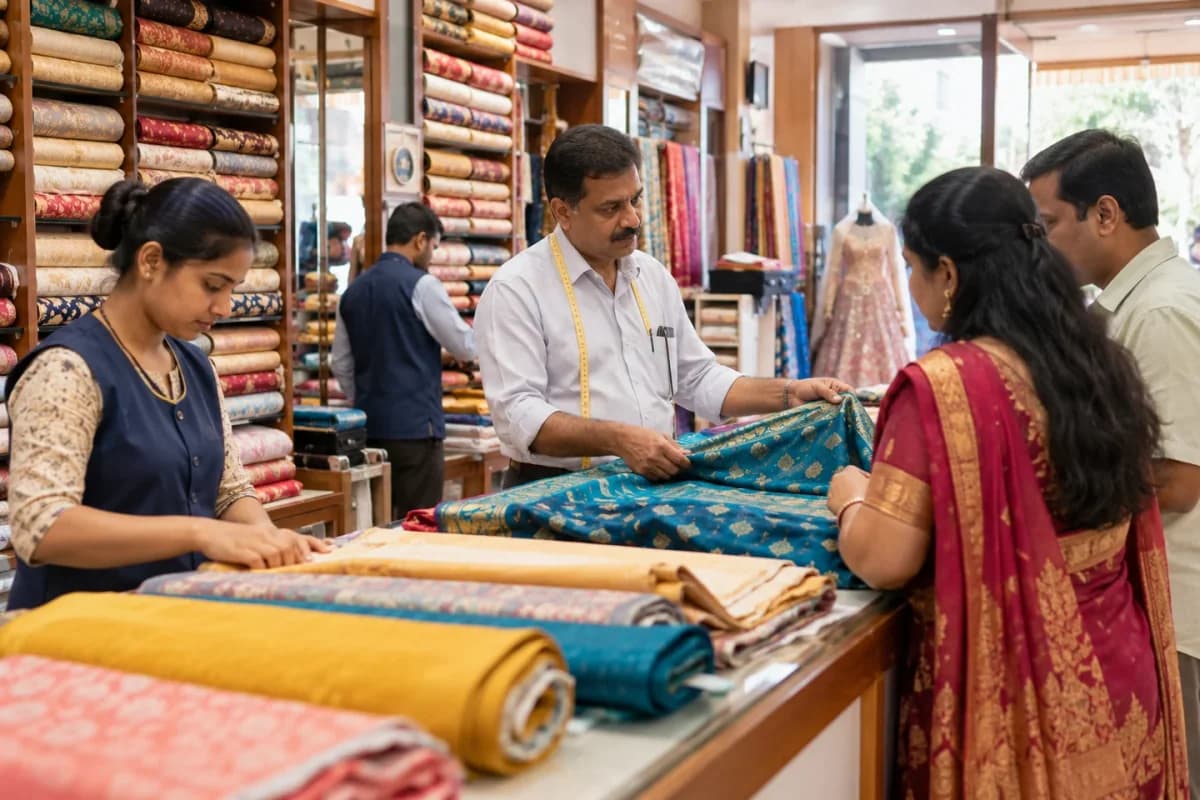
How the business operates.
A tailoring shop makes one garment at a time for one body. Chest, waist, shoulder and sleeve figures are written once, then needed again when the customer returns for a jacket or a child outgrows a uniform.
The records that hold the operation together.
- Customer measurements. Save measurements by garment type, with posture notes and fit preferences, so a returning customer is not measured from scratch and a child’s growth can be compared year to year.
- Orders and delivery dates. Book each garment with style details, fabric source, trial date and promised date, and see which days of the week are already overloaded before a new date is promised.
- Fabric and trims stock. Log customer cloth by length received, and count lining, buttons, zips, threads and interfacing on the shelves, with reorder levels on the items that run out first.
- Cutting and stitching board. Show every open garment by stage, from cut to pressed, with the assigned tailor and the days left, so the stitching room works to a list and not to shouted requests.
- Trial fittings. Book trial slots against the cutter and the order, and record what must change on the garment, such as a lowered armhole or a shortened hem.
- Alterations. Open a linked job for each correction on a delivered garment, with the change asked for, the charge if any, and the tailor who will do it.
- Tailor piece-rate pay. Count the pieces each tailor and finisher completes at the rate for that garment, deduct advances, and show the month’s payable without adding up pinned tickets.
- Advances and receipts. Take the advance at booking, post later part payments, and show the balance on the screen when the customer arrives to collect.
Operational bottlenecks to check
Measurements cannot be found
The figures sit in a book kept by year. When the page is missed, the cutter measures again and the fit differs from the last jacket the customer liked. That is a lost sale.
Customer cloth is not counted in
Cloth arrives in a bag with a slip. Nobody writes the length. So a shortfall after cutting turns into a question of who is at fault.
Dates are promised blind
The counter agrees a delivery date without checking the shirts and blouses already due that day. The stitching room hears about it afterwards. Overtime follows.
Piece-rate pay is added from tickets
Each garment type has its own rate for the tailor and the finisher. Tickets are pinned to a board, and a lost one is argued over at month end.
Alterations drift
A trouser is returned to be taken in. The note rides in a pocket, and the garment waits on a rail with no tailor named. It stays there.
Follow the work across teams.
This is a planning flow. Confirm the steps, owners and approval rules against your actual operation.
Roles and responsibility boundaries.
Reports your managers need.
- Orders due by day, with the garment count per tailor
- Garments late against the promised date, by stage
- Customer fabric received, cut and returned as leftover
- Pieces completed by each tailor and finisher, with the rate and advances
- Unpaid balances by customer, oldest delivery first
- Alterations opened, charged and closed by garment type
- Lining, buttons and zips below reorder level
Connections to scope
- SMS
- Barcode label printer
- Payment gateway
- Accounting export
Confirm data access, record ownership and the exchange method for each connection. Inclusion here does not mean every connection is available in a standard package.
Setup decisions and adoption risks.
Use these requirements to plan phases, data migration and user training. Agree the release sequence after reviewing your current systems.
Limitations to settle before implementation
- A single tailor who works from home on a handful of orders can keep a measurement book and a diary.
- Garment factories that stitch for export on production lines will find Garment Manufacturing Software closer.
Modules to consider first.
These functions connect to the operating model above. Confirm each one against the work your business actually runs.
Choose the operation you want to improve.
Use these activities to explain your scope. Your business does not need every function in the directory.
- Blouse stitching, including bridal and designer blouses
- Kurta and salwar suit stitching
- Shirt and trouser stitching for men
- Suit and sherwani stitching for weddings
- School and office uniforms
- Children's festival wear
- Fall, pico and finishing work for sarees
- Fitting and alteration of ready-made clothes
Explore the business functions.
Production, stock, fleet and recurring billing functions apply only where your business runs those activities. Read the suitability conditions on each page.
Bookings and Appointments
Finance & Accounting
CRM
Human Resources
Inventory Management
Platform
Manufacturing
Start with the problem your team can describe.
Bring a sample record and show where information is copied, missed or waiting for approval. Scope the first useful change from there.
What happens after you share your requirements
- We review your brief and the systems you already use.
- We clarify the workflow, missing information and the work to consider first.
- The proposed scope sets out the deliverables, responsibilities and dependencies.
- Review the scope and commercial terms before deciding whether to proceed.
Start with your requirements
Describe your current process, the people involved and the change you need. Start with the details you know; we can clarify the rest together.
Share your requirements