Ticket Management for Tree service companies
Track support requests with an owner, status and resolution record.
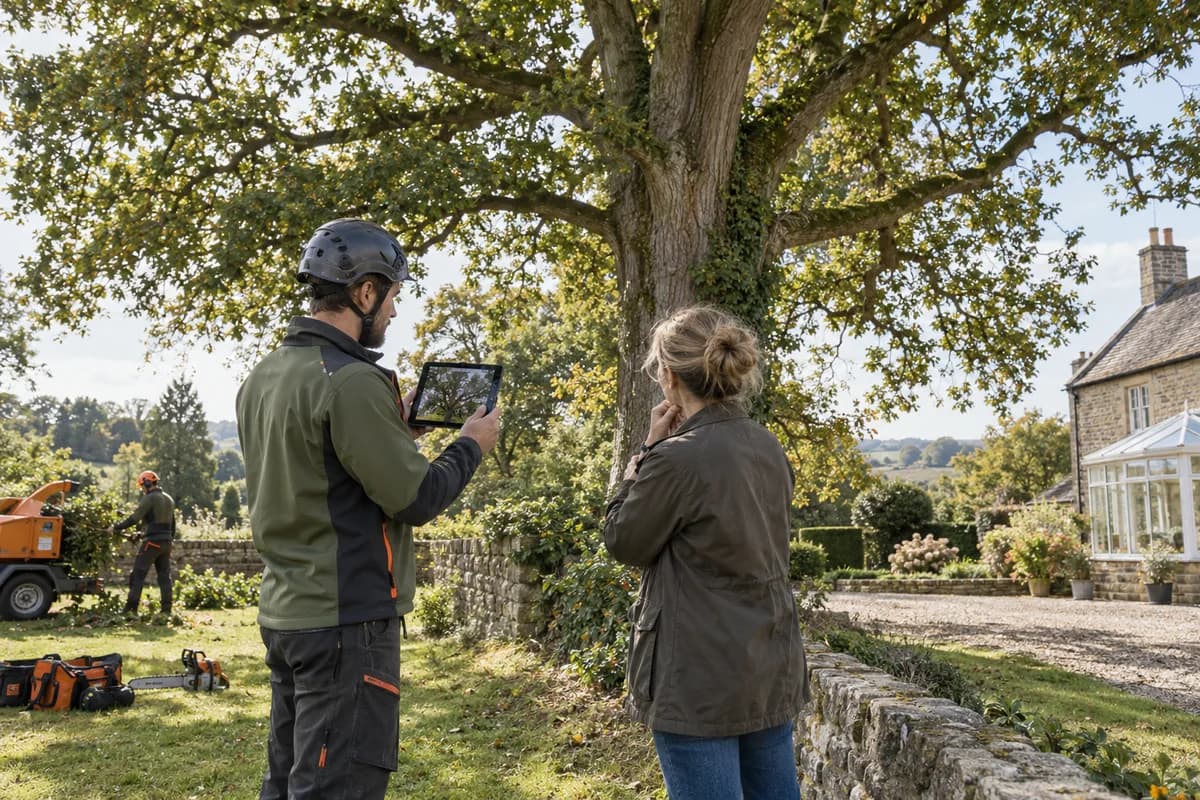
Does this function belong in your operation?
Use when requests need tracking through investigation and resolution.
A complaint, fault or service request is logged.
A neighbour’s complaint, a damaged fence after felling or a missed stump becomes a numbered ticket on the job. The crew leader replies and a return visit is booked. Repeat issues are visible.
Bring the records the workflow depends on.
- Request categories
- Priority and ownership rules
- Status and closure criteria
Outputs to check
- Numbered support-work register
- Assignment and status history
- Resolution and reopening record
Follow the ticket management workflow.
Use this sequence to compare your current process with the proposed module. Agree the owner, permission and exception at each step.
Who uses the module, and who approves?
Keep responsibilities distinct even when one person holds more than one role.
Decide how exceptions are handled.
These business rules belong in configuration and testing. A normal transaction alone does not demonstrate that the workflow is ready.
Can this work independently?
Tickets can be entered independently with customer and issue details. Contract cover, scheduling and job cards provide related evidence, while notifications carry updates. Closing a ticket is a recorded service decision; billing, refund approval and technical certification remain separate processes.
Systems and records it connects with
- Customer support: Customer conversations, unresolved questions and response history.
- Helpdesk automation: Rule-triggered ticket assignments and escalation outcomes.
- AMC contract management: Contract coverage, dates and planned service obligations.
- Technician scheduling: Assigned field jobs and technician availability.
Configure, test and introduce the workflow.
- Tell us how complaints reach you. We write back intake points and who answers each.
- You decide the priority levels and promised times. A rule set arrives to try on sample tickets. Customers, sites and products are imported. Tickets then open with their history.
- Support and technicians use live tickets. Phone use is tested on site.
Check the result before rollout.
Apply these checks to a sample from the agreed workflow, then repeat with an exception. Keep the expected result beside the test record.
- Open tickets have owners.
- Status changes retain history.
- Reopened tickets preserve the earlier resolution.
How the business operates.
A tree service company sells skilled labour, heavy equipment and judgement. Each job has its own risk, access and disposal plan, and the quote has to reflect all three. Nothing repeats exactly.
The records that hold the operation together.
- Enquiries and surveys. Record each enquiry with where it came from and the site address, book the survey, and file tree notes, measurements and photographs under the client.
- Quotations by tree and task. Price each tree and task from your own rates for labour, equipment and disposal. Earlier versions of a tree quotation stay on file, and quotations awaiting an answer sit together in one list.
- Permits and approvals. Record approval requests against the tree and the job, with status and dates, so work is not booked before consent arrives.
- Jobs and crew scheduling. Plan crews, climbers, vehicles and cranes by day, see clashes at once, and move a booking without losing the rest of the week.
Operational bottlenecks to check
Each tree is priced from memory
Species, height, access and disposal all change the cost, and without a record of past jobs a quote depends on one estimator’s recall of a similar tree. A second estimator prices the same oak differently.
Storm calls disrupt the plan
Emergency calls arrive in bursts. Planned jobs are moved by phone. Clients waiting for a booked visit are not told until the crew fails to arrive on the day, and some then cancel.
How work flows across this business
This module sits within a wider operating process. Use the sequence to identify the other teams and records affected by a change.
1. Enquiry
A homeowner or property manager calls, fills in a web form or sends a message. It is logged under the client and the site address, with the kind of tree work asked for.
2. Survey and quotation
The arborist visits, records each tree with photographs and hazards, and builds a quotation from the rate list. The client accepts all, some or none.
3. Permits and booking
Approvals are requested where needed. Once consent is in, the job is booked with a crew, equipment and a date.
4. Work on site
The crew leader opens the job on a phone, records start and finish times, equipment used and any change to the plan, with photographs.
5. Disposal and invoice
Loads taken away and brush chipped are logged, then the invoice follows the agreed price plus any variation the client approved. Receipts then post against that invoice.
6. Follow-up
Recurring visits and replanting are scheduled, and clients on contract are reminded before the next visit.
Industry reports to connect with
- Tree quotations accepted, declined or awaiting an answer
- Jobs by crew and status
- Equipment hours and services due
- Permit requests by status
Questions before implementation.
When should tree service companies consider ticket management?
Use when requests need tracking through investigation and resolution. A complaint, fault or service request is logged.
What should we bring to the requirements discussion?
Bring anonymised examples of Request categories; Priority and ownership rules; Status and closure criteria. Show who creates, checks and changes each record. Use only records from an activity that meets the suitability conditions above.
Does this replace our existing business software?
The starting point is your current system and the gap you need to close. Track support requests with an owner, status and resolution record. Configuration, a connected module or a custom build are evaluated against that gap before a replacement is proposed.
What is outside this module?
Ticket status does not independently prove that a fault is repaired or a customer accepts the outcome.
How are scope, price and rollout decided?
The proposal follows a review of your records, user roles, branches and existing software. Data migration, connections, training and support are scoped separately where needed. Open tickets have owners. Use this check when reviewing the first working version.
Related functions for tree service companies.
Discuss ticket management for your business.
Tell us which workflow needs attention and which systems your team uses. The next step is a requirements discussion and a written scope.
What happens after you share your requirements
- We review your brief and the systems you already use.
- We clarify the workflow, missing information and the work to consider first.
- The proposed scope sets out the deliverables, responsibilities and dependencies.
- Review the scope and commercial terms before deciding whether to proceed.
Start with your requirements
Describe your current process, the people involved and the change you need. Start with the details you know; we can clarify the rest together.
Share your requirements