Business solutions for Uniform manufacturers
Explore software for work such as “Quotation and tender papers kept ready”. Review each business function below, including when it fits and what to check before implementation.
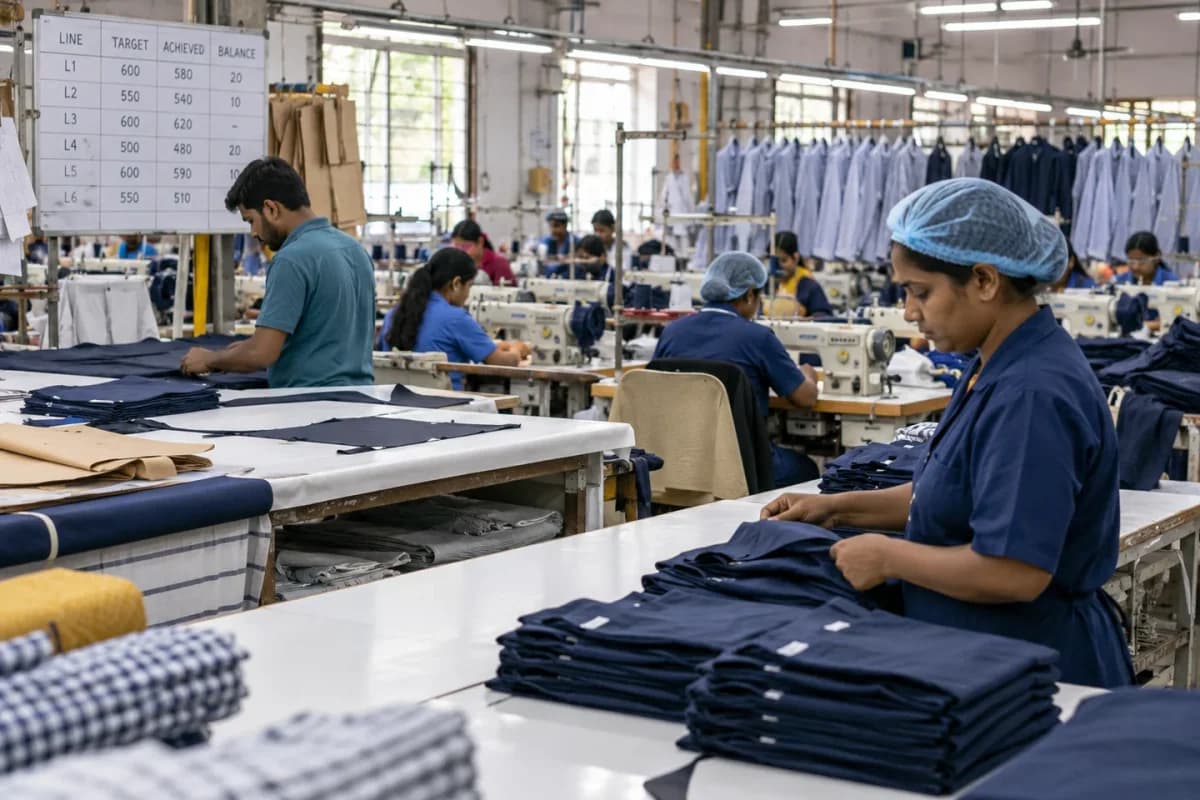
How the business operates.
A uniform order starts with people, not with a style. The buyer supplies a list of wearers and sizes, and the maker turns it into a cutting plan for shirts, trousers, skirts, tunics or jackets in the approved fabric and colour.
The records that hold the operation together.
- Wearer lists and size runs. Import the buyer’s wearer list, check each size against the size chart, and build the size ratio the cutting room will lay.
- Approved sample register. Hold each signed sample with its measurements, trims, shade card and photographs, and flag the version a repeat order should follow.
- Fabric and trims intake. Receive fabric rolls and trims against the supplier’s delivery note, record shade and shrinkage checks, and hold a roll until it passes.
- Cutting plan and bundles. Plan lays by size ratio, record lay length and pieces cut, and tag bundles so each one can be traced to its fabric roll.
- Stitching line and checking. Follow each bundle through operations, with pieces passed, returned for rework or rejected at the checker’s table.
- Logo, badge and name work. Attach embroidery, badges and name tapes to the garment and the wearer, using the thread colour and position of the approved sample.
- Finishing and pressing. Record pieces pressed, tagged and folded, with measurement spot checks against the approved garment.
- Buyer orders and repeat orders. Hold each order by buyer, garment and wearer list, and start a repeat order from the earlier one with the sample carried forward.
Operational bottlenecks to check
Wearer lists change after cutting
A school sends corrected sizes once the fabric is already cut. Part of the order is then made twice, and nobody notes which bundles were replaced.
The approved sample is not on file
The signed sample hangs on a rail or sits in a cupboard. Months later a repeat order is stitched to a memory of it, and the buyer sees a different collar.
Size ratios are decided by hand
The cutting master turns a wearer list into a size ratio on paper. A mistake shows up as a pile of one size and a shortage of another.
Logo and name work fails late
Embroidery, badges and name tapes are added near the end of the route. A wrong thread colour or position is found at packing.
Packing by wearer is manual
Buyers want each set bagged under a name. Packers go by photocopied lists, and a set that was never bagged shows up as a gap on the buyer’s table.
Follow the work across teams.
This is a planning flow. Confirm the steps, owners and approval rules against your actual operation.
Roles and responsibility boundaries.
Reports your managers need.
- Pieces cut, stitched and packed by order
- Rework and rejection by operation
- Fabric used against fabric planned
- Orders pending by buyer and delivery date
- Repeat orders due by term or intake
- Embroidery pieces sent and returned
- Cartons packed against the wearer list
Connections to scope
- Accounting export
- Embroidery unit delivery notes
- Barcode or label printer
- WhatsApp or SMS for order updates
Confirm data access, record ownership and the exchange method for each connection. Inclusion here does not mean every connection is available in a standard package.
Setup decisions and adoption risks.
Use these requirements to plan phases, data migration and user training. Agree the release sequence after reviewing your current systems.
Limitations to settle before implementation
- A tailor stitching a few sets to measure can work from a measurement book.
- A fashion label producing seasonal collections is better served by the manufacturing production product.
Modules to consider first.
These functions connect to the operating model above. Confirm each one against the work your business actually runs.
Choose the operation you want to improve.
Use these activities to explain your scope. Your business does not need every function in the directory.
- Quotation and tender papers kept ready
- Sample sets sent and followed up
- Decision-makers recorded beyond one person
- Orders spread across the year
- Measurement and size records for each order
- Repeat orders from last year's customers
- A buyer list sorted by each institution's buying month
Explore the business functions.
Production, stock, fleet and recurring billing functions apply only where your business runs those activities. Read the suitability conditions on each page.
Manufacturing
Batch and Serial Tracking
Trace goods using batch identifiers or individual serial numbers.
View workflow and suitability →Bill of Materials
Define the materials and quantities needed for a manufactured item.
View workflow and suitability →Job Work Management
Track material sent to an outside processor and returned after work.
View workflow and suitability →Production Planning
Plan manufacturing quantities against demand, materials and capacity.
View workflow and suitability →Quality Control
Record specified inspections and the disposition of checked goods.
View workflow and suitability →
Human Resources
Procurement
CRM
Start with the problem your team can describe.
Bring a sample record and show where information is copied, missed or waiting for approval. Scope the first useful change from there.
What happens after you share your requirements
- We review your brief and the systems you already use.
- We clarify the workflow, missing information and the work to consider first.
- The proposed scope sets out the deliverables, responsibilities and dependencies.
- Review the scope and commercial terms before deciding whether to proceed.
Start with your requirements
Describe your current process, the people involved and the change you need. Start with the details you know; we can clarify the rest together.
Share your requirements