In this guide 6 sections
Ask each ERP vendor to prove four things on your own data, beginning with a recipe cost that includes yield loss. Then watch a co packer batch run from issued material to received cartons, and expiry control that picks the oldest valid stock. Finish with a recall report. It must trace one lot to every customer.
Start with recipe costing, not the demo script
Hand the vendor one real recipe before the call, listing the dry mix, the palm oil, the packing film, the carton and the label. Ask them to cost one batch and one finished case, then change a single ingredient price and show the new figure built live from recipe lines. A spreadsheet total is not proof.
Watch how yield is treated. A recipe never turns every kilogram into saleable pouches, because trim, rework and line losses eat into it, and a system that only multiplies quantity by price misstates margin.
Ask who maintains the bill of materials. Brand teams revise recipes often, so each change should carry a version, an effective date and a named approver rather than an overwritten cell in a shared sheet.
- Cost per batch and per finished case
- Yield loss and rework entered as a recipe line
- Packaging items costed with the food
- Recipe versions with effective dates
- Cost comparison between two versions
Test the co packer flow end to end
Many brands make part of the range at an outside plant, which breaks the usual ERP assumption that you own the machine. Have the vendor walk through a purchase order to the co packer, material sent out, a batch reported back and finished goods received. Ask for the screen. Skip the story.
The hard part is remote stock. Your film and cartons are there with part of your ingredient, so ask how the system reconciles a batch against issued material and where it records the loss.
A good answer includes a conversion charge, a variance report and a way to hold the received lot until your own QA releases it. It must name the stock owner daily. Insist on seeing it.
Check expiry control on the warehouse floor
Packed food carries a manufacturing date, a best before date and a remaining life that modern trade buyers check at the dock door. Ask how dates are stored. Short life cartons get refused.
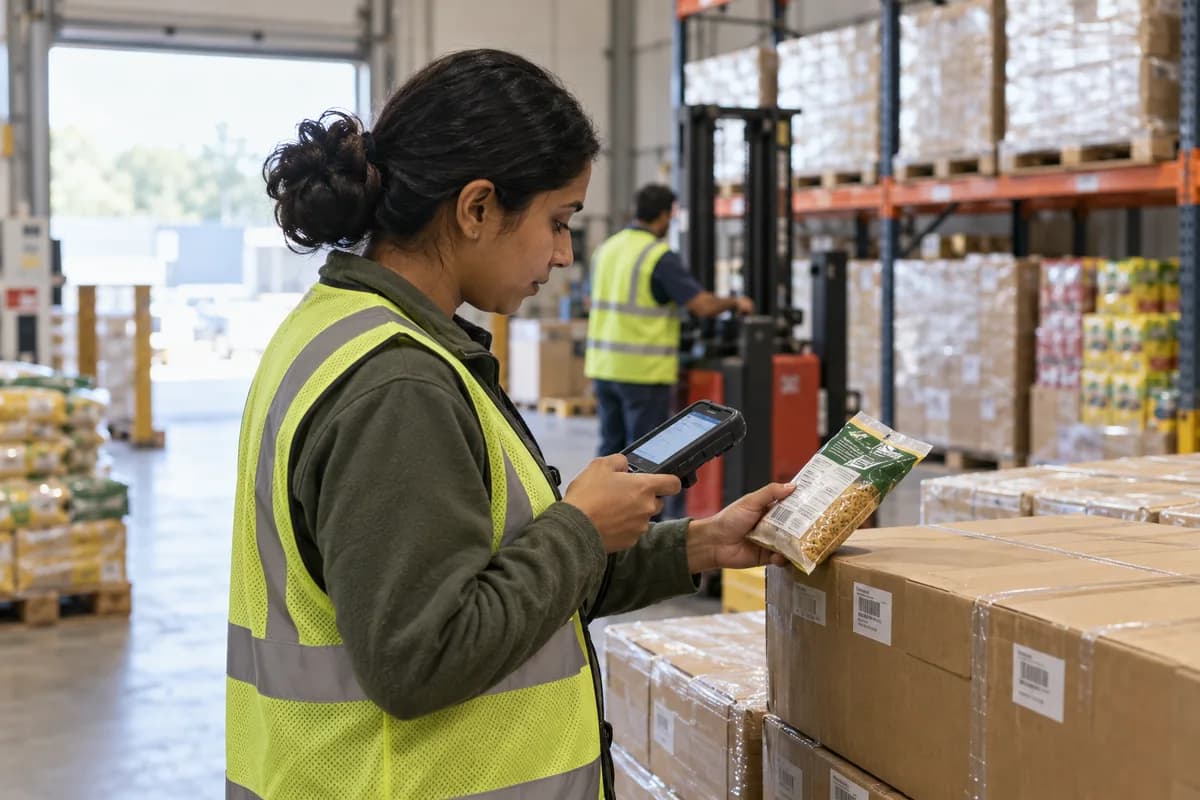
Request a live pick. The system should suggest the lot that expires first, block a lot on hold, and warn when a carton falls inside the customer’s minimum life. Ask what the picker sees on a handheld scanner, because pickers work standing at the rack with a pallet jack and would rather not touch a desktop.
Also ask about returns. Short dated cartons come back from distributors, and each one needs a decision to restock, rework or destroy, recorded against the original invoice and lot.
- First expired, first out picking
- Customer wise minimum remaining life
- Hold and release status on every lot
- Near expiry list for the sales team
Make them run a recall drill
Choose one lot of one ingredient, such as a batch of sesame or a drum of palm oil, that went into several finished products last month. Ask the vendor to list every finished lot that used it, every customer that received those lots and the stock still in your warehouse. Time the whole answer.
Run it backwards as well, starting from a complaint on a finished carton and tracing to the ingredient suppliers and the line. Spreadsheet exports are records, not traceability.
Check the output format. A regulator or retail buyer wants a clean list of lot numbers, quantities and dates, not a screenshot, so ask to see the file before you sign anything. Good vendors have run this drill before and hand over a sample report without hesitation, while weaker ones start explaining why it is hard.
Score the vendors and decide
Give each question a pass, partial or fail, and note who watched the demo, then call two references from food makers of your size. Ask what they had to customise. Silence is a result too.
Last, ask what happens in year two. Who adds a new co packer, a new plant code or a new sales channel, and how long does that take? Cheap licences hide costly change requests.
Shortlist only the vendors who passed all four drills on your data, and book the second round with your QA lead and warehouse head in the room. Bring a printed scorecard.
Vendor drill scorecard
The sheet has four rows for recipe costing, co packer batch, expiry control and recall report, one test per row. Columns hold the test you gave, the vendor’s result, a pass, partial or fail mark and the name of the colleague who watched the demo. Close with a note on customisation. The last row logs references called.
Open a blank worksheet to printQuestions owners ask
Should a small food brand buy a full ERP?
Only if batches, expiry and customers outgrow spreadsheets. Start by listing the drills above. If a lighter system passes all four drills on your own data, it may serve you for years before a full ERP is worth the rollout.
How do we handle a co packer that will not use our system?
Keep your side complete. Record material sent out, batch reports received in a fixed template, finished goods booked on receipt and the conversion charge agreed with the plant. The variance report shows the loss.
What data should we bring to a vendor demo?
Bring one recipe, one live co packer batch, five expiry lots and a past complaint that took too long to trace back to a supplier. Clean sample data hides gaps.
Who should sit in the vendor evaluation?
Finance, the QA lead, the warehouse head and the production planner should all sit in, and the owner or general manager should join the final round. Each of them owns one drill. Finance checks the costing, QA the recall report, the warehouse head the expiry pick, and planning the co packer flow.