In this guide 7 sections
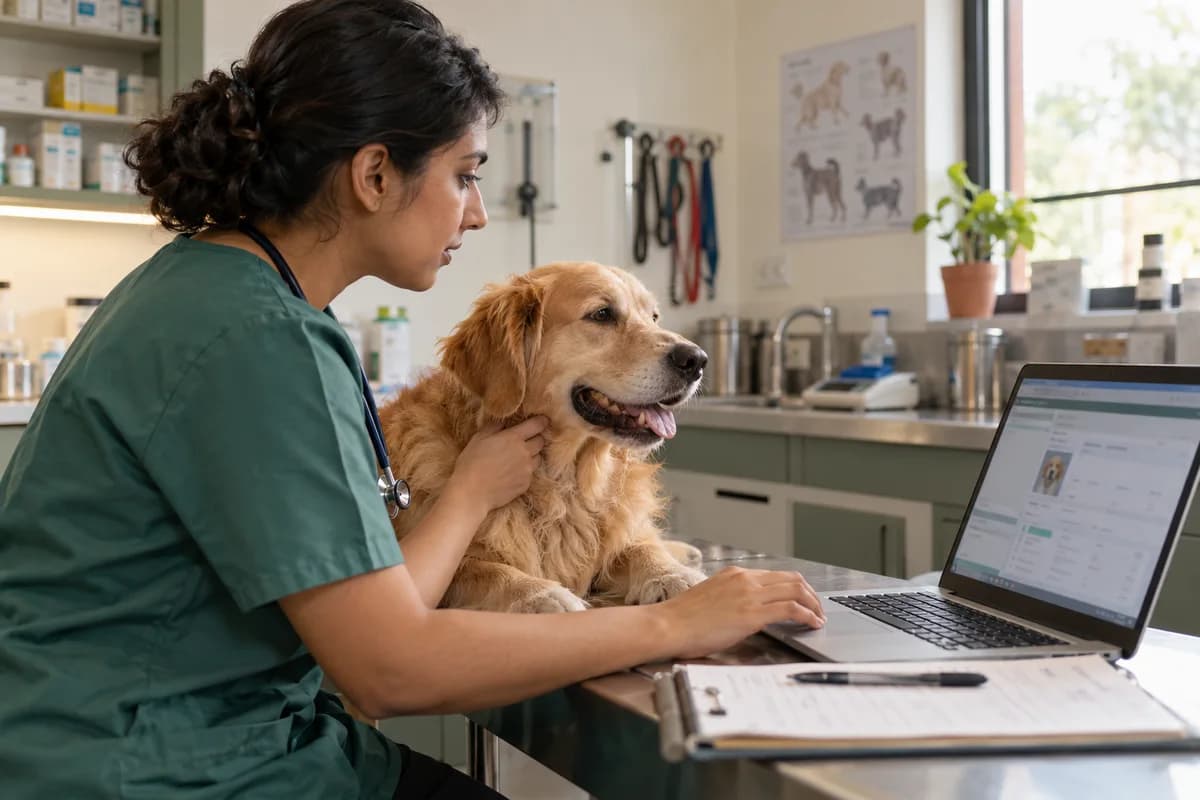
Keep one record per animal. Link it to the owner, store breed, vaccination dates, diagnoses and prescriptions on it, and run appointments and billing from it every day. Every vet sees one history. Owners then get vaccination reminders by SMS or email, while expiry alerts on the vaccine fridge catch stock before it goes out of date at the worst moment.
The animal as the patient record
File every case under the animal. Most clinics file it under the owner’s phone number instead, which works until a family brings two dogs and a cat and the card becomes one muddled page.
Each pet’s vaccination history sits in a booklet in the owner’s cupboard, not in the clinic, so the vet starts from memory every visit. That is the gap.
A record per animal links to its owner and carries diagnoses, treatments, vaccination dates and notes against that one patient, so nothing is filed under the wrong pet. A locum covering a Sunday morning sees the same picture the regular vet would, and reception can search by the pet’s name or the owner’s.
Automatic vaccination reminders
Vaccines and deworming drive repeat visits. Clinics leave the remembering to the pet parent, or to a receptionist who works down a register with a phone in hand between consultations.
Reminders should go out on their own. Due dates already recorded against the animal trigger an SMS or email to the owner, and boosters, flea treatment and yearly check-ups run on that same schedule.
An online portal shows owners what is due next, so a booster is booked before the date slips by a full month or two. Fewer visits get missed.
Scheduling around procedures
A vet’s day mixes consultations, vaccinations, grooming, surgery and walk-ins, so one shared book cannot show a doctor in theatre until noon. Bookings belong to each vet.
Each booking carries a confirmation, any reschedule and a reminder before the visit, and reception sees who is free before offering a slot.
Run a no-show report. It names the days that lose the most appointments, which is rarely the day you would have guessed, and it shows where a reminder call earns its place.
Vaccine and medicine stock against real use
Vaccines, antibiotics, dewormers and surgical supplies are costly to hold, and running out of a vaccine on Saturday sends a pet parent to the clinic two streets away. They may not return.
Medicines, vaccines and supplies are tracked with expiry dates and low-stock alerts, orders are raised from the same screen, and billing builds the invoice from the visit.
Outstanding balances are tracked by owner. That matters when a welfare trust or a regular client starts paying late, because someone has to chase the balance and know exactly what it covers.
- Revenue by service: consultation, surgery, vaccination
- Vaccinations due this month
- Medicines below their reorder level
- Outstanding dues by client
Records and reminders at a single-vet clinic
One vet seeing a few animals a day can manage on case cards and a phone calendar for years, and nothing visibly breaks while the practice is small. The reminder habit is what slips.
Fixing that gap alone can justify a simple system, because every missed booster is a visit and an invoice the clinic never sees.
Look for one system that covers appointments, patient records, billing, inventory, client messages and reports together, so the fridge, the register and the till stop living apart. Start with the reminders.
Put the advice to work.
Use a test copy or fictional example to turn the discussion into something your team can check.
The animal as the patient record
Can staff identify the correct record and encounter before entering a note?
For “The animal as the patient record”, use fictional records with similar names and more than one visit. Ask the clinical lead to check which encounter is open and who may correct an entry without losing its history.
Background reading: Frappe: healthcare record relationships
Pet record and reminder template
A one-page template for one animal’s record: owner, species, breed, age, vaccinations with due dates, treatments, medicines dispensed and follow-ups, all in the order a vet reads them. Fill it in for five regular patients. It shows what your clinic loses.
Open a blank worksheet to printQuestions owners ask
What should be in the system before day one?
Start with active patients. Their upcoming vaccination dates drive the reminders from the first morning, so enter those before older case history, which can follow as each pet returns for a visit. Count the medicine stock once.
Can one system run a pet hospital with several doctors?
Appointments are scheduled per vet, and every doctor opens the same record for a given animal, so a handover between shifts needs no phone call. Reports show revenue by service.
How do vaccination reminders reach pet owners?
They go out by SMS or email. Each reminder is based on the due date already recorded against the animal, so the receptionist no longer works through a register between consultations.