In this guide 6 sections
On grid systems feed the utility and need a net meter and approval papers. Off grid systems use batteries and no utility link. Hybrid systems do both. A service record should note the system type, inverter model, battery bank if any, meter details and approval reference.
On grid with net metering
An on grid system has panels, a grid tied inverter and a bidirectional meter. It runs only while the utility supply is present. When the grid drops, the inverter shuts down by design so line workers stay safe.
Net metering credits exported units against imported ones. The rules, the billing cycle and any export cap come from the local utility, so ask the customer for the sanction letter and the meter number before any visit.
Note the sanctioned load and the inverter rating separately. A utility approval for a lower capacity than the installed inverter is a common reason for a refused meter change, and the desk should spot it early.
- Panel count and inverter model
- Net meter number
- Utility approval reference
- Anti islanding setting
Off grid with a battery bank
An off grid system has no utility link. Panels feed a charge controller, a battery bank and an inverter, and everything the house runs comes from stored energy. There is no fallback.
Complaints here point to the battery bank first. Record bank voltage, battery type and age, charge controller model and the connected load. An undersized bank fails however good the panels are, and a mismatched controller can cook a healthy bank within a season.
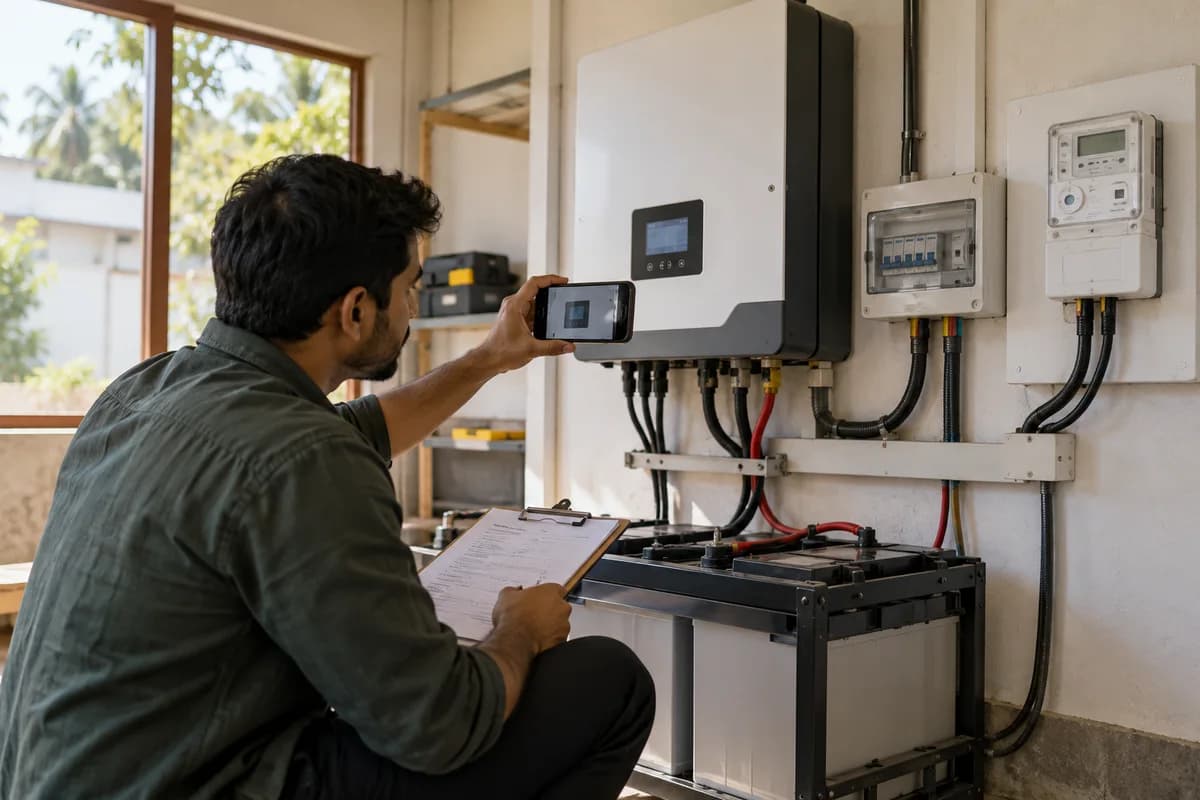
Photograph the DC isolator, the battery terminals and the controller screen before touching anything. A before picture protects the technician if a cable was loose.
Hybrid systems sit in between
A hybrid inverter connects panels, batteries and the grid, and it can export, store and back up during an outage. The settings decide which source is used first. That choice is easy to get wrong.
Service staff must note the operating mode, such as self consumption or battery priority. A customer who says power cuts still switch off the lights may simply have a hybrid inverter set to export mode with no backup load panel wired.
Check the firmware first. Many hybrid inverters ship in a default mode that does not match the wiring. The fix can be a settings change made over a remote session, with no visit.
- Operating mode and priority order
- Battery chemistry and capacity
- Backup load panel
- Export limit setting
What the service record must hold
Start every record with the system type. Then add equipment serials, commissioning date, approval papers, meter details and the latest inverter firmware version, so the next technician does not have to guess.
Photos help. A shot of the inverter display, the meter and the earthing pit tells a technician more than a paragraph of typed notes ever could. Keep them on the ticket.
Add the warranty end dates for panels, inverter and battery as separate fields. They differ, and a desk that quotes one date for everything will quote a wrong one.
Questions a desk should ask first
Ask which type of system it is. Ask whether the grid is up. Ask what the inverter display says. Those three answers sort most calls before any technician is booked.
Turn them into a short script on the ticket screen. Update it after each tricky call. The desk then learns from the field instead of repeating dead ends such as a tripped MCB or a loose MC4 connector.
Close each call with a note on what was found. Over a month those notes reveal which fault codes dominate, which models misbehave, and which customers need a one page guide to their own inverter display.
Service desk intake sheet
A sheet with a system type tick box, then three blocks. On grid lists meter number and approval reference. Off grid lists battery bank and controller. Hybrid lists mode and backup panel. A bottom strip holds fault code, photo links and technician notes. Fix it to the desk screen as a printout, and update it whenever the field team finds a new pattern.
Open a blank worksheet to printQuestions owners ask
Why does an on grid system stop during a power cut?
The inverter shuts down when the grid fails, to protect line workers repairing the feeder. A hybrid system with a backup load panel and batteries can keep chosen circuits running through the cut.
What is the meter for?
It records units sent to and drawn from the grid. The utility reads it for billing credits, so a service record should carry the meter number and the last seen reading.
Can an off grid system later join the grid?
Often yes, with a different inverter, new approval papers and a fresh commissioning visit. Treat it as a new installation with its own record, and keep the old battery history attached.
Do the rules vary by region?
Yes. Each utility sets its own approval steps, export caps and billing terms, so check the local regulator and note the rule that applied when you commissioned the site.