In this guide 8 sections
An organic farm diary is the dated account of what happened on each plot: crops, seed, inputs, pest control, contamination precautions, harvest, handling and sales. The person doing or supervising field work writes it, and a farm manager or internal inspector checks it against bills, stock and the land.
What inspectors read it against
An inspector stands by the compost pit and asks when the last batch went out, and to which plot. A diary with dates answers in a moment. A cupboard of loose bills does not. The same page also tells your own team what was tried on that bed and when.
APEDA’s NPOP standards ask for an organic crop production plan, including inputs, seed sources, separation measures and a record keeping system. Certification bodies must check that operators keep records fit to verify production, storage, processing, purchase and sales. For grower groups, the NPOP procedures provide a farm diary format.
Entries to keep for every plot
Give each plot a fixed code and a sketch map. Then every later line can point to it without describing the field again. Mark buffer strips, water sources, storage and any neighbouring non-organic land on the sketch.
The grower group format covers the areas below. Individual operators should confirm their certifier’s preferred layout.
- Plot, area, crop, intercrop, season and status
- Seed or planting material, supplier, date and treatment
- Input name, source, quantity, plot and date applied
- On-farm preparations with materials and quantity made
- Pest, disease, weed and contamination control actions
- Estimated yield, harvest date, actual weight, storage and sale
Field notes today, fair copy this week
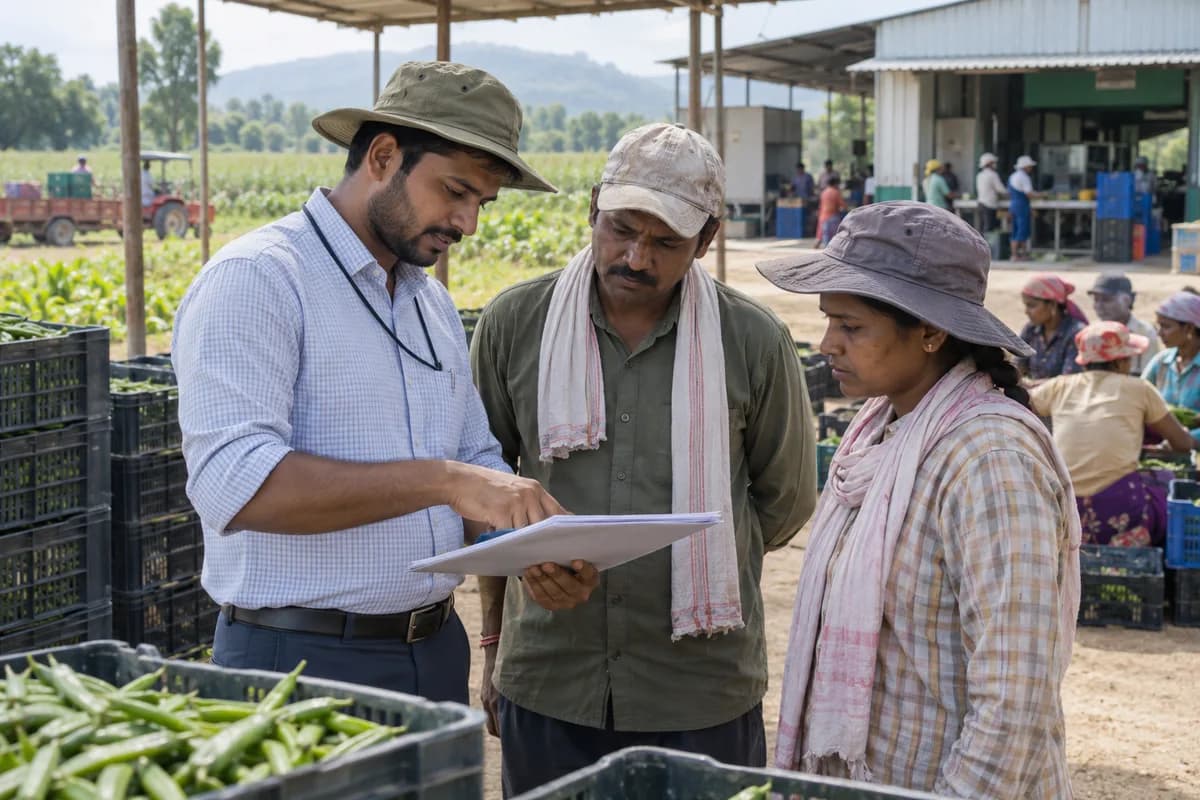
Whoever sprays, sows or picks should note it that day, in the language they use. A phone photo of a bag label with the plot code is a useful backup. It is not the whole entry. Quantity, date and the plot still have to be written down.
Set a fixed time for the manager to check new lines against the input shed and purchase bills. Corrections get a single stroke, the new value, initials and date. Never copy a season out neatly just before inspection. A uniform hand and identical ink invite harder questions. Keep the rough page.
Gaps that cause trouble later
Brand names without composition leave the certifier unable to judge an input. Quantities in handfuls and tractor loads cannot be added up. Harvest totals for the whole farm cannot be tied to plots.
Parallel production, with certified and non-certified output from one operation, needs sharper separation. NPOP procedures call for documentation that clearly distinguishes the two, reliable checks of actual harvest and room to store them apart. The certification body has to approve the arrangement. Grower group members should also check their group’s own conditions.
- Empty seed packets and bills not retained
- Rain-damaged pages with no replacement note
- Neighbour spraying observed but unrecorded
- Sales entered without lot or plot reference
Closing the season on one page
After the last picking, add seed bought and used, inputs bought, used and remaining, and produce harvested, sold, kept, wasted and still stored. Explain each difference in a line.
Compare the season with the plan submitted for certification. Note crops dropped, plots rested and inputs that were planned but never used. The NPOP standards expect operators to report plan changes to the certification body as they happen. Do not save a new input or crop for the renewal visit. File the diary, bills and certificates under one season label.
Photographed bag labels still need a diary entry.
Pick one recent spraying or sowing day and compare the field worker’s note with the diary.
Field notes today, fair copy this week
Does the fair copy carry the plot code, input, quantity, date and person?
Read the original note and label photograph beside the diary line while the worker is available. Fill only what that person can confirm, mark the date of copying, and flag any input whose composition is unknown.
Background reading: ERPNext: forward and backward traceability
Plot diary starter page
A double page per plot with its code, sketch and status at the top, ruled blocks for sowing, inputs, field actions, harvest and sales, and a weekly checker’s initials. A final strip balances input stock and produce quantities at season close.
Open a blank worksheet to printQuestions owners ask
Can the diary be digital?
Ask your certification body what it accepts for review and signature. A digital record should show dates and corrections, work with weak signal and export a readable copy by plot and season.
Who writes when workers cannot read or write easily?
A supervisor can write the entry on the same day and show who did the work. Let the worker confirm by voice and verify quantities at the input store.
Should purchases be copied into the diary?
Record the bill number, input, supplier and quantity, and keep the bill filed. That link lets a checker compare purchases with applications and remaining stock.
Sources
- APEDA, National Programme for Organic Production, eighth edition, 2024 — verified 28 Nov 2026
- APEDA, NPOP procedures 2024, including the grower group farm diary format — verified 28 Nov 2026