In this guide 6 sections
Buyers expect a certificate that names the lot, lists each test with its method and a result, and carries a signed date. Weight, strength, tear and coating are typical. Each result must cite the standard used, so the buyer’s own lab can repeat the test on a retained sample taken from the same lot.
Which tests usually appear?
It depends on the product. Coated tarpaulin buyers ask for mass per area, tensile and tear strength and coating adhesion, protective fabric buyers add flame behaviour, and filter cloth buyers want air permeability.
Do not add tests nobody asked for. Print what the order demands, because extra results invite questions that you may not want to answer in front of the buyer’s quality engineer.
Keep a short matrix per product listing the tests, methods and limits, so the lab, the certificate and the order always agree on what is required.
- Mass per unit area
- Tensile strength, warp and weft
- Tear strength
- Coating adhesion
- Flame behaviour where relevant
Why the named method counts for so much
A tear value means little without its method, because two methods can give different numbers on the same cloth, so name the method and its edition beside every result. Name the edition too.
Never quote an old edition. If the buyer’s order names an older edition, test to that one and print its name on the page, even when a newer edition exists.
Also state the sample size, conditioning and test direction, because a buyer’s lab that finds a different number will first check whether the setup matched yours.
How do you link the certificate to the lot?
Print the production lot and roll range on the certificate, and state which rolls were sampled and where on the roll, away from the selvedge and the first metres. Sample position is part of the result.
A strip cut from the edge of a roll can read differently from one cut from the middle, so the certificate should say which was used. Link every certificate to a lot.
Store the certificate against the lot record, so anyone looking at a delivery can open the lot and see the certificate, the raw readings and the instrument used.
What does the buyer check first?
The buyer reads the specification line, then the result, then the method, and many also check who signed and the calibration date of the tensile tester. Missing signatures cause returns.
Units are checked too, and a result printed in the wrong unit, or without the unit at all, is rejected unread before anyone looks at the value. Show pass or fail against the specified limit rather than making the buyer compare numbers, because the verdict is what the receiving inspector files.
Keeping certificates ready for audits
Store raw test sheets with the certificate, so that when a customer audits you can show the path from loom or coating run to the number printed. Audits then move quickly.
Keep the calibration certificate for the tensile tester and the balance in the same folder, so the auditor sees the instrument was in date on the test day. Next step: choose one recent delivery and see whether you can produce its certificate, raw readings and calibration record in five minutes.
- Raw readings kept with the certificate
- Tester calibration date recorded
- Lot and roll range printed
Test certificate template
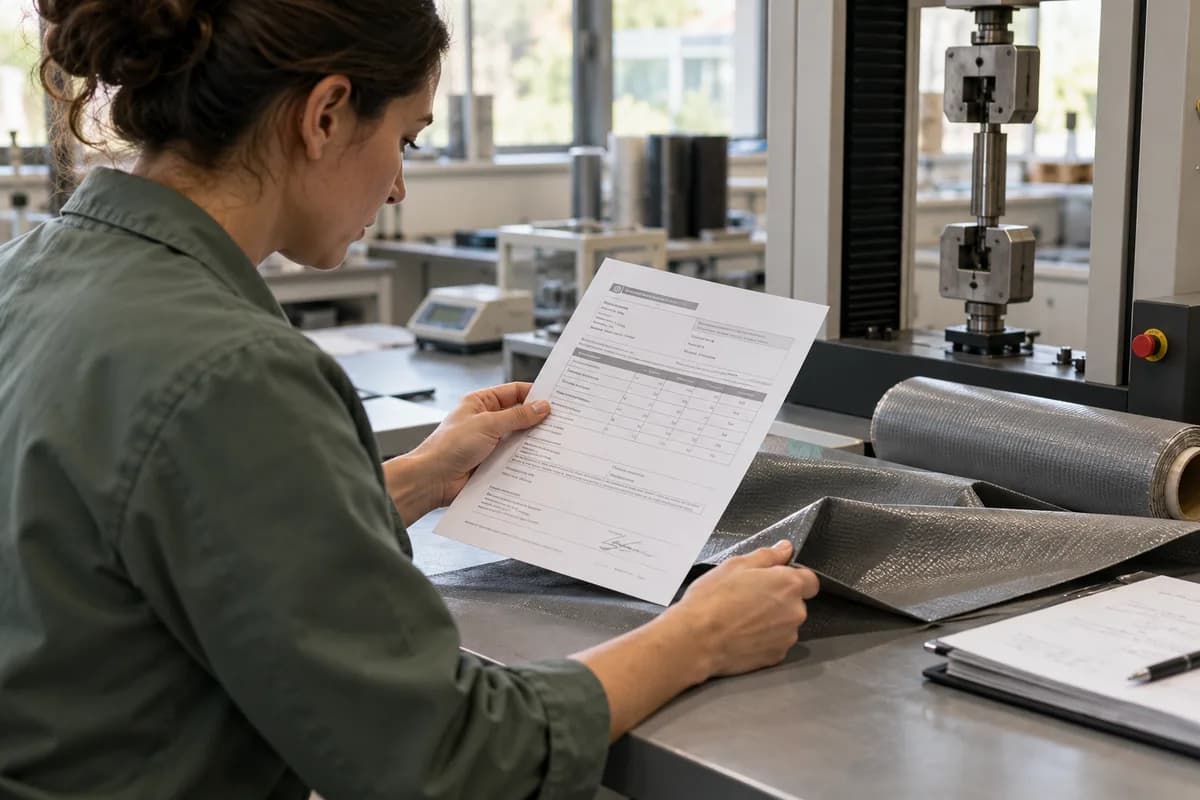
A one-page certificate with a header for buyer, order, lot and roll range, followed by a table of test, method with edition, specified limit, result and pass or fail. A footer shows the sample position, tester calibration date, signatory and date, so the buyer can see who stood behind each reading.
Open a blank worksheet to printQuestions owners ask
Do I need an accredited lab?
Only if the buyer requires it. Some contracts demand accredited testing and others accept in-house results, so read the purchase order before booking an outside lab for every lot.
How often should each lot be tested?
Follow the buyer’s plan. If none is given, agree a sampling rate with the buyer, write it into the order and test every lot to that rate.
What if a result is near the limit?
Retest on fresh samples from the same lot and record both sets of readings, then tell the buyer before shipping rather than after a rejection reaches your desk.
Can the certificate be digital?
Yes, if the buyer accepts it. A signed PDF linked to the lot record works for many programmes, provided the signatory and calibration date still appear on the page.