Build a system around your job specs, your dies and your press runs.
A packaging plant makes the same box or pouch many times, with small changes each time. A repeat order returns with a new artwork, a new size or a new board grade.
The details sit in the job specification. Dimensions, board or film, colours, die number, plate set and packing instructions all have to match the last approved run, unless the customer says otherwise.
Software built by GullySystem for such a plant would keep that specification as the master record. Estimates, jobs, stock and dispatch would all read from it.
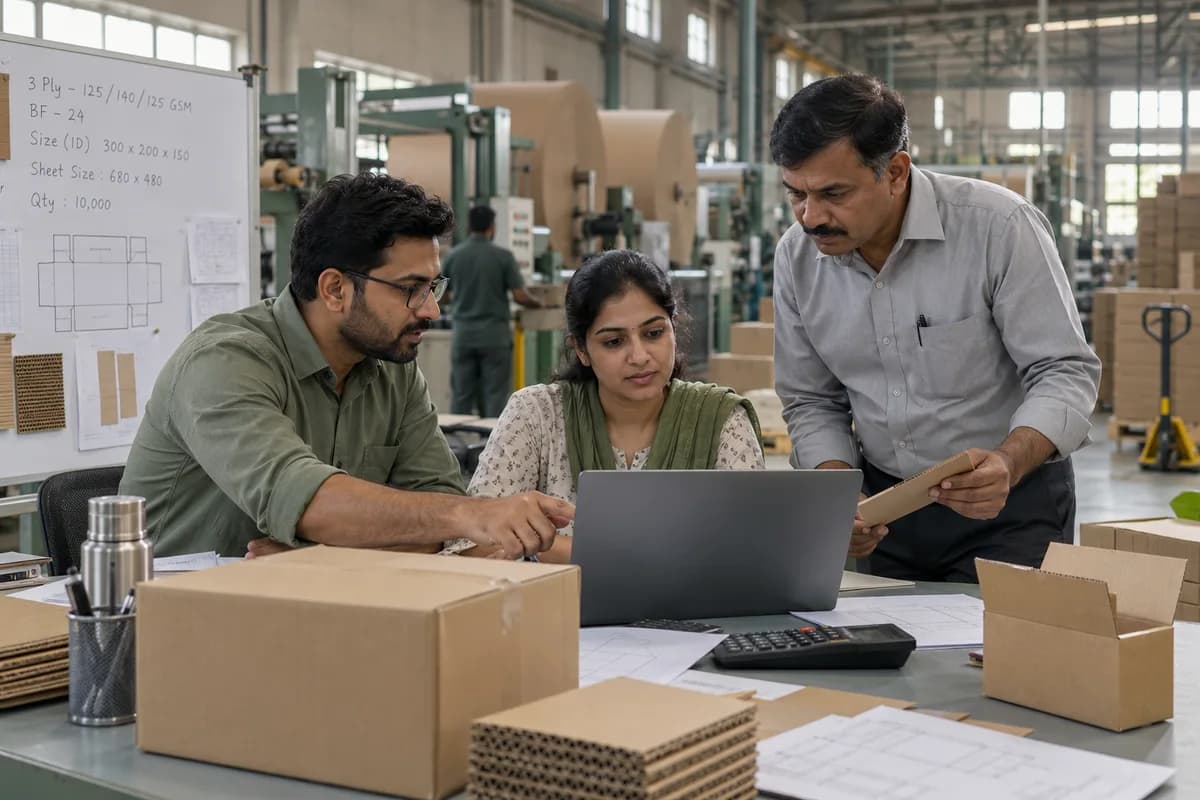
Plants this can be built for.
A corrugated plant converts reels into boxes. A flexible packaging plant prints, laminates and slits film. The machines differ, and so does what has to be tracked from one stage to the next.
- Corrugated box manufacturers
- Flexible packaging manufacturers
- Rigid packaging manufacturers
- Folding carton manufacturers
- Label manufacturers
- Food packaging manufacturers
- Industrial packaging manufacturers
- Packaging film manufacturers
- Paper bag and sack manufacturers
- Plastic container and bottle makers
- Pallet and crate makers
- Foam and protective packaging makers
- Rigid box and gift packaging makers
- Packaging converters
The modules, and what each one covers.
Nothing here is a fixed package. Each module is built, left out or changed to match how your organisation already works.
Job specification and repeat orders
Sales and prepress teams keep one specification for each product the customer buys.
- Product code and customer
- Size, style and construction
- Board, film or paper specification
- Number of colours and ink codes
- Die and plate numbers
- Finishing and packing instructions
- Revision history
- Repeat order that copies the last run
Estimate and quotation
Estimators price a job from its dimensions, its material and the way it will run.
- Sheet or reel size worked out
- Material waste allowance
- Print, die and finishing cost
- Plate and die one-time charges
- Setup cost spread over the run
- Quantity break prices
- Freight to the customer
- Quote against final cost
Board and resin prices change often. The estimate keeps the material rate it used, so a repeat quote can show what moved.
Artwork, proofs and approvals
- Artwork received and version
- Dieline matched to the job
- Colour proof sent to the customer
- Approval recorded with date
- Changes requested and applied
- Barcode and regulatory text checks
- Approved file released to prepress
- Old artwork withdrawn
Plates, cylinders and dies
Prepress and tool room teams hold the tools that give a job its shape and print.
- Plate set by job
- Gravure cylinder register
- Cutting die and creasing rule
- Location on the rack
- Impressions used
- Repair and remake history
- Customer-owned tooling flagged
- Tool charge recovered
Material, reel and sheet stock
- Paper reel by mill and grade
- Board by flute and GSM
- Film by micron and width
- Ink, adhesive and varnish stock
- Reel weight at receipt and after use
- Part reels returned to stock
- Material reserved for a job
- Slow stock and ageing
Purchase of board, film and inks
- Requirement from open jobs
- Mill and supplier master
- Order by grade and width
- Delivery chased
- Goods receipt with moisture or thickness check
- Rejection and credit note
- Price comparison across mills
Production planning and job scheduling
Planners sequence jobs on each machine to cut changeovers and keep delivery dates.
- Jobs by machine and shift
- Grouping by board, colour or width
- Setup time counted
- Ready-material check before release
- Rush jobs inserted
- Delayed job flags
- Job bag or traveller printed
- Machine load for the week
Printing and converting stages
- Corrugating or film extrusion
- Printing
- Lamination or coating
- Die cutting
- Slitting or folding
- Gluing or pouch making
- Counting and packing
- Operator and machine per stage
- Quantity in and quantity out
- Waste at each stage
- Setup and run time
- Semi-finished stock between stages
- Stage-wise status of a job
Quality checks on the line
Quality teams check print, size and strength against the approved sample.
- First off approval against the proof
- Colour reading against standard
- Registration and dimension check
- Bursting or compression strength
- Seal strength for pouches
- Adhesion and lamination bond
- Odour and migration checks for food use
- Hold and release of a lot
Food contact packaging has its own rules in each market. The system records the tests your quality team runs. It does not decide what a market requires.
Batch traceability for food and pharma packs
- Raw material lot per job
- Ink and adhesive batch
- Finished lot number
- Lot linked to the customer shipment
- Retained sample record
- Search from complaint to material
- Supplier declarations stored
Wastage and recycling
- Waste by stage and cause
- Trim and edge waste
- Setup waste against run waste
- Waste returned to the pulp or granule route
- Scrap sold by weight
- Waste by job against estimate
- Waste by operator and machine
Packing, dispatch and delivery
- Packing by carton count and pallet
- Pallet label and quantity
- Delivery schedule by customer
- Call-off orders against a blanket order
- Delivery note and tax invoice
- Vehicle and driver details
- Proof of delivery
- Short delivery and balance tracking
Billing, credit and customer accounts
- Invoice from the delivered quantity
- Over and under supply tolerance
- Tooling charges invoiced separately
- Credit limit by customer
- Outstanding by age
- Payment follow-up
- Currency per customer
Complaints and returns
- Complaint logged against a job
- Photographs from the customer
- Retained sample compared
- Cause and corrective action
- Rework or remake order
- Credit note raised
- Repeat complaints by product
Who logs in, and what they see
- Owner
- Sales team
- Estimators
- Prepress team
- Planning team
- Machine operators
- Quality team
- Stores team
- Dispatch team
- Accounts team
One connected workflow, end to end.
Every stage below can sit in one system, so nobody re-enters what the last stage already captured.
- Enquiry
- Estimate
- Order
- Artwork and proof
- Material purchase
- Job planning
- Printing
- Converting
- Quality check
- Packing
- Dispatch
- Invoice
You do not have to replace everything at once.
Each phase is usable on its own, so the system earns its place before the next part is built.
- 1
Specifications, estimates and jobs
Product specifications, estimates, proofs and approvals, so a repeat order starts from the last approved run.
- 2
Stock and planning
Reel and sheet stock, purchase, tool store and machine schedules, with materials checked before a job is released.
- 3
The press and converting floor
Stage-wise production entry, waste by cause, quality checks and lot records for products that need them.
- 4
Dispatch and accounts
Packing, call-off deliveries, invoices, credit control, complaints and the job-level margin reports for the owner.
How a build actually runs.
- 01
Follow one repeat job
We pick a product the plant has run many times and trace how its specification is remembered, found and changed.
- 02
Write down the machine routes
Each product type follows its own route, whether corrugating, printing and die cutting, or extrusion, lamination and slitting.
- 03
Design the job traveller
The traveller that rides with the job is rebuilt as a screen at each machine, in the order operators fill it.
- 04
Build specifications and estimates first
Everything downstream reads the specification, so it is the first thing made and the first thing tested.
- 05
Run live jobs in parallel
A set of customers moves first, with the paper traveller kept beside the screen until the two agree.
- 06
Add the harder parts
Lot traceability, call-off schedules and waste analysis follow once the daily entry is steady.
What you bring, and when.
The build moves at the speed of the answers. These are the things we ask for, in the order we ask.
- 01
Job specs, artwork proofs and job bags
Share a job specification sheet, an approved artwork proof and a job bag from a repeat order. Add a carton costing. They show how a job is defined.
- 02
Estimating, prepress, production and quality
Each team holds different information. Prepress holds artwork and dies. Production holds machine records. The works manager settles disputes.
- 03
Wastage allowances and board rates
Wastage allowances, board and ink rates are fixed as modules take shape. Supervisors review each against a live job. Open questions delay the next module.
- 04
Repeat jobs and reel stock
Repeat jobs and reel stock move in at the end. The works manager checks the balances.
Systems we can put together for you.
- Packaging job specification systems
- Corrugated box plant management
- Flexible packaging production tracking
- Folding carton job management
- Label printing workflow
- Estimating and costing tools
- Artwork and proof approval tracking
- Die, plate and cylinder registers
- Reel and sheet stock management
- Machine scheduling for converting
- Waste analysis by stage
- Batch traceability for food packs
- Customer call-off and delivery portals
- Management dashboards
Questions owners ask before starting.
What does custom packaging software change?
It gives each product one master specification. Estimating, planning, production and dispatch all read from that record, so repeat jobs run as approved.
How does a repeat order start?
The last approved specification is copied forward. Only what has changed, such as a new quantity or a revised artwork file, needs to be entered.
Does it handle both corrugated and flexible packaging?
Yes, but they use different routes. The stages and estimating rules are drawn for the kind of plant you run.
Can we track dies, plates and cylinders?
Yes. Each tool is linked to its jobs, its rack location, the impressions used and its repair history.
Where is waste entered?
At each stage, with a cause. The figure is then compared with the allowance in the estimate.
Does it support lot traceability for food packaging?
Yes. Material, ink and adhesive lots are linked to the finished lot and the shipment.
Can customers place call-off orders?
Yes. A blanket order is recorded, and each delivery draws from it with the balance visible.
Will the system read counts from our presses?
Sometimes. That depends on what the machines expose. Without that link, operators enter counts at the end of a run.
Would a ready product fit us?
Often. Our corrugated box and flexible packaging software cover common flows, and a custom build suits plants with unusual stages.
How we work with this trade.
Ready products for this work.
If one of these fits, it is cheaper and faster than building from scratch. We will say so.
Build a system that remembers how every job was approved.
A customer reorders because the last box or pouch was right. The next one has to match, and matching depends on what the plant recorded the first time.
Send us a specification sheet, a traveller and a recent complaint. We will show where the three disagree, and what our ready packaging products already do about it.
Tell us how your packaging manufacturing companies runs today.
We will tell you what can be digitised, what can be connected, what is worth automating, and what you should leave alone.
What happens after you share your requirements
- A senior engineer reads your answers. Nobody phones first.
- Within one business day you get a written note: what we understood, what we would start with, and the questions we still have.
- If it fits, a proposal follows with the order of work, what we need from you and what you receive at each step.
- No call is booked and nothing is paid until you have read the note. Your details stay with us.
Start with your requirements
Seven short steps that tell us what you need. A senior engineer reads them before anyone gets in touch.
Share your requirements