One journey, built and used by real customers
An MVP is the first working version of a new product or business line, cut to one core journey and built for founders and established businesses testing an idea. Real users get it early. Their signups, repeat visits and payments are read before the full build is committed, and the decision follows those records instead of opinions from meetings.
- Scope cut to one question
- Working software used by real customers
- Source code, hosting and data held in your name
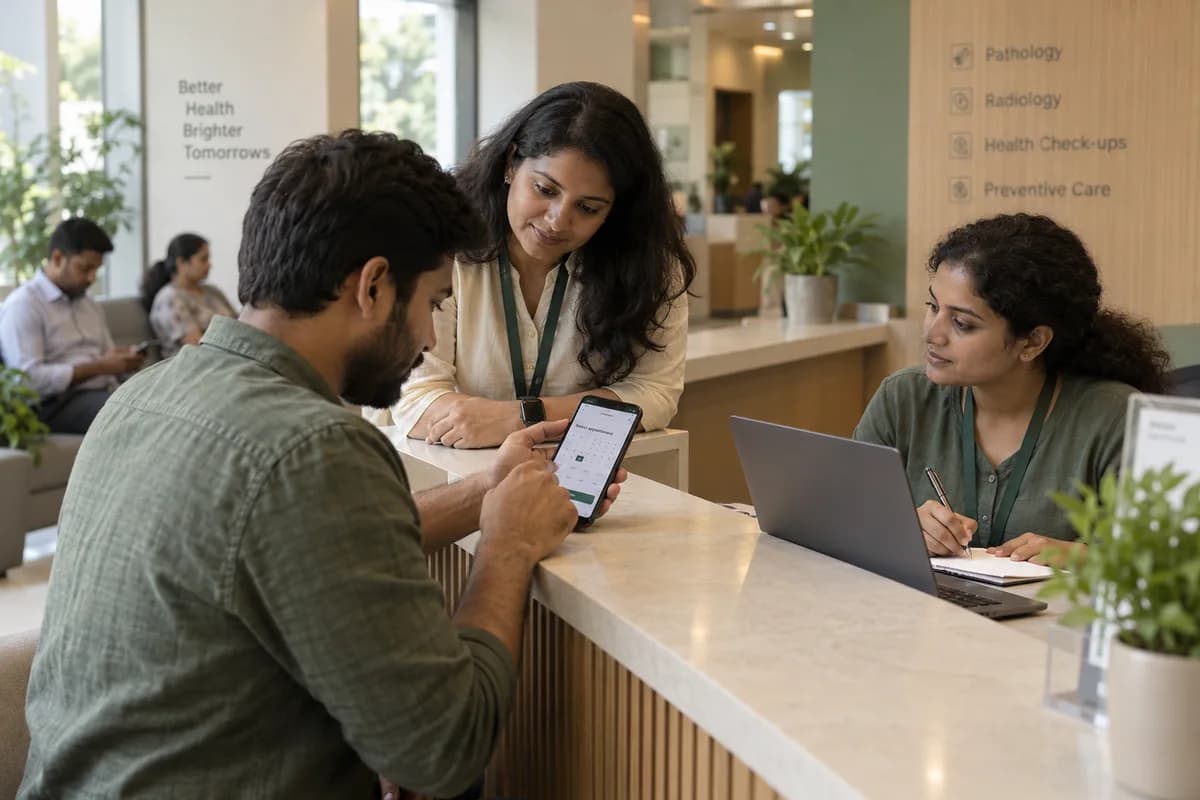
Founders and established firms commission first versions, such as home-collection booking for a diagnostic lab, self-service reordering for a distributor’s retailers or a parent app for a coaching institute. A manufacturer might want a service-contract portal. Some of this work grows into a full product. Some of it shows early that the budget belongs elsewhere, which is a useful answer before a full build is paid for.
Where an Unproven Idea Stalls
Ideas Discussed but Not Built
The idea has been through meetings, paper sketches, a WhatsApp group and two quotations, yet nothing exists that a customer can open on a phone. The calendar keeps moving, and the longer the idea stays on paper, the more time a competitor in the same trade gets to launch first. Nobody can click anything yet.
Quotations Covering Every Module
A proposal covering every module carries a figure that needs family, board or bank approval, and with no evidence the idea works, the decision is deferred. The quotation sits in a drawer. Nothing gets signed.
Feature Lists That Keep Growing
Each person who hears the idea adds a suggestion, such as a loyalty wallet, a dealer app or a referral scheme, and the first release recedes with every conversation. Then the owner compares the plan with a funded competitor whose product took years to reach its present shape, and the plan starts to feel too small to launch. More features get added.
Encouragement Without Payment
Customers, friends and staff are all supportive. None of them has paid by bank transfer, typed in card details or come back to use the product twice in one week. Encouragement is not demand, and real money is about to be spent on the difference between the two, with nothing yet measured to justify it.
Full Builds Made Before Anyone Used Them
A full system was built to a specification written before any user had been observed, and it does what the document said. Customers needed something else. The budget is gone. The lesson was expensive.
No Agreed Content for a First Version
Developers ask the client to define the scope, while the client expected the developers to do it, and every vendor then prices a different imagined product. Quotes cannot be compared. Nobody has a shared definition of finished.
Internal Ideas With No Way to Be Tried
An operations head wants dealers to place their own orders, or wants a service sold on subscription instead of per visit, and the answer arrives as a project. So the idea is never tried. The business carries on unchanged because trying costs too much, and the same phone calls keep arriving at the counter every day.
A bigger plan does not fix this. A smaller one does. Build only the software one real customer needs, put it in their hands, and let their behaviour in the live product decide what gets built next.
The Smallest Version That Can Still Prove the Point
An MVP is working software that a real customer uses for a real purpose, not a mockup, a slide deck or a cheaper copy of the full product. Scope is cut to a single journey. The rest of the backlog is parked until release one shows real behaviour, for instance whether a booking now arrives with no phone call or a dealer stops ringing the counter.
One Question Agreed Before the Build
The assumption the investment depends on is named first, such as whether users book without phoning, whether they pay, or whether dealers stop calling the counter. The design answers that one question.
A Working Product, Not a Presentation
It carries real logins and real records, and it collects real payment through a payment gateway or bank transfer wherever willingness to pay is the question being tested. Users behave honestly only then. A free demo tells you little.
Tracked From Day One and Built to Continue
Each step of the journey is tracked, so drop-off, return visits and lapsed users are observed instead of reported as opinion in a review meeting. The first version shares its stack and data model with a full product, so a result worth pursuing is extended module by module rather than restarted from nothing.
What an MVP Leaves Behind
Focus on business value before discussing technology.
Software Used by Real Customers
A live product with named users and real records, plus a link that can be shared with anyone who asks what is being built. Not a prototype in a meeting room.
Riskiest Assumption Tested First
The point that worries the founder gets tested first rather than last, when changing direction still costs little and the remaining budget is uncommitted. A wrong guess is cheap here.
A Defined First Release to Approve
A written scope line separates what sits in the first version from what is parked, so the investment being approved is a specific and bounded piece of work. Approval becomes a simple yes.
Usage Records to Show Others
Signups, completed journeys, repeat use and payments are recorded from the live product, and a partner, investor, bank or board can see it before backing the next stage. Numbers replace opinion in the room.
Work That Carries Into the Full Product
The database, the code, the event history and everything learned about users move into the next phase, so the MVP spend becomes the first stage of the product. It is not a separate write-off.
Continue, Change or Stop
A decision, not another opinion. The read-out recommends continuing, changing direction or stopping, and stopping counts as a good result when it places the remaining budget somewhere that will earn more.
What an MVP Build Includes
Everything required from operational discovery to production deployment and long-term maintenance.
Idea Framing and Risk Assessment
Known facts are separated from assumptions, and the assumption that would hurt the business if wrong is named as the purpose of the first version. Facts go on one list. Guesses go on another.
Scope Line Definition
A written two-column list records what is in the first release and what is parked, and the feature argument happens on paper rather than mid-build. Parked items are never lost.
First-Version Interface Design
Screens are designed for one journey, for clarity and speed rather than a design system, with a finish good enough for users to take the product seriously. A design system can wait.
Core Journey Development
The chosen journey is built from sign-in to final outcome, so a user completes the task without any step that quietly needs someone in the office. No hidden phone calls.
Payment Collection in the First Release
Card payments, payment links or a payment gateway are connected wherever willingness to pay is the question, with receipts and a record of who paid. A completed payment records a decision. A survey records only an opinion.
Controlled Access and Onboarding
Invite codes, approved mobile numbers or a waiting list send the product to a chosen group, so a poor first impression stays inside that group. Early users are people you can phone.
Usage Tracking and Drop-Off Measurement
Events are recorded at each step of the journey, which shows where people stopped, how many returned and which part of the idea was ignored. Opinion gives way to counts.
In-Product Feedback Capture
Pilot users report a problem or request a change from inside the product, with feedback stored against the record they were working on, not scattered across phone calls. Context travels with the complaint.
Operator Console for the Client Team
A back-office screen shows every user and record, so staff can correct a mistake and complete the steps still done by hand behind the scenes. Nothing waits for a developer.
Pilot Launch Support
Support stays close while real users first touch the product, so blockers are cleared as they appear and early sessions are watched together with the client. The team does not disappear after launch.
Evidence Read-Out and Next-Phase Plan
A written summary covers what users did, what it suggests about the idea and a recommended scope for the next stage of the product. The data may point to stopping.
Continuation Into the Full Product
Where the result supports it, the same team carries the codebase into a complete product, adding the roles, reports, integrations and scale the business then needs. The same people carry on.
Typical First Versions Across Industries
Real-world business processes we configure and automate.
Diagnostic Lab Testing Online Home-Collection Booking
A diagnostic lab wants an app for bookings, phlebotomist routing, reports and referrals, but the unknown is whether patients will book online instead of phoning the counter. A first version covers two localities and a short test list, with slot booking, payment and WhatsApp confirmation, while a coordinator assigns each collection by hand. Routing, report delivery and referrals wait until booking behaviour is clear, because they only matter if enough patients book online in the first place.
Coaching Institute Testing a Parent App
A coaching institute plans a parent app with attendance, marks, fees, transport tracking and chat, but a first version handles one batch and does only two things. Daily attendance reaches the parent. A score card follows each test. Whether parents open it, and whether they complain on the day it stops, says more than another round of feedback forms handed out at the next parents’ meeting.
Transport Operator Testing a Load-Matching Board
A transport operator wants a load-matching board to replace the phone calls from attached truck owners, and the idea rests on owners posting availability from basic Android phones. A first version covers one route corridor, with vehicle posting, load listing and acceptance, while the booking is still confirmed on a call. Rate cards can wait. Settlement waits until owners post without reminders.
Auto Parts Distributor Testing Retailer Self-Ordering
At an auto parts distributor the counter staff spend the day reading out stock over the phone, and a full retailer portal has been quoted and postponed twice. A first version goes to retailers in one territory, with their own rates, live availability on fast-moving items and orders that land at the packing desk. Credit limits, schemes, claims and accounting entries all wait for the phase that usage supports, which keeps the first release small enough to finish.
Modular Kitchen Studio Testing Paid Design Slots
A kitchen and wardrobe studio spends its week drawing layouts for people still comparing carpenters, so the unknown is whether a buyer will pay for a design slot. A first version covers one city and three standard layouts, with room size entry, an indicative range for two material grades and payment of the slot amount. A designer still makes the drawing afterwards. Material catalogues, three-dimensional views, finance options and the production schedule all stay parked, because none of them helps decide whether anyone pays for a slot.
Pump Manufacturer Testing Paid Service Contracts
A pump manufacturer selling through dealers wants a direct relationship with owners, and paid annual service contracts are the way it plans to build one. A first version covers one product range in one region, with pump registration by serial number, online contract purchase and complaint logging. A service desk screen supports the internal team. Dealer commissions, spare parts and a technician app stay outside the first release, since none of them tests whether owners will buy a contract.
Is This Service Right for Your Business?
We partner with established businesses that have outgrown manual processes and want reliable systems.
Founders With an Idea and No Product Yet
The founder understands the market and has a first customer in mind, so something real must reach that customer before money goes into a full build. Then a funding conversation has substance.
Established Businesses Testing a New Line
A distributor considering self-service ordering, a service company moving to subscriptions and a manufacturer going direct to owners all face one risk, a new model nobody has tried. A pilot comes before a project.
Owners Holding a Quotation They Cannot Approve
A full-system proposal has sat unapproved for months because the figure feels too large for an idea nobody has yet proven in the market. A first version makes it a decision.
Businesses That Need Something to Show
A partner, anchor customer, bank or family board may want to see the product working before committing any money, and slides rarely settle that conversation. A working link does.
Teams Whose Previous Full Build Missed
The business paid for everything at once, launched, and found that real usage sat far from what the specification assumed, which left little budget for a second attempt. This time the assumption is tested first.
When an MVP Is Not the Right Fit
Where no demand question exists, skip the pilot. That covers attendance, billing or stock for the business’s own staff, where usage is decided internally and no customer has to be persuaded. If paying users already ask for specific features, the business is past MVP and needs a roadmap, not a pilot, because the demand question is already answered. If the only question is whether people are interested, a landing page, a WhatsApp number and a round of enquiries can answer it with less software. If the product must handle regulated data or public money from day one, the first release has to meet that standard in full. Narrow the audience, never the engineering.
Enterprise Capabilities in Plain Business Terms
One Complete Journey
The chosen path works fully from first screen to final confirmation, because a half-working journey teaches more about the software than about the idea behind it. Every step actually works.
Invite-Only Pilot Access
Access is controlled by invite code, approved mobile number or manual approval, so the first users are people the client chose and can follow up with personally. Strangers do not wander in.
Live Payment Collection
Cards, wallets, QR codes, payment links or a gateway are supported, with receipts and a record of who paid, so willingness to pay is observed instead of surveyed.
Mobile-First on Ordinary Handsets
Screens are built for an entry-level Android phone on a weak network, since that is the device on which first users will judge the idea. Small screens come first.
Step-by-Step Usage Events
Each meaningful action is recorded with a user and a time, which gives completion and drop-off by step instead of one overall visitor count. Totals hide the problem.
Manual Work Behind an Automatic Face
Where a step is not yet worth automating, the client’s own team completes it from the console while the user sees a finished experience. Test the process before building it.
Operator and Support Console
One screen lets the client team find any user or record, fix an entry, resend a message and unblock a user during the pilot. None of this needs a call to GullySystem.
In-Product Feedback and Issue Reporting
Users report a problem from the screen they are on, with the record attached, so the client learns what broke and for whom, not only that something failed.
Limits and a Kill Switch
Caps apply to signups, transaction values and daily volume, and a single control pauses the pilot immediately if something needs correcting before more users see it. A bad day stays small.
Structured Data From Day One
Even a small first version stores customers, items and transactions in proper tables, so records created during the pilot carry into the full product instead of being retyped. Nothing is rekeyed later.
Error Reporting and Uptime Monitoring
Crashes and failures are reported automatically with their context, so a problem during the pilot is found and fixed before a user gives up on the idea. Uptime is watched too.
Export of Everything Gathered
Users, transactions, events and feedback can be exported to Excel at any point, so the evidence belongs to the client and can be reviewed by anyone they choose. The data is yours.
Our Structured 6-Step Delivery Process
A transparent path from your first conversation to a reliable production release.
- 01
Idea Framing and the One Question
The idea, the customer and the way money is meant to be made are reviewed, and what must be true for the idea to work is written down. The client spends an honest hour on where the idea might fail and who the first twenty users would realistically be, naming real people wherever possible. The step ends with one written question.
- 02
Cutting the Scope Line
Everything the full product might eventually do is listed in a spreadsheet, and each item is placed in the first release or parked with a reason beside it. Parking is recorded, not lost. The client names one decision-maker with the authority to say no to a good feature, because a first version approved by committee stops being a first version.
- 03
Designing the Single Journey
Screens are designed for that one path and walked through with two or three people who match the intended users, one screen at a time. The client supplies those people. Placeholder text hides the problems that matter, so real forms, real prices and real item names go into every screen from the first draft.
- 04
Building the Working Version
The journey is built from sign-in to confirmation with real data, payment collection where it applies, usage tracking, the operator console and the messages users receive. The client raises payment and WhatsApp credentials in its own name and answers quickly when a rule turns out to be ambiguous, since a waiting developer guesses.
- 05
Controlled Launch to Real Users
The product is released to the chosen group, the first sessions are watched together with the client and blockers are fixed as they appear. The client lines up the first users and names one person to onboard them, follow up and hear complaints first-hand, without waiting for a report.
- 06
Reading the Evidence and Deciding
Usage, payments and feedback go into a plain read-out set against the question from step one, ending in a recommendation to continue, change direction or stop. The decision belongs to the client. Source code, hosting and data are handed over whichever way it goes, and the accounts stay in the client’s name from the first day.
What You Receive Upon Project Completion
Everything required to run, maintain, and expand your software without vendor lock-in.
Connects With the Systems You Already Rely On
We build bridges between your software so you don't have to replace functional existing tools.
Collecting Money in the First Version
- Stripe
- Adyen
- Bank transfer and QR
- Payment links
- Subscription billing
Reaching and Onboarding First Users
- WhatsApp Business API
- Transactional SMS
- Transactional email
- Firebase push
Sign-In and Access Control
- Mobile OTP login
- Google sign-in
- Invite codes and approved-number lists
Systems You Already Run
- QuickBooks and Xero
- Excel and Google Sheets import
- Google Maps and location
- Custom REST and webhook endpoints
Watching What Happens
- Product event tracking
- In-app feedback capture
- Error and crash reporting
- Uptime monitoring
Selected for Reliability, Speed, and Longevity
Technology chosen to match your operational scale and long-term maintainability.
Web and Frontend
Mobile
Backend and APIs
Data and Storage
Hosting and Delivery
Why Business Owners Choose GullySystem
Features Are Argued Out of the First Release
A longer feature list means a larger invoice, so the first meeting here is spent removing items and explaining what each removal protects. Scope is the main lever.
A Working Product Rather Than a Demonstration
A clickable prototype shows whether people understand the screens, but only working software with real records and real payments shows whether they want it. That is the question worth paying for.
Tracking Included in the First Release
Usage tracking, drop-off by step and feedback capture are built into the first release rather than added after launch, so the pilot produces evidence instead of anecdotes. Retrofitting loses the first users’ behaviour.
Manual Steps Where Automation Is Not Yet Justified
If a person can do a step while pilot numbers are small, a person does it, and the budget goes to the parts users actually touch. Automation follows proof. Effort goes where users are.
Code That Serves as a Foundation
Small scope does not mean careless work, because the standard stays the same and the data model, code and deployment are the ones used for a full build. A good result is extended, not rewritten.
A Read-Out That Can End the Idea
If the pilot shows demand is missing, the read-out says so plainly, and a clear no arrives at first-version cost, before a full product exists. An honest no is useful.
Flexible Engagement Options
Choose an engagement model that matches your operational scope, budget, and timeline.
Idea to First Version
For a new product idea with nothing built yet, framing, scope line, design, build and pilot launch are delivered against an agreed first-release scope and acceptance criteria.
Prove One Feature
A single new journey, such as self-service ordering, a subscription or a customer portal, is built and piloted alongside the current way of working. Today’s systems stay untouched.
Build and Iterate Window
The first version comes with an agreed window of continuous changes while real users are on it, so early findings are acted on instead of noted for later. Changes ship while users watch.
Continue to Full Product
The same team carries the codebase into a complete product with the roles, reporting, integrations and capacity the business needs, once the idea has earned the investment. Evidence comes first.
Frequently Asked Questions
Straightforward answers to the questions owners ask before getting started.
What exactly is an MVP, and how is it different from a prototype or a demo?
An MVP is working software that a real customer uses to get a real outcome, cut down to one journey and run on that customer’s own data. A prototype is a set of clickable screens with no logic behind them, useful for checking whether people understand the design before any code exists. A demo stays in the team’s hands. Only an MVP puts the customer in control of their own data and money, so only an MVP can show whether the idea has real demand.
Is an MVP right for us, or should we just build the full system?
That depends on one thing. Software for the business’s own staff, such as billing, attendance, stock or job cards, should be built properly, because usage is decided internally and a pilot proves nothing. An MVP earns its place when someone outside the business must choose to use it or pay for it, such as a customer, dealer, parent or patient. Test that choice first.
How do you decide what goes into the first version and what gets left out?
Everything works backwards from one written question. Anything needed to answer it goes into the first version, while anything that only makes the product nicer, broader or more complete is parked. Nothing parked is lost. The first release holds one user type, one journey and one way of paying, so reporting, settings screens and bulk operations are left out. Those matter in a full product. A pilot barely notices them.
What drives the cost of MVP development?
Scope drives cost, not a per-screen rate. The main factors are the steps in the journey, the user types it touches, the platforms needed and whether live payments are tested. Outside systems connected during the pilot also count, as does how much existing data must be loaded and how much of the process stays manual for now. The scope line moves the figure. It is written before any quotation.
What decides how long it takes to get in front of users?
Decisions and access matter more than coding. The factors are how quickly the scope line is agreed, how fast approvals return, how long payment and WhatsApp credentials take to arrive and whether first users exist. Reopened feature lists cause the drift. Protecting the scope line is the factor the client controls directly, and the timeline is confirmed only after scoping, once the journey, platforms and dependencies are written down.
Will the MVP have to be thrown away when we build the full product?
No, it is not thrown away. It runs on the same stack, data model and deployment approach as a full build, so the next phase adds modules to what already exists. Some early screens are redesigned once more is known, and manual steps such as order confirmation are automated only when volume justifies the effort. Pilot customers, transactions and history carry forward. Only the disproved assumption is discarded, and finding that out is exactly what the pilot was for, at a fraction of the cost of a full build.
Can the first version connect to the systems we already run?
Yes, though to less than people expect. Connections are limited to what the journey needs, such as a payment gateway, WhatsApp confirmations or an item master imported from your accounting software or Excel. Ledger posting, ERP integration and two-way synchronisation are normally parked, since they add cost and delay without helping answer the demand question. Those connections come next if the pilot succeeds, and the data model is designed from the start so that step stays straightforward.
How will we know whether the MVP succeeded?
Success is agreed before the build starts. It is a handful of specific behaviours, such as how many invited users completed the journey without help, how many returned, how many paid and where people stopped. The product records those actions as they happen, so the end of the pilot shows what people did rather than what they said. A stopping rule is written down in advance, because that judgement is harder to make once the team is attached to the product.
Is real customer data and real money safe in a first version?
Yes, and the standards do not drop. Payments go through a regulated gateway in the client’s own merchant account, so card and bank details are never held in the product. Data is encrypted in transit and at rest, access is restricted to named people and credentials are kept in a secrets store outside the code. The pilot runs in its own environment, separate from the live systems the business already operates, so a pilot fault stays inside it. Access controls, limits and a pause switch are in the first release, because early users form the first impression of the product.
Who owns the source code, the data and the accounts?
The client owns all three. That covers the source code repository, the database, the technical documentation and the intellectual property in what was built, whatever the pilot concludes. Hosting, payment and messaging accounts are created in the business’s name from the start, with GullySystem’s access scoped and revocable, so changing teams never means recovering accounts. Nothing is held back. Nothing is licensed back.
Who finds the first users, and what else do you need from us?
The client finds the first users. They come from the client’s own market and relationships, which is why that part cannot be outsourced to a developer who has never met them. Four other things are needed. One is a decision-maker who can approve the scope line and say no to additions, and another is real content such as rates, item lists or test lists. A third is credentials raised in the client’s name for payments and WhatsApp, and a fourth is one person who onboards the pilot users and hears their complaints. That person is essential, because a pilot is only as valuable as the objections someone hears first-hand, across a counter, by phone or on WhatsApp.
What happens after the pilot, and do you support the product in the meantime?
Yes, support runs through the pilot. It covers fixes for whatever blocks users and small changes while people are using the product, and the read-out with a recommended next-phase scope follows. The client can then continue with GullySystem into a full build, take the code to another team or stop, and each of the three is a normal outcome. The same people carry on. If the client pauses, a documented and deployed system is handed over, ready to be picked up later without reconstructing how it works.
Will you sign an NDA before we describe the idea in detail?
Yes, a mutual NDA before the detailed conversation is a normal request at this stage, and it is signed by both sides without difficulty. Paper does not protect an unproven idea. What protects it is how few people see the specification and how soon a real version reaches customers, which is the argument for keeping the first version small. Others are often trying similar ideas. The advantage goes to whoever reaches real users first.
Read before you decide.
Practical notes on the questions this service raises, not product marketing.
What Is an MVP and What Should It Include?
What an MVP is, the one user journey it must complete, the basics it cannot skip, and the features that can safely wait for version two.
MVP vs Prototype vs Proof of Concept
How an MVP, a prototype and a proof of concept differ in purpose, cost and evidence, and how to pick the one that settles your biggest doubt.
How Much Does MVP Development Cost in India?
What drives MVP development cost in India, with sourced illustrative ranges by complexity and the running costs most first estimates leave out.
How Long Does It Take to Develop an MVP?
How long MVP development typically takes by stage, with a sourced illustrative timeline and an honest look at what actually causes delays.
Let’s Build the Right Software for Your Business
Tell us about your current operational challenge, spreadsheet bottleneck, or software requirement. An experienced engineer will review your workflow and reply within one business day.
- No obligation consultation
- Senior engineer reviews your brief
- Your operational details stay 100% confidential
Start with your requirements
Seven short steps that tell us what you need. An engineer reads them before getting in touch.
Share your requirementsRelated Practices & Services
Custom Software and Product Engineering
The full build once the idea is proven: complete workflows, user roles, integrations, reporting and the capacity to run the business on it.
UI/UX Design and Prototyping
Screen flows and clickable prototypes suit the case where the question is only whether people understand the product, before any code is written.
SaaS Product Development
For a first version that worked and now needs tenants, subscription plans, self-service signup and an operator console to be sold to others.
Web and Mobile Application Development
Android, iOS and web applications built out properly once the audience, journey and platform are settled, with the roles and screens a full product needs.