Production Planning for Beverage manufacturers
Plan manufacturing quantities against demand, materials and capacity.
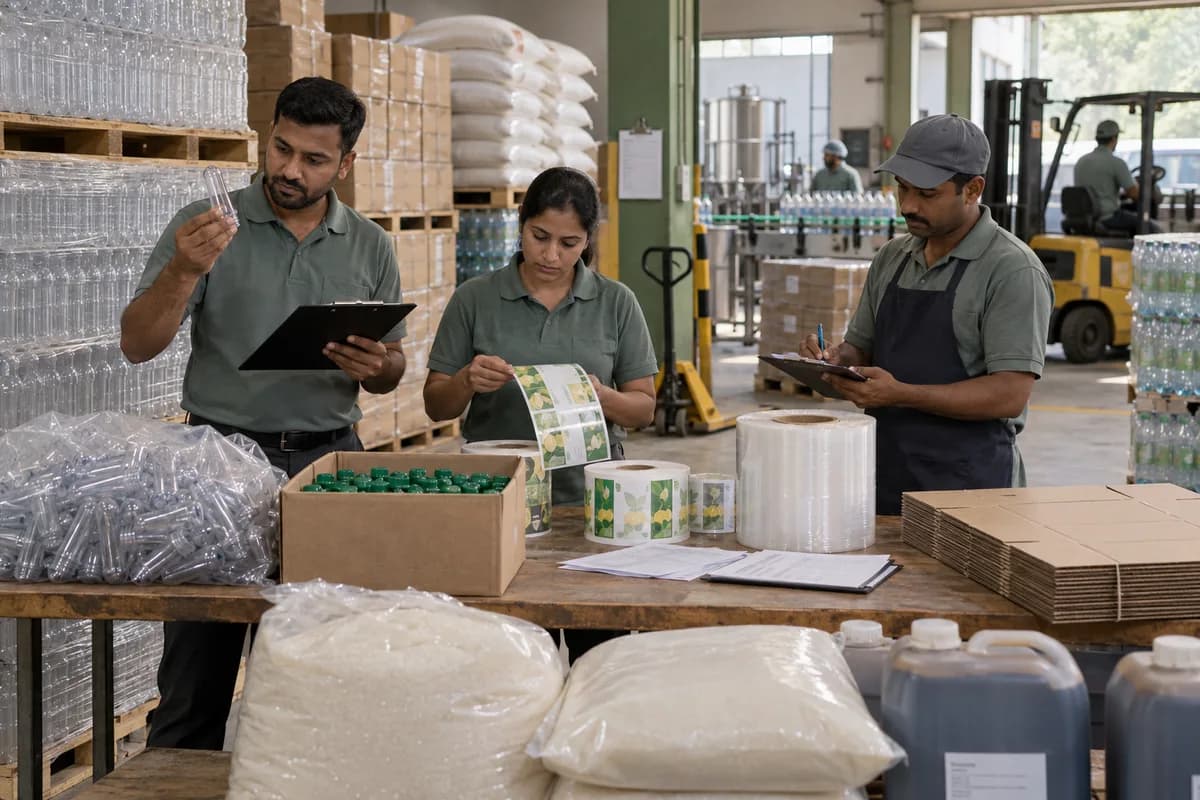
Does this function belong in your operation?
Use when the business manufactures, assembles or prepares physical products.
Confirmed demand needs a production schedule.
The filling plan must connect distributor demand to blend availability, packaging and the actual line calendar. A sequence that looks possible in bottle counts can fail because the syrup tank, cap stock or changeover window is unavailable. Let the planner compare those constraints before releasing the run; the schedule is a decision record, not a machine-control instruction.
Bring the records the workflow depends on.
- Accepted demand by flavour and pack size
- Blend or syrup availability and usable packaging
- Filling-line and tank calendars
- Approved changeover and cleaning requirements
Outputs to check
- Proposed flavour and pack sequence by line
- Ingredient and packaging shortages against planned runs
- Demand affected by a moved or interrupted filling run
Follow the production planning workflow.
Use this sequence to compare your current process with the proposed module. Agree the owner, permission and exception at each step.
Who uses the module, and who approves?
Keep responsibilities distinct even when one person holds more than one role.
Decide how exceptions are handled.
These business rules belong in configuration and testing. A normal transaction alone does not demonstrate that the workflow is ready.
Can this work independently?
Planning needs demand, material definitions and capacity assumptions. These can be entered independently, but order, stock and work-order links keep the plan aligned with actuals. Releasing a plan does not issue material or record completed output; those execution steps need their own records.
Systems and records it connects with
- Bill of materials: Approved component quantities and production-definition versions.
- Work orders: Released production jobs, material issues and output records.
- Stock: Item-location quantities and authorised stock movements.
- Purchase orders: Authorised supplier commitments and open line balances.
Configure, test and introduce the workflow.
- Walk us through machines, ovens or lines and the shifts they run. A written map of capacity comes back.
- Tell us which items repeat daily. A set of standing quantities is returned for approval. Sales orders and stock arrive from your existing records. A trial plan appears for a sample day.
- Overlap for a while. The floor uses the screen while the whiteboard stays up, and differences are noted.
Check the result before rollout.
Apply these checks to a sample from the agreed workflow, then repeat with an exception. Keep the expected result beside the test record.
- Build a run sequence that exposes a tank or packaging conflict before release.
- Move one filling run and identify the distributor orders whose supply changes.
- Replan an interrupted run using completed output and remaining materials without duplicating demand.
How the business operates.
You buy preforms, caps, labels, sugar, concentrate and treated water, blend and fill in batches, and sell to distributors, retail outlets and institutions. Your result depends on breakage, empties returned and what each line actually filled in a shift.
The records that hold the operation together.
- Ingredient and packaging lot receipts
- Blend version, batch sheet and filling record
- Quality readings and release decision
- Finished-goods batch and dispatch note
Operational bottlenecks to check
A batch cannot be traced to its materials
The batch code, the syrup sheet and the cap and label lots sit in different registers, and one of them is missing when a complaint comes in. The distributor waits for answers.
Empties and deposits do not reconcile
Crates, returnable bottles and jars go out on vans and come back short, while the deposit ledger is a notebook. The team cannot reconcile the containers held by each outlet.
How work flows across this business
This module sits within a wider operating process. Use the sequence to identify the other teams and records affected by a change.
1. Receive and identify materials
Receive ingredients, preforms, caps and labels with their supplier references. Keep rejected or unapproved lots apart from material available to production.
2. Prepare the blend and line
Release a batch against the approved formulation and pack specification. Record ingredient issues and the line-cleaning record required by the plant.
3. Fill, inspect and release
Capture filled packs, rejects and the quality readings selected by the quality team. A named release decision makes the batch available for dispatch.
4. Load customer and route orders
Allocate released batches to distributor or route orders. Record the quantity and returnable containers loaded against each delivery.
5. Reconcile returns and payment
Record accepted deliveries, damaged stock, empties returned and deposits. Accounts reconciles the resulting invoice and collection records.
Industry reports to connect with
- Batch yield and packaging consumption
- Filling rejects by line and reason
- Stock by batch and remaining shelf life
- Returnable containers and deposits by customer
Questions before implementation.
When should beverage manufacturers consider production planning?
Use when the business manufactures, assembles or prepares physical products. Confirmed demand needs a production schedule.
What should we bring to the requirements discussion?
Bring anonymised examples of Accepted demand by flavour and pack size; Blend or syrup availability and usable packaging; Filling-line and tank calendars; Approved changeover and cleaning requirements. Show who creates, checks and changes each record. Use only records from an activity that meets the suitability conditions above.
Does this replace our existing business software?
The starting point is your current system and the gap you need to close. Plan manufacturing quantities against demand, materials and capacity. Configuration, a connected module or a custom build are evaluated against that gap before a replacement is proposed.
What is outside this module?
Production output depends on actual materials, equipment and execution. The plan records assumptions and revised decisions as those conditions change.
How are scope, price and rollout decided?
The proposal follows a review of your records, user roles, branches and existing software. Data migration, connections, training and support are scoped separately where needed. Build a run sequence that exposes a tank or packaging conflict before release. Use this check when reviewing the first working version.
Discuss production planning for your business.
Tell us which workflow needs attention and which systems your team uses. The next step is a requirements discussion and a written scope.
What happens after you share your requirements
- We review your brief and the systems you already use.
- We clarify the workflow, missing information and the work to consider first.
- The proposed scope sets out the deliverables, responsibilities and dependencies.
- Review the scope and commercial terms before deciding whether to proceed.
Start with your requirements
Describe your current process, the people involved and the change you need. Start with the details you know; we can clarify the rest together.
Share your requirements