Job Cards for Car wash centres
Record a staffed vehicle wash from intake and approved cleaning through checked handback.
Does this function belong in your operation?
Use where staff take custody of vehicles and need a work record beyond the queue or booking.
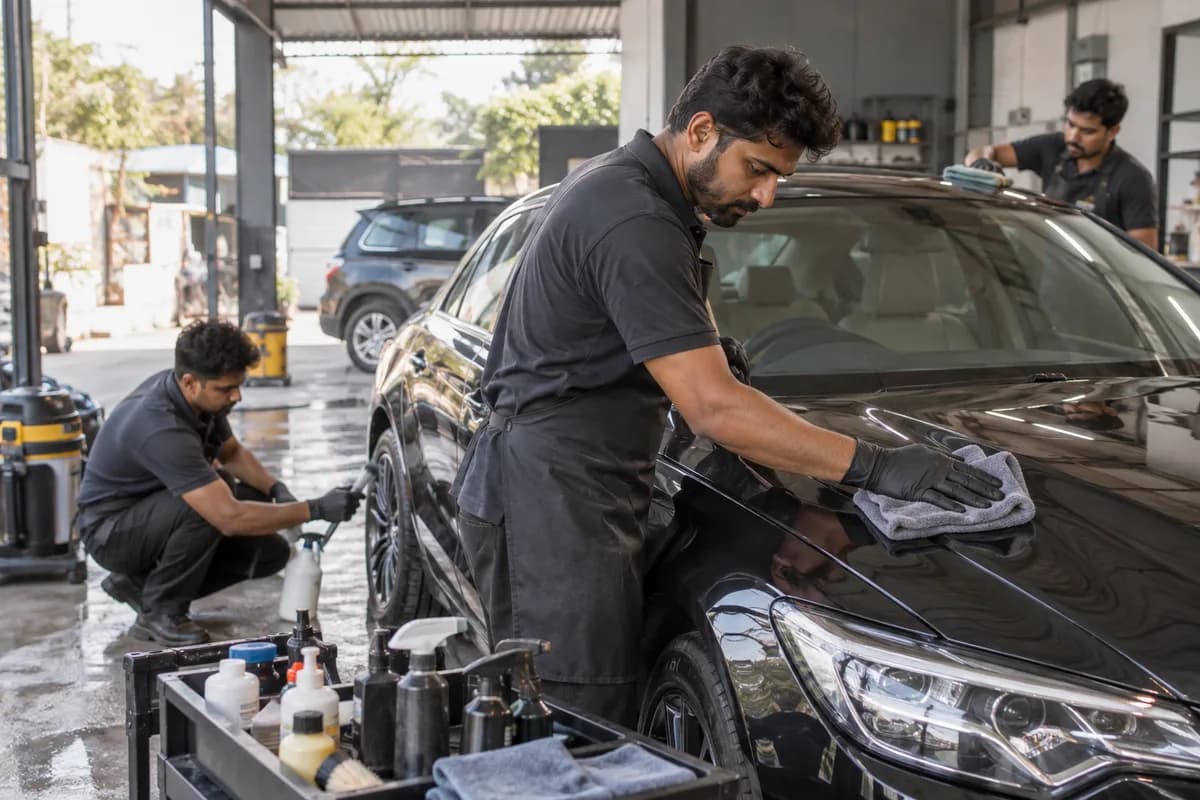
A staffed wash centre accepts a vehicle for cleaning.
A staffed wash needs a brief vehicle visit record that survives the move from reception to wet bay and back to the cashier. Record what was accepted, who held the keys, which tasks were completed and what the supervisor checked. Do not turn a missed area into a new paid wash or erase intake evidence when the customer returns with a concern.
Bring the records the workflow depends on.
- Vehicle and customer visit reference
- Intake condition, declared items and permitted photo references
- Accepted wash service, add-ons and price decision
- Assigned bay, attendant and key custody
Outputs to check
- Vehicle cleaning and custody record
- Checked work list with unfinished or repeated tasks
- Handback and approved billing inputs
Follow the job cards workflow.
Use this sequence to compare your current process with the proposed module. Agree the owner, permission and exception at each step.
Who uses the module, and who approves?
Keep responsibilities distinct even when one person holds more than one role.
Decide how exceptions are handled.
These business rules belong in configuration and testing. A normal transaction alone does not demonstrate that the workflow is ready.
Can this work independently?
A visit card can work from entered customer and vehicle details. Scheduling allocates capacity; stock records consumables; billing applies approved charges. Completion of washing does not establish payment, customer acceptance or resolution of a damage report.
Systems and records it connects with
- Appointments: booked arrival and vehicle identifiers.
- Stock records: agreed consumable issues where recorded per visit.
- Invoicing: accepted service charges and entitlement references.
- Customer support: concerns linked to the original visit.
Configure, test and introduce the workflow.
- Walk one vehicle through reception, cleaning, checking and key return; agree the minimum fields staff can record at each point.
- Trial an added interior service, paused job and return complaint without overwriting the first visit.
- Match visit cards to the day’s handbacks and bills before replacing the existing record.
Check the result before rollout.
Apply these checks to a sample from the agreed workflow, then repeat with an exception. Keep the expected result beside the test record.
- Accepted services and later additions remain distinguishable.
- A repeat wash retains the original intake and work record.
- Key return, work completion and payment status are separate events.
How the business operates.
A car wash centre accepts a vehicle for an agreed wash or interior clean and returns it with the visit and payment recorded. A staffed bay needs a queue, custody and work checks; an unattended self-service installation needs equipment and payment-event records. Define the actual model first. Cleaning customer fleets does not mean operating them.
The records that hold the operation together.
- Vehicle visit number, registration, service choice and customer contact permission
- Intake condition record, restricted photo references, declared items and key handover
- Bay assignment, work status, completed add-ons and supervisor check
- Prepaid entitlement reference, redemption, invoice and payment allocation
Operational bottlenecks to check
Booked and walk-in queues collide
Track booked arrivals and walk-ins together. Equipment stops or delayed interior work need an updated queue and customer communication, not duplicate bay bookings.
Service choice changes inside the bay
Keep the original choice, accepted add-on and revised amount visible. This prevents an unaccepted service from reaching the bill and exposes work completed without a matching charge decision.
How work flows across this business
This module sits within a wider operating process. Use the sequence to identify the other teams and records affected by a change.
1. Accept the visit
Match a booked arrival to its reservation or create a walk-in queue entry. Confirm service, price, vehicle restrictions and capacity. Record declined or deferred work instead of assigning an unsuitable bay.
2. Inspect and take custody
Capture the agreed condition observations and permitted photographs before work. Identify the staff member holding the keys and note declared property. Resolve a scope question or unexpected condition with the customer before proceeding.
3. Assign and perform the wash
Allocate the accepted work to an available bay and attendant. Record start, pause and completion events. Additional interior work or another paid service needs explicit acceptance; a longer job must update the queue.
4. Check and handle rework
The bay lead compares completed tasks with the selected service and records remaining issues. A repeat wash stays linked to the original visit with the reason and person reviewing it, rather than appearing as another paid customer.
5. Bill and return the vehicle
Apply the price or entitlement, record the bill and allocate confirmed payments. Return keys and recorded property to the authorised collector. Preserve unresolved complaints and follow-up separately from collection.
Industry reports to connect with
- Vehicles waiting, in work and awaiting collection by bay
- Completed visits and repeat washes by service and reason
- Approved charges, package redemptions, receipts and unsettled fleet bills
- Consumables used, count differences and equipment downtime
Questions before implementation.
When should car wash centres consider job cards?
Use where staff take custody of vehicles and need a work record beyond the queue or booking. A staffed wash centre accepts a vehicle for cleaning.
What should we bring to the requirements discussion?
Bring anonymised examples of Vehicle and customer visit reference; Intake condition, declared items and permitted photo references; Accepted wash service, add-ons and price decision; Assigned bay, attendant and key custody. Show who creates, checks and changes each record. Use only records from an activity that meets the suitability conditions above.
Does this replace our existing business software?
The starting point is your current system and the gap you need to close. Record a staffed vehicle wash from intake and approved cleaning through checked handback. Configuration, a connected module or a custom build are evaluated against that gap before a replacement is proposed.
What is outside this module?
Vehicle cleaning quality, handling and equipment suitability remain the centre’s responsibility. Mechanical diagnosis, spare parts and repair certification are separate scope.
How are scope, price and rollout decided?
The proposal follows a review of your records, user roles, branches and existing software. Data migration, connections, training and support are scoped separately where needed. Accepted services and later additions remain distinguishable. Use this check when reviewing the first working version.
Related functions for car wash centres.
Discuss job cards for your business.
Tell us which workflow needs attention and which systems your team uses. The next step is a requirements discussion and a written scope.
What happens after you share your requirements
- We review your brief and the systems you already use.
- We clarify the workflow, missing information and the work to consider first.
- The proposed scope sets out the deliverables, responsibilities and dependencies.
- Review the scope and commercial terms before deciding whether to proceed.
Start with your requirements
Describe your current process, the people involved and the change you need. Start with the details you know; we can clarify the rest together.
Share your requirements