Business solutions for Contract farming companies
Explore software for work such as “Grower enrolment by village and crop”. Review each business function below, including when it fits and what to check before implementation.
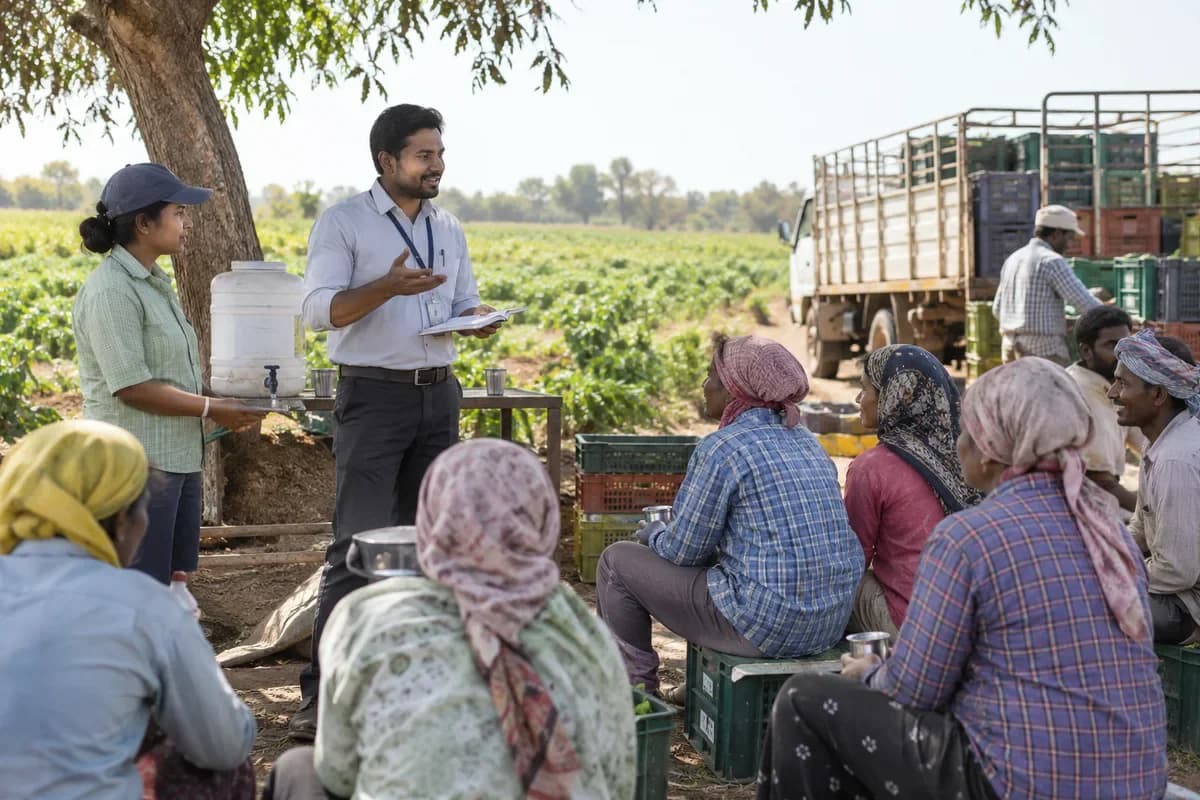
How the business operates.
The company never owns the field. It owns an agreement with several hundred growers, each holding a small plot of gherkin or sugarcane, a seed pack, a fertiliser advance and a promised delivery date. Most of that promise lives in a ledger at the area office, beside a stack of signed agreements, and the ledger ages faster than the crop.
The records that hold the operation together.
- Grower registry. Hold each grower’s identity, bank account, cluster and field officer, with the signed agreement, land record copy and nominee details attached to the file. Nothing lives in a cabinet.
- Agreement terms. Record crop, season, price band, grade rules, delivery window and recovery terms as fields the weighbridge reads, and keep the dated history of every revision to those terms. Old terms never vanish.
- Plots and crop calendar. Register each plot with area, variety, sowing date and expected harvest week, and let the calendar show which clusters are sowing, flowering or ready for the first picking. Harvest weeks drive trucks.
- Input store and issue. Receive seed, fertiliser and crop protection by batch number, issue them to growers against their agreements, and show the stock remaining in each store. Issues carry batch numbers.
- Advance ledger. Every input issue and cash advance adds to the grower’s balance, and the ledger shows what remains to recover and from which crop, season or cluster. Exposure is visible early.
- Field officer visits. Log visit date, crop stage, pest or disease note, photographs and a yield estimate for each plot, and let visits roll up into a forecast for the cluster. Officers see their own plots.
- Collection centre weighment. Capture truck number, lot, gross and tare weights, moisture or grade readings and rejected quantity at the weighbridge, then print a slip the grower can read and keep. Slips follow the agreement.
- Grade and price rules. Apply the price band and the grade deductions from the grower’s agreement to each weighment, so the slip and the later payment follow the same signed terms. No clerk decides alone.
Operational bottlenecks to check
Agreements are in cabinets, not linked
The price band, grade rules and delivery window sit on a signed paper, and a collection centre clerk applies them from memory. Growers dispute the slip.
Input advances are lost in a ledger
Seed, fertiliser and sprays go out in the pre-season rush, and weeks later finance cannot tell how much each grower owes before settlement. Recovery becomes a guess.
Field officers keep their own notes
Visit observations, yield estimates and photographs stay on individual phones, so the procurement head plans trucks from guesses about how much each cluster will deliver. Trucks arrive empty or late.
Side selling goes unnoticed
A grower with a high market price sells outside the agreement, and the company learns of it only when delivery falls far below the estimate. The season is gone.
Settlement takes weeks to explain
A grower asks why the payment is lower than expected, and staff reassemble the weighment, grade deduction and advance recovery by hand from three separate sources. The grower waits outside.
Follow the work across teams.
This is a planning flow. Confirm the steps, owners and approval rules against your actual operation.
Roles and responsibility boundaries.
Reports your managers need.
- Agreements, area and expected volume by crop and cluster
- Input issues and advance balances by grower
- Field officer visits done against plan
- Forecast against procured weight, by cluster and week
- Grade deductions and rejected quantity by centre
- Settlements released with advance recovery
- Processor intake against centre totals, by lot
Connections to scope
- SMS
- Weighbridge indicator
- Bank payment file
- Accounting export
Confirm data access, record ownership and the exchange method for each connection. Inclusion here does not mean every connection is available in a standard package.
Setup decisions and adoption risks.
Use these requirements to plan phases, data migration and user training. Agree the release sequence after reviewing your current systems.
Limitations to settle before implementation
- A buyer that purchases only on the open market with no agreements, advances or field staff does not need this.
- Greenhouse growers who run their own crop cycles will find Hydroponic and Greenhouse Farm Management Software closer.
Modules to consider first.
These functions connect to the operating model above. Confirm each one against the work your business actually runs.
Choose the operation you want to improve.
Use these activities to explain your scope. Your business does not need every function in the directory.
- Grower enrolment by village and crop
- Buyer visit and sample lot programme
- Seed and input supply tie-ups
- Traceability records for buyers
- Grower payment and trust stories
- Second crop and rotation contracts
Explore the business functions.
Production, stock, fleet and recurring billing functions apply only where your business runs those activities. Read the suitability conditions on each page.
Manufacturing
Documents
Finance & Accounting
Procurement
Inventory Management
Project Management
Assets and Fleet
Start with the problem your team can describe.
Bring a sample record and show where information is copied, missed or waiting for approval. Scope the first useful change from there.
What happens after you share your requirements
- We review your brief and the systems you already use.
- We clarify the workflow, missing information and the work to consider first.
- The proposed scope sets out the deliverables, responsibilities and dependencies.
- Review the scope and commercial terms before deciding whether to proceed.
Start with your requirements
Describe your current process, the people involved and the change you need. Start with the details you know; we can clarify the rest together.
Share your requirements