Business solutions for Home textile manufacturers
Explore software for work such as “A range book with swatch, colour and care details”. Review each business function below, including when it fits and what to check before implementation.
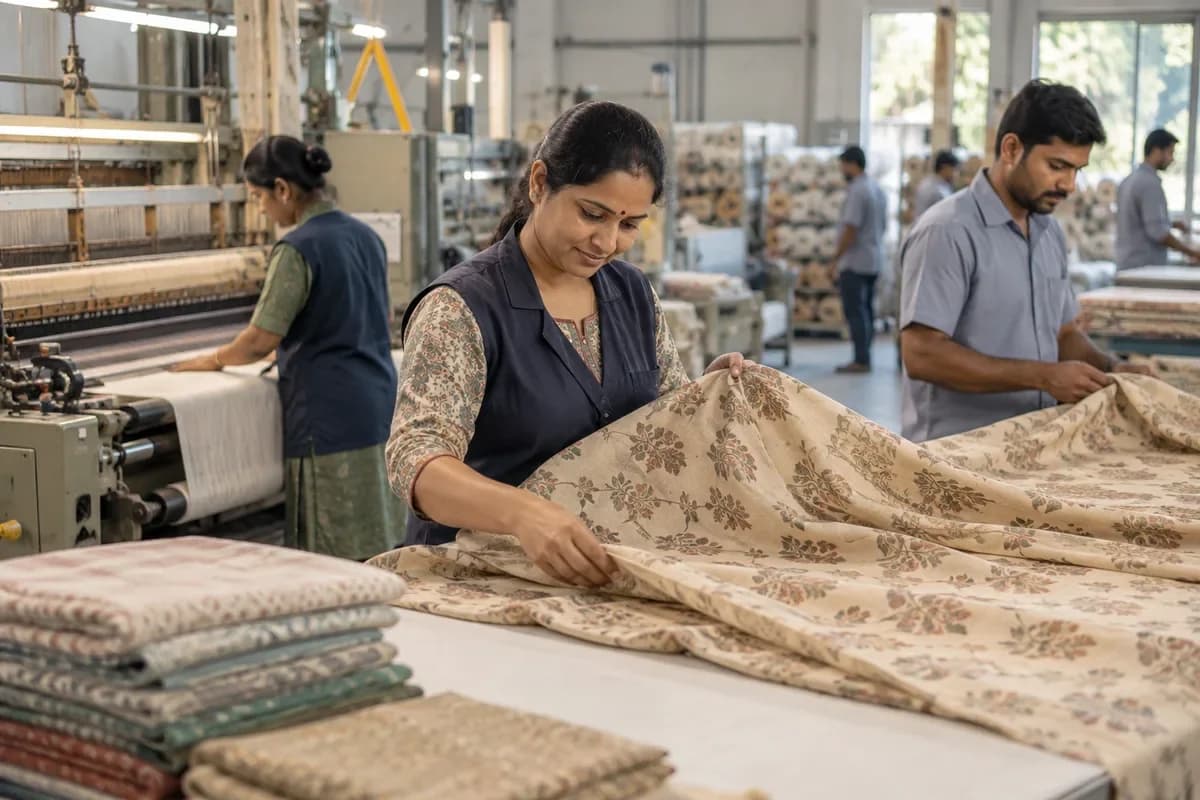
How the business operates.
A home textile order is a programme. A retailer asks for a bed set in four colours, each made of a fitted sheet, a flat sheet and pillowcases, and each with its own label, barcode and carton mark. A towel buyer cares about weight per dozen, pile and border. Detail rules.
The records that hold the operation together.
- Buyer programmes and purchase orders. Hold each programme by design, size and colour, with the set composition, label rules and delivery windows belonging to that buyer.
- Lab dip and sample approvals. Record each lab dip, strike-off and pre-production sample with its approval date and keep the approved shade on the order.
- Yarn and fabric stock. Receive yarn and greige fabric by lot, issue it to an order, and see what is free and what is reserved for a programme.
- Weaving, knitting and dyeing records. Record loom or knitting output, dye lot, shade check and shrinkage so bulk fabric can be matched to the approved dip.
- Fabric inspection and cutting. Log defects per roll, plan lays against the set composition and follow pieces cut by colour and size.
- Sewing and towel lines. Capture pieces by section, hemming, borders and closures, with towel weight per dozen checked by lot and rejects counted apart from rework.
- Set completion before packing. Show which sets are complete and which piece is short, so a missing pillowcase is chased before the packing table.
- Outside printing, embroidery and washing. Dispatch pieces for printing, embroidery or washing at another unit, then set the returned count and rejects beside the quantity sent.
Operational bottlenecks to check
Set composition is checked at packing
A bed set needs a fitted sheet, a flat sheet and pillowcases in the same colour. A missing pillowcase is found at the packing table, long after the fabric was cut.
Approvals are given by email
A lab dip, strike-off or pre-production sample is approved in a message. Weeks later the dye house cannot show which approval governs the bulk.
Towel weights drift
A towel buyer specifies weight per dozen. Pile height, yarn count and loop density move during the run, and the checks are made after the lot is finished.
Labels and cartons carry the wrong data
Retailer barcodes, size labels and carton marks are typed from a purchase order. A wrong digit sends a pallet to the wrong store or holds it at the port.
Outside processes disappear from view
Printing, embroidery or washing is done at another unit. Pieces leave on a slip, and the returned count is set against it only when the month’s accounts are closed.
Follow the work across teams.
This is a planning flow. Confirm the steps, owners and approval rules against your actual operation.
Roles and responsibility boundaries.
Reports your managers need.
- Pieces cut, sewn and packed by programme and colour
- Sets complete and sets short by item
- Dye lots and approvals by order
- Towel weight checks by lot
- Outside unit pieces sent against returned
- Rejects and rework by section
- Shipments by container and delivery window
Connections to scope
- Accounting export
- Barcode or label printer
- Roll inspection machine data
- Messaging for buyer updates
- Shipping documents export
Confirm data access, record ownership and the exchange method for each connection. Inclusion here does not mean every connection is available in a standard package.
Setup decisions and adoption risks.
Use these requirements to plan phases, data migration and user training. Agree the release sequence after reviewing your current systems.
Limitations to settle before implementation
- A small unit stitching to walk-in orders can keep an order book and a stock register.
- A yarn spinner will find the yarn product closer to its work than a made-up goods factory.
Modules to consider first.
These functions connect to the operating model above. Confirm each one against the work your business actually runs.
Choose the operation you want to improve.
Use these activities to explain your scope. Your business does not need every function in the directory.
- A range book with swatch, colour and care details
- Tracking of swatches sent and projects followed up
- Hotel, hospital and contractor quotation follow-up
- Shade approval records for repeat lots
- A reorder list and a simple order channel for dealers
- Cross-selling across the range to existing buyers
- Direct export buyer introductions beyond agents
- IndiaMART and trade portal listings with real photos
Explore the business functions.
Production, stock, fleet and recurring billing functions apply only where your business runs those activities. Read the suitability conditions on each page.
Retail and POS
Manufacturing
Batch and Serial Tracking
Trace goods using batch identifiers or individual serial numbers.
View workflow and suitability →Job Work Management
Track material sent to an outside processor and returned after work.
View workflow and suitability →Production Planning
Plan manufacturing quantities against demand, materials and capacity.
View workflow and suitability →Quality Control
Record specified inspections and the disposition of checked goods.
View workflow and suitability →
Human Resources
Procurement
CRM
Start with the problem your team can describe.
Bring a sample record and show where information is copied, missed or waiting for approval. Scope the first useful change from there.
What happens after you share your requirements
- We review your brief and the systems you already use.
- We clarify the workflow, missing information and the work to consider first.
- The proposed scope sets out the deliverables, responsibilities and dependencies.
- Review the scope and commercial terms before deciding whether to proceed.
Start with your requirements
Describe your current process, the people involved and the change you need. Start with the details you know; we can clarify the rest together.
Share your requirements