Work Order Management for Material handling equipment manufacturers
Track a production job from material issue to completed output.
Does this function belong in your operation?
Use when physical production needs a job-level record of materials and output.
A production plan releases a specific job.
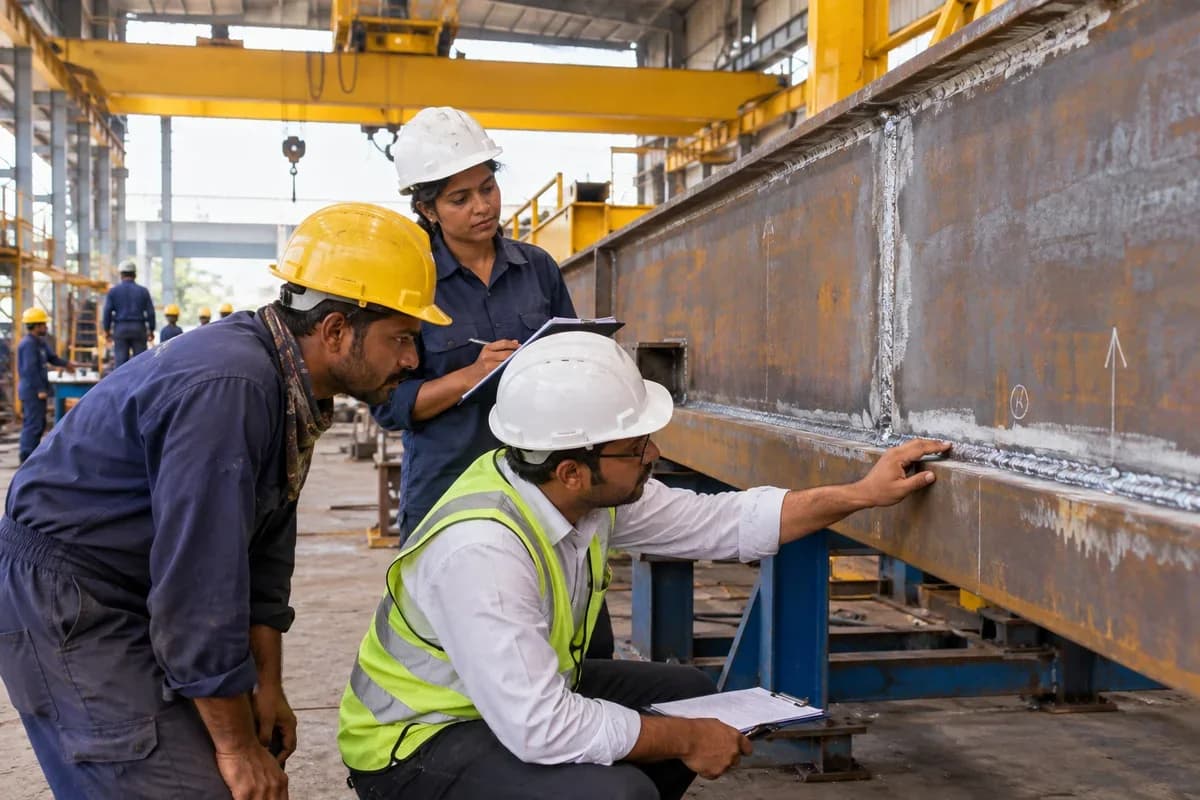
A work order releases the mast channel to burning, welding and then the carriage build, with a due date for each stage. Painting and hydraulic fitting follow. Delays at the welding bay show on the board.
Bring the records the workflow depends on.
- Required output
- Approved material list
- Process steps and due dates
Outputs to check
- Released production-job record
- Material and output reconciliation
- Work-in-progress and variance list
Follow the work order management workflow.
Use this sequence to compare your current process with the proposed module. Agree the owner, permission and exception at each step.
Who uses the module, and who approves?
Keep responsibilities distinct even when one person holds more than one role.
Decide how exceptions are handled.
These business rules belong in configuration and testing. A normal transaction alone does not demonstrate that the workflow is ready.
Can this work independently?
A work order needs an output definition and process instructions. It can use entered materials and progress, but bill-of-materials, stock and quality links make execution traceable. Sales orders provide demand; closing production is not the same as dispatching or invoicing the finished goods.
Systems and records it connects with
- Bill of materials: Approved component quantities and production-definition versions.
- Production planning: Demand, planned quantities and resource or material constraints.
- Stock: Item-location quantities and authorised stock movements.
- Job work delivery notes: Material dispatch and return references for outside processing.
Configure, test and introduce the workflow.
- Tell us the stages a job passes through, in your words. A stage list comes back to confirm.
- Sales orders are connected, and so is the bill of materials. A sample work order draws on each. A screen shows jobs by stage. The supervisor tries it beside the whiteboard.
- Supervisors and the store use live work orders. The whiteboard is retired after a trial period.
Check the result before rollout.
Apply these checks to a sample from the agreed workflow, then repeat with an exception. Keep the expected result beside the test record.
- Output links to its work order.
- Material usage is traceable.
- Unfinished quantities remain visible.
How the business operates.
A lifting machine has one job. It must carry a stated weight without failing, and everything in the workshop, from the profile-cut plate to the latched hook, exists to support that promise.
The records that hold the operation together.
- Enquiries and duty capture. Log each enquiry with capacity, lift height, floor type, aisle width and shift pattern, and keep the bay photographs and layout sketches the buyer sent.
- Quotations by rated load. Price standard models and specials from your own tables for mast height, fork length, battery pack and guarding, and keep every revision on file. Buyers can compare rounds.
- Drawings for specials. Hold the drawing and parts list of a non-standard unit under a revision letter, so the workshop builds the version that was quoted. Nothing drifts at the bench.
- Steel plate and tube store. Receive plate, box tube and channel with mill certificate numbers, then issue them against the unit being cut, and return remnants to the rack with their length.
Operational bottlenecks to check
Capacity is quoted but never confirmed at build
The quotation says one tonne on a two-stage mast, but the unit leaving the bay carries a lighter fork arm because stock ran out. The buyer is never told.
Proof tests live in notebooks
Test mass, hold period and result sit on a sheet kept by the tester; a buyer’s auditor asks for it a year later and nobody finds it. The test is gone.
How work flows across this business
This module sits within a wider operating process. Use the sequence to identify the other teams and records affected by a change.
1. Enquiry and duty
The enquiry records capacity, lift height, floor type, aisle width and shift pattern, and a sales engineer is named against it. Nothing is left to the first phone call.
2. Quotation
A model is picked from the list, or a special is sketched, and options such as chain guards, battery pack and delivery are priced. Every revision stays on file for the next round.
3. Order and release
A confirmed order opens a unit record, and the drawing, parts list and component picks, such as load chain, hook block and lift cylinder, go to the workshop together.
4. Fabrication and assembly
Plate and box tube are cut and welded, the drive and chain are fitted, and a lead signs off each stage. Painting comes last, after the weld inspection.
5. Test and nameplate
The unit is loaded to its stated proof weight and held, the result and tester are saved, and the nameplate is printed from that same record.
6. Dispatch, installation and service
Delivery, commissioning and the first inspection date are written against the serial, and yearly visits are then scheduled from the customer register.
Industry reports to connect with
- Units in build, split by stage and model
- Steel, chain and hook issues by serial
- Load tests done, passed and awaiting
- Quotations won, lost and still open, by duty class
Questions before implementation.
When should material handling equipment manufacturers consider work order management?
Use when physical production needs a job-level record of materials and output. A production plan releases a specific job.
What should we bring to the requirements discussion?
Bring anonymised examples of Required output; Approved material list; Process steps and due dates. Show who creates, checks and changes each record. Use only records from an activity that meets the suitability conditions above.
Does this replace our existing business software?
The starting point is your current system and the gap you need to close. Track a production job from material issue to completed output. Configuration, a connected module or a custom build are evaluated against that gap before a replacement is proposed.
What is outside this module?
This is a production work order; field repairs and customer visits belong in job cards.
How are scope, price and rollout decided?
The proposal follows a review of your records, user roles, branches and existing software. Data migration, connections, training and support are scoped separately where needed. Output links to its work order. Use this check when reviewing the first working version.
Related functions for material handling equipment manufacturers.
Discuss work order management for your business.
Tell us which workflow needs attention and which systems your team uses. The next step is a requirements discussion and a written scope.
What happens after you share your requirements
- We review your brief and the systems you already use.
- We clarify the workflow, missing information and the work to consider first.
- The proposed scope sets out the deliverables, responsibilities and dependencies.
- Review the scope and commercial terms before deciding whether to proceed.
Start with your requirements
Describe your current process, the people involved and the change you need. Start with the details you know; we can clarify the rest together.
Share your requirements