Quality Control for Milk collection centres
Record specified inspections and the disposition of checked goods.
Does this function belong in your operation?
Use when goods or production stages require documented checks before release.
Material or output reaches an agreed inspection stage.
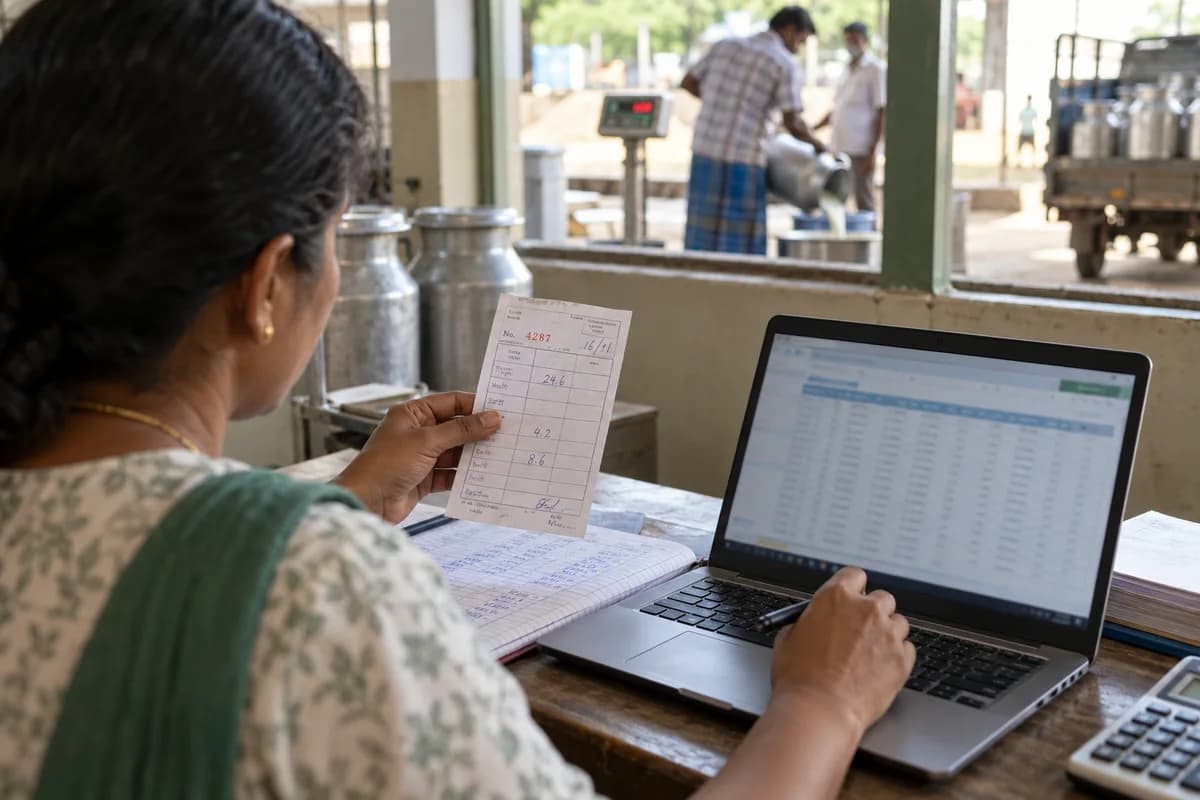
A clot or alcohol test, a fat reading and a temperature check are saved for each supplier’s can. Rejected milk carries a reason. A supplier with repeated rejections is listed.
Bring the records the workflow depends on.
- Inspection specifications
- Sampling and acceptance rules
- Authorised reviewers
Outputs to check
- Inspection readings and evidence
- Hold, release or rejection record
- Nonconformance follow-up list
Follow the quality control workflow.
Use this sequence to compare your current process with the proposed module. Agree the owner, permission and exception at each step.
Who uses the module, and who approves?
Keep responsibilities distinct even when one person holds more than one role.
Decide how exceptions are handled.
These business rules belong in configuration and testing. A normal transaction alone does not demonstrate that the workflow is ready.
Can this work independently?
Quality records can be maintained independently against identifiable receipts or jobs. Inventory and production connections must enforce any hold or release decision. The module records authorised checks; it does not select a regulatory standard or replace a qualified inspector's judgement.
Systems and records it connects with
- Work orders: Released production jobs, material issues and output records.
- Goods receipt: Counted, accepted and rejected supplier-delivery quantities.
- Purchase returns: Approved supplier-return quantities and adjustment references.
- Batch and serial tracking: Lot or unit identifiers carried through stock movements.
Configure, test and introduce the workflow.
- Show us where checks happen now. A note names the checkpoints and the parameters to record.
- Provide limits and your list of rejection reasons. A test lot can then be checked on the trial screen. Checkers use it at a station for a trial run. Their remarks return as changes.
- Checkers, production and purchase each practise their part. Each group gets a printed card. Other stations join as the trial station settles. The team reviews rejection reasons together.
Check the result before rollout.
Apply these checks to a sample from the agreed workflow, then repeat with an exception. Keep the expected result beside the test record.
- Failed items follow the agreed hold rule.
- Results retain the specification version.
- Release decisions identify the reviewer.
How the business operates.
A collection centre is a short, busy window. Suppliers queue with cans, the pan scale reads, a sample goes to the tester, and a slip is written for a person who has walked four kilometres at dawn. Seconds per supplier. Errors here are paid for later.
The records that hold the operation together.
- Supplier register and pass book. One record per supplier holds village or route, animals in milk, bank details and payment cycle, and the pass book lists each shift’s quantity, test and amount.
- Milk weighing and test entry. Litres or kilograms, fat and solids-not-fat are recorded at the weighing platform from an analyser file or by key, and the shift, can count and tester are stored with the line.
- Rate chart and price slabs. The plant’s rate chart by fat and solids-not-fat is held with bonus slabs and effective dates, and every entry takes the row that applied on its day. Old shifts stay as they were.
- Rejection and quality log. Clot, alcohol and adulteration results are recorded with the rejected cans and the reason given, and suppliers with repeated rejections appear on a review list for the manager.
Operational bottlenecks to check
The pass book and the register disagree
Each supplier holds a pass book, and the clerk keeps a register. A smudged line, a skipped shift or a sheet lost in the rain leaves two versions of the same morning, and neither can be proved. Each side trusts its own.
Rates are applied by memory
The rate chart has changed three times this season, and the clerk reads from a laminated sheet. A wrong row pays one supplier too little and another too much for months.
How work flows across this business
This module sits within a wider operating process. Use the sequence to identify the other teams and records affected by a change.
1. Supplier arrives
The supplier is found by code or name. Animals in milk, cycle, bank details and open balance appear on the weighing screen before the can is lifted onto the scale.
2. Weighing and testing
Quantity is recorded and a sample is drawn. Fat and solids-not-fat come from the analyser or by key, and a failed clot or alcohol test marks the can as rejected before any litre is added.
3. Rate and amount
The chart row is picked automatically. A slip is printed or a message is sent with the quantity, fat, rate and amount, and the pass book picks up the same figures without anyone copying them.
4. Cooling
Milk goes to the cooler. Readings are logged at set times by the person who took them, and any reading above your limit is flagged to the manager.
5. Dispatch
Each tanker gets a seal number. The plant’s receipt figures are entered beside the load when they arrive, so a short delivery shows up as a difference to chase.
6. Payment cycle
At cycle end, entries are totalled, feed dues and advances are deducted, and the bank list or cash payout sheet goes out with a statement for each supplier.
Industry reports to connect with
- Litres and average fat and solids by supplier, shift and route
- Rejected cans by supplier and reason
- Cooler readings above limit, with time and person
- Tanker loads against plant receipts, with differences
Questions before implementation.
When should milk collection centres consider quality control?
Use when goods or production stages require documented checks before release. Material or output reaches an agreed inspection stage.
What should we bring to the requirements discussion?
Bring anonymised examples of Inspection specifications; Sampling and acceptance rules; Authorised reviewers. Show who creates, checks and changes each record. Use only records from an activity that meets the suitability conditions above.
Does this replace our existing business software?
The starting point is your current system and the gap you need to close. Record specified inspections and the disposition of checked goods. Configuration, a connected module or a custom build are evaluated against that gap before a replacement is proposed.
What is outside this module?
The software records your inspection process and does not certify product safety or regulatory conformity.
How are scope, price and rollout decided?
The proposal follows a review of your records, user roles, branches and existing software. Data migration, connections, training and support are scoped separately where needed. Failed items follow the agreed hold rule. Use this check when reviewing the first working version.
Related functions for milk collection centres.
Discuss quality control for your business.
Tell us which workflow needs attention and which systems your team uses. The next step is a requirements discussion and a written scope.
What happens after you share your requirements
- We review your brief and the systems you already use.
- We clarify the workflow, missing information and the work to consider first.
- The proposed scope sets out the deliverables, responsibilities and dependencies.
- Review the scope and commercial terms before deciding whether to proceed.
Start with your requirements
Describe your current process, the people involved and the change you need. Start with the details you know; we can clarify the rest together.
Share your requirements