Attendance & Time Tracking for Painting contractors
Record working time, absence and approved attendance corrections.
Does this function belong in your operation?
Use when staff attendance or working time affects pay, deployment or reporting.
A shift starts, ends or needs correction.
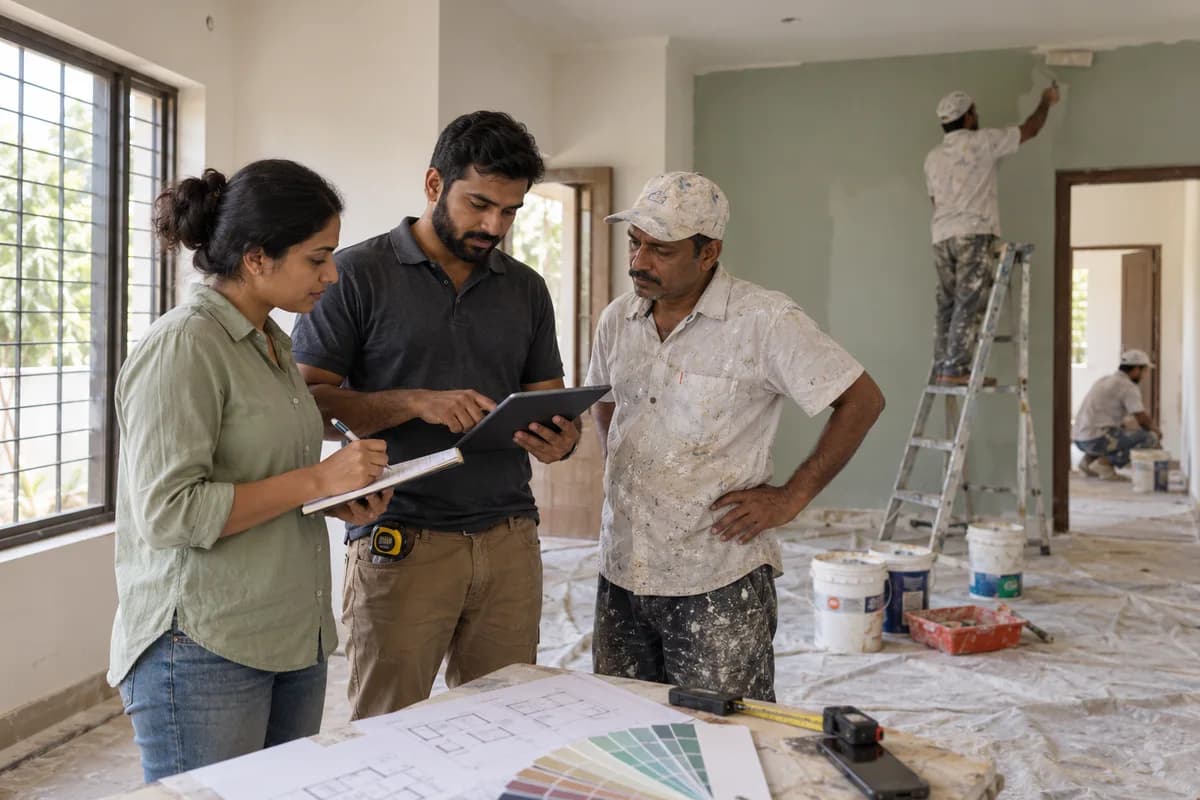
Foremen mark every painter as present, half day or absent when the gang reaches site. A painter who splits a day between two sites has the hours divided. Scaffold hands are marked separately.
Bring the records the workflow depends on.
- Employee and shift list
- Attendance sources
- Overtime and correction rules
Outputs to check
- Approved attendance register
- Correction and overtime history
- Payroll-ready period totals
Follow the attendance & time tracking workflow.
Use this sequence to compare your current process with the proposed module. Agree the owner, permission and exception at each step.
Who uses the module, and who approves?
Keep responsibilities distinct even when one person holds more than one role.
Decide how exceptions are handled.
These business rules belong in configuration and testing. A normal transaction alone does not demonstrate that the workflow is ready.
Can this work independently?
Attendance can use manual entries or imported device records. Employee and shift identifiers are required; payroll, leave and project time are separate processes. Device integration must define how missing, duplicated or delayed events are reconciled before a period closes.
Systems and records it connects with
- Payroll management: Approved pay inputs, deduction calculations and payment instructions.
- Leave and holiday management: Approved absence and branch calendar information.
- Project time tracking: Approved task hours and their billable classification.
- Biometric attendance devices: Device event imports and rejected or duplicated attendance events.
Configure, test and introduce the workflow.
- We go through the register, the sheets and the machine reports in use today. You supply samples from a recent month. You get back a written note of how attendance flows.
- Shifts, grace periods, half day and overtime rules are listed in plain words. You confirm them. A rules sheet comes back that you can show staff. We look at the biometric model and at each place where marking happens. You say who marks where. A note returns on what connects directly and what needs a file.
- Last month’s records are loaded into a trial screen. The admin team compares the result with the sheet they really used. Differences are discussed. Supervisors and the admin team practise marking and correcting. You choose the start date. The old register retires after a clean month close.
Check the result before rollout.
Apply these checks to a sample from the agreed workflow, then repeat with an exception. Keep the expected result beside the test record.
- Overnight shifts use the correct dates.
- Corrections retain the approver.
- Approved totals reconcile with the attendance period.
How the business operates.
Painting looks simple and leaks money in the details: an extra putty coat nobody quoted, a shade changed after the first wall, and buckets that never came back from site.
The records that hold the operation together.
- Enquiries and site visits. Log enquiries by address and type of work, such as distemper, texture, enamel or waterproofing. Schedule the visit. Chase every quotation that nobody answered.
- Site measurement sheets. Record rooms, walls, ceilings, doors, windows and grills with their sizes. The system works out paintable area by surface, after deducting openings and adding the extra for cornices and beading.
- Quotations and estimates. Price interior, exterior, wood and metal work from your rate card by area and coat. The scope is written out, including crack filling and damp treatment.
- Paint and material planning. Work out wall putty, primer, emulsion, thinner, masking tape and sandpaper for a site from its measured area and number of coats, using the coverage figures you trust for each product.
Operational bottlenecks to check
Paint runs out mid-job
The estimate missed a putty coat, and a gang of six stops for half a day while somebody rides to the dealer. The whole day is lost.
Nobody recorded the shade code
The customer wants a touch-up after a leak repair, and the colour is now a guess with a fan deck. Nobody enjoys that call.
How work flows across this business
This module sits within a wider operating process. Use the sequence to identify the other teams and records affected by a change.
1. Enquiry and site visit
An enquiry arrives by phone, WhatsApp or a referral. It is logged with the address, the type of work and a date for the site visit.
2. Measurement and quotation
Rooms, walls, ceilings, doors and grills are measured at the visit. The quote prices putty, primer, emulsion or enamel by area and coat, and lists the scope so the client knows what is included.
3. Planning the site
After confirmation, tins and consumables are worked out from the measurements. Scaffolding is booked for exterior faces. A start date is set and a crew allotted.
4. Work at the site
The supervisor marks the crew present. Sanding, crack filling, putty, primer and each coat are ticked off room by room as the painters finish.
5. Stage billing
A bill is raised at each agreed stage, such as advance, after putty and primer, and on completion. Payments are recorded against it.
6. Handover and follow-up
The snag list is closed with touch-ups and the final bill is settled. Clients stay on record for repainting and for referrals to their neighbours.
Industry reports to connect with
- Quotations sent, won and pending by month
- Sites running and the stage each has reached
- Paint and material used against the plan for each site
- Painter days and wages payable
Questions before implementation.
When should painting contractors consider attendance & time tracking?
Use when staff attendance or working time affects pay, deployment or reporting. A shift starts, ends or needs correction.
What should we bring to the requirements discussion?
Bring anonymised examples of Employee and shift list; Attendance sources; Overtime and correction rules. Show who creates, checks and changes each record. Use only records from an activity that meets the suitability conditions above.
Does this replace our existing business software?
The starting point is your current system and the gap you need to close. Record working time, absence and approved attendance corrections. Configuration, a connected module or a custom build are evaluated against that gap before a replacement is proposed.
What is outside this module?
Location tracking, biometrics and payroll connections require agreed scope and appropriate permissions.
How are scope, price and rollout decided?
The proposal follows a review of your records, user roles, branches and existing software. Data migration, connections, training and support are scoped separately where needed. Overnight shifts use the correct dates. Use this check when reviewing the first working version.
Related functions for painting contractors.
Discuss attendance & time tracking for your business.
Tell us which workflow needs attention and which systems your team uses. The next step is a requirements discussion and a written scope.
What happens after you share your requirements
- We review your brief and the systems you already use.
- We clarify the workflow, missing information and the work to consider first.
- The proposed scope sets out the deliverables, responsibilities and dependencies.
- Review the scope and commercial terms before deciding whether to proceed.
Start with your requirements
Describe your current process, the people involved and the change you need. Start with the details you know; we can clarify the rest together.
Share your requirements