Business solutions for Snack manufacturers
Explore software for work such as “Distributor selection, onboarding and a reorder routine”. Review each business function below, including when it fits and what to check before implementation.
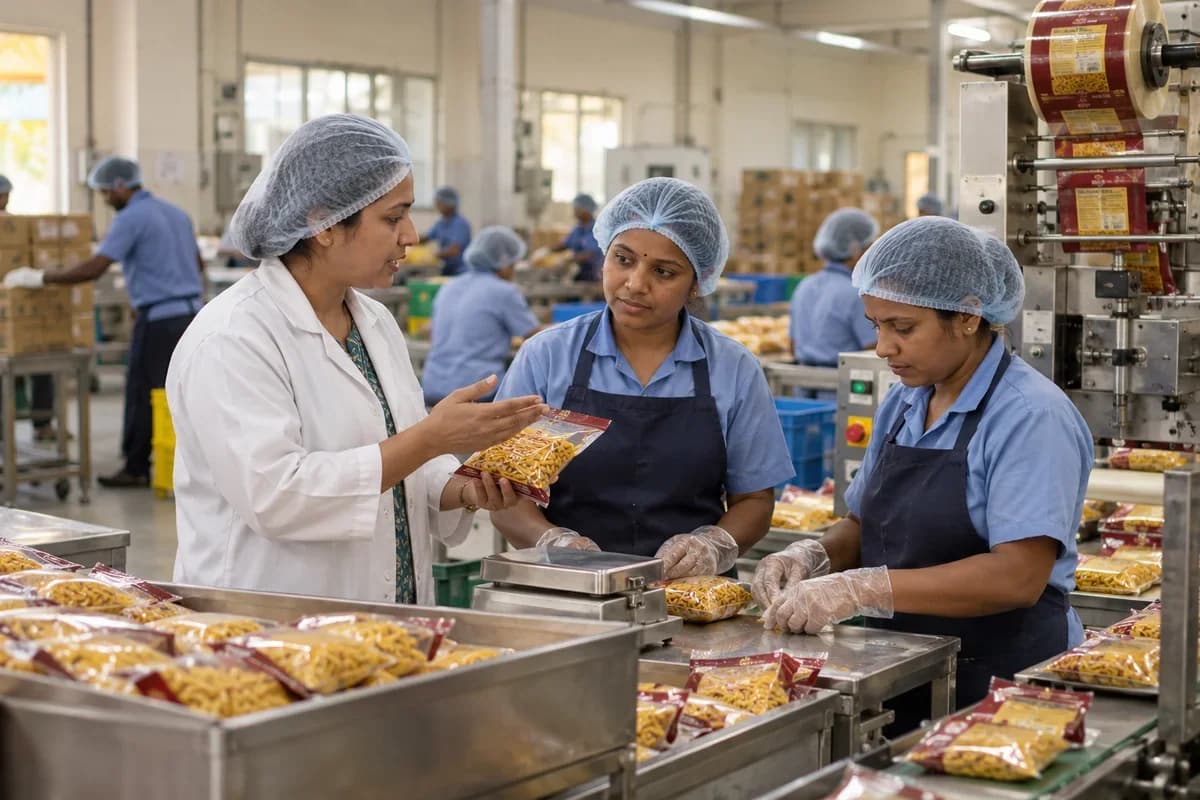
How the business operates.
Snacks are made fast and sold on weight, crispness and taste. A fryer that runs a few degrees off or a seasoning drum that is overfed changes the product, and the bag is sealed before anyone sees it.
The records that hold the operation together.
- Raw material and oil receipt. Book potatoes, flour, grits, pellets, oil, seasoning and film by lot, with quality checks recorded on arrival.
- Run planning by flavour. Turn distributor orders into runs by flavour and line, sequencing flavours to reduce clean-down time.
- Fryer and oven batch log. Record oil temperature, belt speed, fry time and oil age for each batch, and flag readings outside the limits.
- Oil change schedule. Keep the date and quality reading of each oil change per fryer, so oil is renewed before it affects the product.
- Seasoning recipes and usage. Store each flavour mix by weight and log powder and oil used in the drum, run by run.
- Bag weight and giveaway. Record checkweigher results, average weight and giveaway by weigher and run, with rejects counted.
- Seal, gas flush and detector checks. Log seal strength, nitrogen flush and metal detector tests on every fill run, with the operator named.
- Yield and waste by run. Read yield from raw material to packed bags, with peel loss, slice rejects, oil uptake and fines recorded.
Operational bottlenecks to check
Fryer settings drift and nobody notices
Oil temperature and belt speed are set by hand. A shift of settings shows only as colour or crunch on the packed bag, by which time several thousand bags of that flavour have already been sealed.
Seasoning is dosed by eye
Powder is scooped into the drum by the operator, and the quantity depends on who is on shift. Flavour strength differs from run to run.
Bag weight giveaway is unmeasured
Weighers are set high to avoid short packs. The extra grams across a day are never added up, even though together they are bags of product given away.
Raw material yield is not tracked
Potatoes lost in peeling and slicing, and oil absorbed in frying, are not weighed. The true cost per bag stays unknown.
Flavour changeovers waste product
The line is cleaned between seasonings, and the time and scrap are not logged. Planners cannot sequence flavours well.
Follow the work across teams.
This is a planning flow. Confirm the steps, owners and approval rules against your actual operation.
Roles and responsibility boundaries.
Reports your managers need.
- Yield and waste by run and flavour
- Bag giveaway by weigher and shift
- Fryer batches outside temperature limits
- Seasoning used against recipe
- Oil changes by fryer
- Cartons dispatched by flavour and distributor
Connections to scope
- Checkweigher data import
- Barcode and label printing
- Accounting export
Confirm data access, record ownership and the exchange method for each connection. Inclusion here does not mean every connection is available in a standard package.
Setup decisions and adoption risks.
Use these requirements to plan phases, data migration and user training. Agree the release sequence after reviewing your current systems.
Limitations to settle before implementation
- A shop frying and selling snacks by weight on the premises can manage without it.
- Makers of cooked meals and sauces will find Packaged Food Manufacturer Management Software closer.
Modules to consider first.
These functions connect to the operating model above. Confirm each one against the work your business actually runs.
Choose the operation you want to improve.
Use these activities to explain your scope. Your business does not need every function in the directory.
- Distributor selection, onboarding and a reorder routine
- Retailer pack: margin card, scheme sheet and display aid
- Festival and gifting order system with boxes and a closing date
- Secondary sales tracking for a few key towns
- WhatsApp catalogue for bulk and function orders
- Direct online sales for regional flavours
- Sampling at shops, offices and apartment complexes
Explore the business functions.
Production, stock, fleet and recurring billing functions apply only where your business runs those activities. Read the suitability conditions on each page.
Assets and Fleet
Manufacturing
Batch and Serial Tracking
Trace goods using batch identifiers or individual serial numbers.
View workflow and suitability →Bill of Materials
Define the materials and quantities needed for a manufactured item.
View workflow and suitability →Production Planning
Plan manufacturing quantities against demand, materials and capacity.
View workflow and suitability →Quality Control
Record specified inspections and the disposition of checked goods.
View workflow and suitability →Work Order Management
Track a production job from material issue to completed output.
View workflow and suitability →
Procurement
Inventory Management
Start with the problem your team can describe.
Bring a sample record and show where information is copied, missed or waiting for approval. Scope the first useful change from there.
What happens after you share your requirements
- We review your brief and the systems you already use.
- We clarify the workflow, missing information and the work to consider first.
- The proposed scope sets out the deliverables, responsibilities and dependencies.
- Review the scope and commercial terms before deciding whether to proceed.
Start with your requirements
Describe your current process, the people involved and the change you need. Start with the details you know; we can clarify the rest together.
Share your requirements