Asset AMC Tracking for Snack manufacturers
Track the maintenance cover and service dates of assets your business owns or uses.
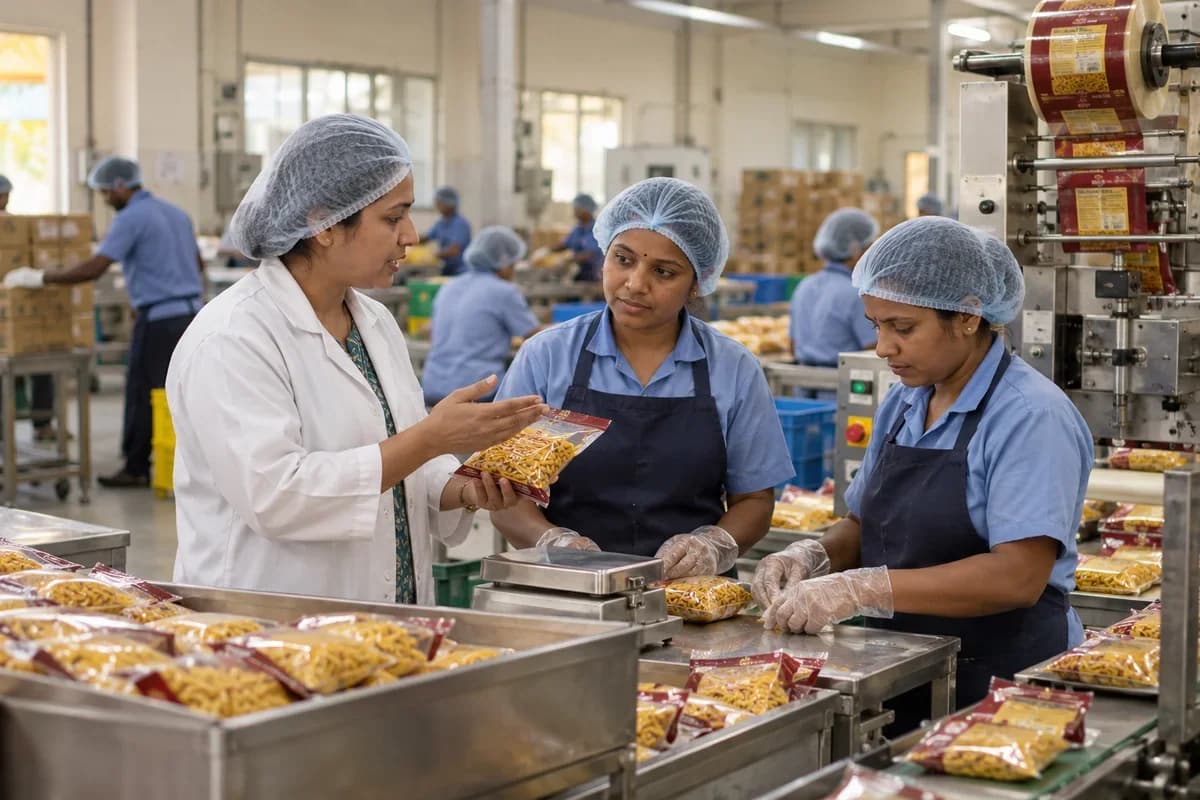
Does this function belong in your operation?
Use when important equipment has warranties or maintenance agreements to monitor.
An asset enters service or its maintenance cover changes.
Fryers, slicers, seasoning drums, weighers and sealers carry service contracts and spare lists. A weigher due for calibration is flagged. Vendor visits are booked against the production gap.
Bring the records the workflow depends on.
- Asset identifiers
- Warranty and service contracts
- Service dates and vendor contacts
Outputs to check
- Asset coverage and renewal register
- Service visit and fault history
- Uncovered or overdue asset list
Follow the asset amc tracking workflow.
Use this sequence to compare your current process with the proposed module. Agree the owner, permission and exception at each step.
Who uses the module, and who approves?
Keep responsibilities distinct even when one person holds more than one role.
Decide how exceptions are handled.
These business rules belong in configuration and testing. A normal transaction alone does not demonstrate that the workflow is ready.
Can this work independently?
The register can run independently using asset and contract details. Fixed-asset records supply identity, vendor records identify the service provider, and tickets capture faults. Accounts confirms supplier payment; a maintenance entry does not establish that the equipment is safe or ready to operate.
Systems and records it connects with
- Fixed asset register: Asset identifiers, custody and acquisition records.
- Vendor management: Approved supplier identities, terms and sensitive-change controls.
- Ticket management: Numbered requests, ownership and resolution history.
- Invoice management: Issued invoice references, line amounts and outstanding balances.
Configure, test and introduce the workflow.
- Share the asset list, even a rough sheet. Add whatever contract files you can find, and a note comes back listing machines with no contract or end date.
- Load contract and warranty dates, covered assets and the agreed maintenance frequency. Check the resulting calendar with the maintenance owner, including renewals, missed visits and equipment that has no current cover.
- Fault spotters learn the phone screen. They and the maintenance in-charge leave trained, with a guide in your own words. Complaints and visits are entered as they happen. When a renewal arrives, the machine’s history is printed beside the quotation.
Check the result before rollout.
Apply these checks to a sample from the agreed workflow, then repeat with an exception. Keep the expected result beside the test record.
- Contract dates match the attached agreement.
- Service history stays with the asset.
- Uncovered assets are distinguishable from covered assets.
How the business operates.
Snacks are made fast and sold on weight, crispness and taste. A fryer that runs a few degrees off or a seasoning drum that is overfed changes the product, and the bag is sealed before anyone sees it.
The records that hold the operation together.
- Raw material and oil receipt. Book potatoes, flour, grits, pellets, oil, seasoning and film by lot, with quality checks recorded on arrival.
- Run planning by flavour. Turn distributor orders into runs by flavour and line, sequencing flavours to reduce clean-down time.
- Fryer and oven batch log. Record oil temperature, belt speed, fry time and oil age for each batch, and flag readings outside the limits.
- Oil change schedule. Keep the date and quality reading of each oil change per fryer, so oil is renewed before it affects the product.
Operational bottlenecks to check
Fryer settings drift and nobody notices
Oil temperature and belt speed are set by hand. A shift of settings shows only as colour or crunch on the packed bag, by which time several thousand bags of that flavour have already been sealed.
Seasoning is dosed by eye
Powder is scooped into the drum by the operator, and the quantity depends on who is on shift. Flavour strength differs from run to run.
How work flows across this business
This module sits within a wider operating process. Use the sequence to identify the other teams and records affected by a change.
1. Purchase and receipt
Potatoes, flour, grits, pellets, oil, seasoning and film arrive by lot. Quality checks are recorded before they go to the store.
2. Run planning
Distributor orders and stock become a run plan by flavour and line, with changeovers sequenced to cut clean-down.
3. Base making and frying
Slicing, extruding or sheeting feeds the fryer or oven. Temperature, belt speed, time and oil are logged for the batch.
4. Seasoning
Powder and oil are dosed to the recipe in the drum. The quantity used is booked against the run.
5. Bagging and checks
Weigher, bagger, checkweigher and metal detector results are recorded per fill run, with rejects counted.
6. Cartons and dispatch
Cartons are packed by flavour, labelled with a code and dispatched to distributors with a delivery note.
Industry reports to connect with
- Yield and waste by run and flavour
- Bag giveaway by weigher and shift
- Fryer batches outside temperature limits
- Seasoning used against recipe
Questions before implementation.
When should snack manufacturers consider asset amc tracking?
Use when important equipment has warranties or maintenance agreements to monitor. An asset enters service or its maintenance cover changes.
What should we bring to the requirements discussion?
Bring anonymised examples of Asset identifiers; Warranty and service contracts; Service dates and vendor contacts. Show who creates, checks and changes each record. Use only records from an activity that meets the suitability conditions above.
Does this replace our existing business software?
The starting point is your current system and the gap you need to close. Track the maintenance cover and service dates of assets your business owns or uses. Configuration, a connected module or a custom build are evaluated against that gap before a replacement is proposed.
What is outside this module?
The register tracks purchased maintenance cover. Service delivery remains the provider’s responsibility, and equipment readiness requires the appropriate inspection.
How are scope, price and rollout decided?
The proposal follows a review of your records, user roles, branches and existing software. Data migration, connections, training and support are scoped separately where needed. Contract dates match the attached agreement. Use this check when reviewing the first working version.
Related functions for snack manufacturers.
Discuss asset amc tracking for your business.
Tell us which workflow needs attention and which systems your team uses. The next step is a requirements discussion and a written scope.
What happens after you share your requirements
- We review your brief and the systems you already use.
- We clarify the workflow, missing information and the work to consider first.
- The proposed scope sets out the deliverables, responsibilities and dependencies.
- Review the scope and commercial terms before deciding whether to proceed.
Start with your requirements
Describe your current process, the people involved and the change you need. Start with the details you know; we can clarify the rest together.
Share your requirements