Batch and Serial Tracking for Switchgear manufacturers
Trace goods using batch identifiers or individual serial numbers.
Does this function belong in your operation?
Use when physical goods require lot history, expiry control or individual identification.
Traceable goods are received, produced or moved.
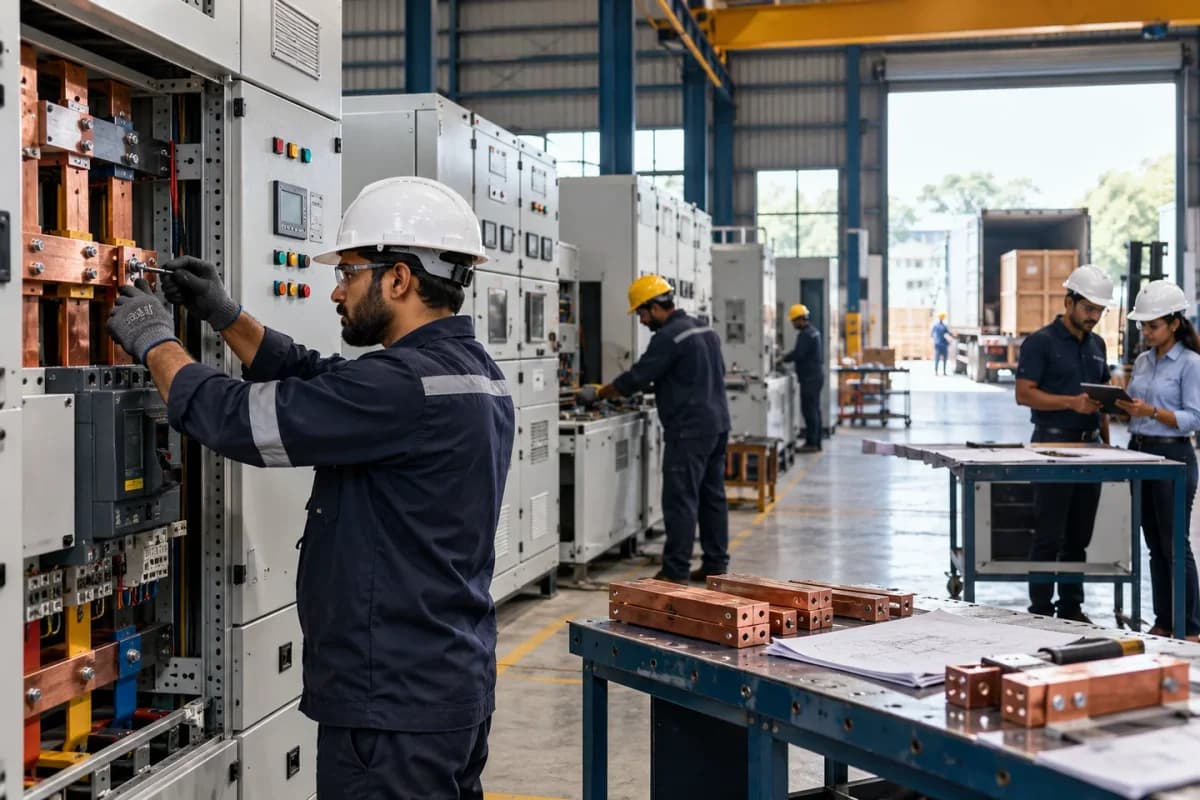
Breakers, relays and meters fitted are recorded by serial number against the panel and feeder. A warranty claim finds the panel in seconds. Replacement parts update the record.
Bring the records the workflow depends on.
- Item tracking rules
- Batch or serial identifiers
- Movement and expiry records
Outputs to check
- Lot or unit movement history
- Trace-forward and trace-back report
- Held or expiring stock list
Follow the batch and serial tracking workflow.
Use this sequence to compare your current process with the proposed module. Agree the owner, permission and exception at each step.
Who uses the module, and who approves?
Keep responsibilities distinct even when one person holds more than one role.
Decide how exceptions are handled.
These business rules belong in configuration and testing. A normal transaction alone does not demonstrate that the workflow is ready.
Can this work independently?
Traceability requires identifiers on the physical goods and their recorded movements. It can run from controlled imports, but goods receipt, production, stock and sales must preserve the same references. A trace report cannot recover identifiers that were never captured at a handoff.
Systems and records it connects with
- Goods receipt: Counted, accepted and rejected supplier-delivery quantities.
- Stock: Item-location quantities and authorised stock movements.
- Quality control: Inspection results and authorised hold or release decisions.
- Invoice management: Issued invoice references, line amounts and outstanding balances.
Configure, test and introduce the workflow.
- You tell us which items carry shelf life or serials. We write back how each will be numbered.
- The storekeeper shows how goods arrive. You get a goods receipt screen to try, with a field for the supplier’s lot. Send current stock. A trial import comes back with gaps listed for the team to fill, using whatever batch details exist.
- Counter and service staff practise. They issue by batch and look up a serial, and you get a trained group and a corrected import.
Check the result before rollout.
Apply these checks to a sample from the agreed workflow, then repeat with an exception. Keep the expected result beside the test record.
- Tracked items cannot move without required identifiers.
- Serial references do not duplicate active units.
- A lot can be traced to its recorded recipients.
How the business operates.
A switchboard maker takes sheet steel, copper bar and bought-in breakers, and hands over a lineup of panels that a client’s consultant has already approved on paper. The drawing revision decides what gets built. That is the rule. One late change to a feeder can alter the breaker, the busbar rating and the nameplate.
The records that hold the operation together.
- Tender and panel templates. Price a lineup from stored incomer, coupler and feeder templates, then adjust ratings and accessories. Every tender revision is kept.
- Feeder schedule. List each feeder with its rating, breaker type, metering and protection, so the schedule matches the single-line diagram.
- Drawing revision control. Hold general arrangement drawings, consultant comments and the approved revision. Only the released revision reaches the floor.
- Panel bill of materials. Break each panel into enclosure, busbar, breaker, relay and wiring items, with the quantity reserved for that feeder.
Operational bottlenecks to check
Drawing revisions drift from the floor
The consultant approves revision C, but the fabrication team still holds revision B on a printout. A feeder is built with the wrong breaker frame, and the fault shows at the witness test.
Bought-in breakers set the schedule
Breakers, relays and current transformers come from several makers on different lead times. A lineup waits for one missing relay while the finished frames take up bay space.
How work flows across this business
This module sits within a wider operating process. Use the sequence to identify the other teams and records affected by a change.
1. Enquiry and tender
The enquiry arrives with a single-line diagram and a feeder list. The estimator prices each section from stored panel templates and the current breaker prices.
2. Order and drawing approval
The accepted order becomes a lineup. The design team issues the general arrangement drawing and tracks consultant comments until a revision is approved.
3. Component purchase
Breakers, relays and meters are ordered against panels. Receipts are checked and each item is reserved for its feeder.
4. Fabrication and busbar
Frames are cut, punched and bent. Busbar is made to length, with plating or painting sent as outside processes and tracked back.
5. Assembly, wiring and test
Panels are wired and fitted. The test bay records insulation, wiring and functional results, and notes any witness inspector.
6. Dispatch and invoice
Once a lineup clears test, its nameplates are printed and the packing papers are raised. The invoice follows the order and its priced variations.
Industry reports to connect with
- Lineups by stage, with panels held for missing components
- Drawing revisions awaiting consultant approval
- Bought-in items on order against the panel they are reserved for
- Busbar pieces out for plating and their expected return
Questions before implementation.
When should switchgear manufacturers consider batch and serial tracking?
Use when physical goods require lot history, expiry control or individual identification. Traceable goods are received, produced or moved.
What should we bring to the requirements discussion?
Bring anonymised examples of Item tracking rules; Batch or serial identifiers; Movement and expiry records. Show who creates, checks and changes each record. Use only records from an activity that meets the suitability conditions above.
Does this replace our existing business software?
The starting point is your current system and the gap you need to close. Trace goods using batch identifiers or individual serial numbers. Configuration, a connected module or a custom build are evaluated against that gap before a replacement is proposed.
What is outside this module?
Traceability does not replace product testing, recall decisions or regulatory obligations.
How are scope, price and rollout decided?
The proposal follows a review of your records, user roles, branches and existing software. Data migration, connections, training and support are scoped separately where needed. Tracked items cannot move without required identifiers. Use this check when reviewing the first working version.
Related functions for switchgear manufacturers.
Discuss batch and serial tracking for your business.
Tell us which workflow needs attention and which systems your team uses. The next step is a requirements discussion and a written scope.
What happens after you share your requirements
- We review your brief and the systems you already use.
- We clarify the workflow, missing information and the work to consider first.
- The proposed scope sets out the deliverables, responsibilities and dependencies.
- Review the scope and commercial terms before deciding whether to proceed.
Start with your requirements
Describe your current process, the people involved and the change you need. Start with the details you know; we can clarify the rest together.
Share your requirements