Quality Control for Transformer manufacturers
Record specified inspections and the disposition of checked goods.
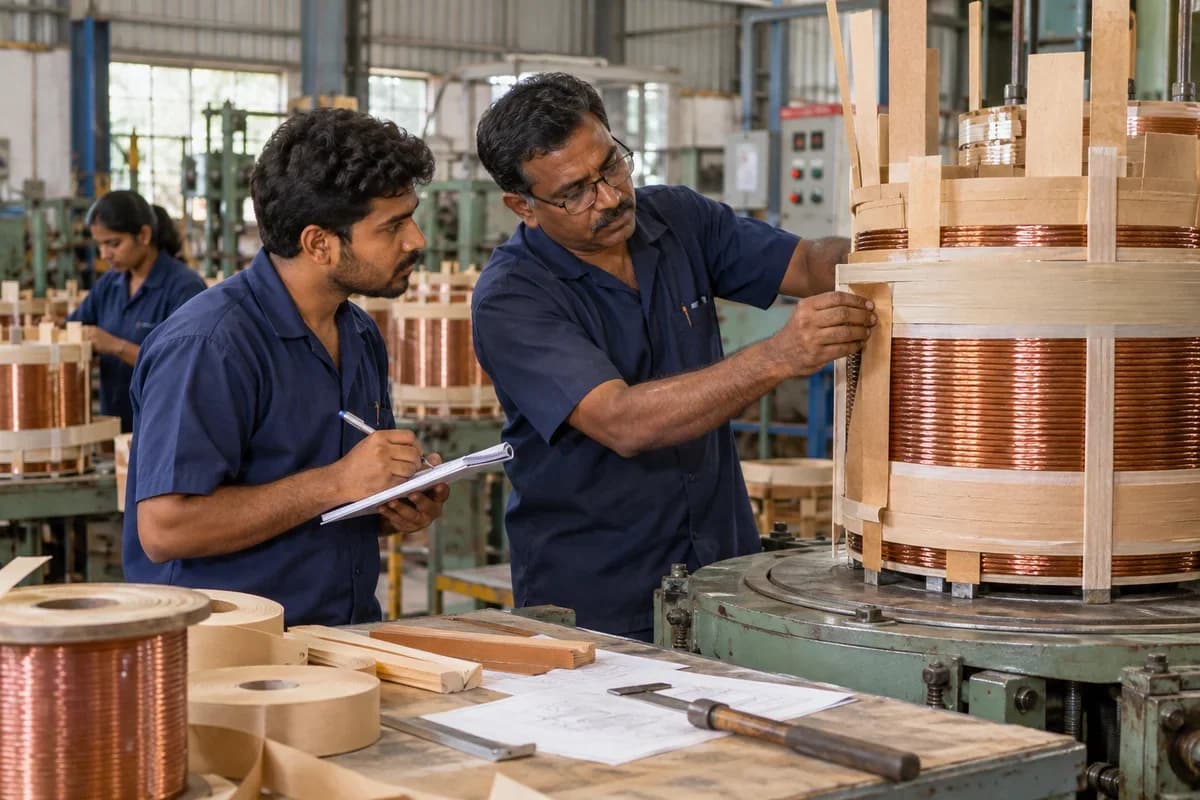
Does this function belong in your operation?
Use when goods or production stages require documented checks before release.
Material or output reaches an agreed inspection stage.
Ratio, resistance, loss and impedance readings are entered per unit against the promised values, and a unit above its limit is flagged at once.
Bring the records the workflow depends on.
- Inspection specifications
- Sampling and acceptance rules
- Authorised reviewers
Outputs to check
- Inspection readings and evidence
- Hold, release or rejection record
- Nonconformance follow-up list
Follow the quality control workflow.
Use this sequence to compare your current process with the proposed module. Agree the owner, permission and exception at each step.
Who uses the module, and who approves?
Keep responsibilities distinct even when one person holds more than one role.
Decide how exceptions are handled.
These business rules belong in configuration and testing. A normal transaction alone does not demonstrate that the workflow is ready.
Can this work independently?
Quality records can be maintained independently against identifiable receipts or jobs. Inventory and production connections must enforce any hold or release decision. The module records authorised checks; it does not select a regulatory standard or replace a qualified inspector's judgement.
Systems and records it connects with
- Work orders: Released production jobs, material issues and output records.
- Goods receipt: Counted, accepted and rejected supplier-delivery quantities.
- Purchase returns: Approved supplier-return quantities and adjustment references.
- Batch and serial tracking: Lot or unit identifiers carried through stock movements.
Configure, test and introduce the workflow.
- Show us where checks happen now. A note names the checkpoints and the parameters to record.
- Provide limits and your list of rejection reasons. A test lot can then be checked on the trial screen. Checkers use it at a station for a trial run. Their remarks return as changes.
- Checkers, production and purchase each practise their part. Each group gets a printed card. Other stations join as the trial station settles. The team reviews rejection reasons together.
Check the result before rollout.
Apply these checks to a sample from the agreed workflow, then repeat with an exception. Keep the expected result beside the test record.
- Failed items follow the agreed hold rule.
- Results retain the specification version.
- Release decisions identify the reviewer.
How the business operates.
A transformer order starts as a tender with a kVA rating, voltage ratio, vector group, impedance and loss limits. You price core steel, winding copper or aluminium, insulation, oil and tank, then commit to no-load and load loss figures that the customer can penalise. The design sheet comes next. It fixes core dimensions, turns per coil and the tap range, and the shop cuts every lamination and orders the oil from it.
The records that hold the operation together.
- Transformer tenders. Cost a unit from core steel, winding copper, insulating oil and tank fabrication, and keep each revision of the offer that went to the buyer.
- Loss commitment register. Store the no-load loss, load loss and impedance limits promised to each buyer, beside the tender that made the promise.
- Design sheet control. Hold core, coil and tap data per unit, with each buyer comment round and the released revision.
- Core steel lots. Receive CRGO coils by lot and weight, and book cut laminations and slitting scrap to each core.
Operational bottlenecks to check
Loss limits are quoted, then forgotten
The tender commits to no-load and load loss limits, but the bay works from the design sheet alone. A unit passes routine tests and still sits above the figure quoted to the buyer. The penalty arrives with the invoice.
Core steel is not traced to a unit
Silicon steel coils arrive by lot and weight, get slit and cut, and the offcut is counted by eye. Months later, a unit with high core loss cannot be tied to the coil it came from.
How work flows across this business
This module sits within a wider operating process. Use the sequence to identify the other teams and records affected by a change.
1. Tender
A buyer sends rating, ratio, vector group, impedance and loss limits. The unit is priced from steel, winding copper, oil and tank, and the loss commitments are stored with the offer.
2. Design release
The design office issues core dimensions, coil data and the tap range. Buyer comments are logged round by round, and only the approved revision goes to the shop.
3. Material booking
CRGO coils and winding wire are booked to the unit by lot and weight. A shortage shows against the unit before the cut-to-length line starts.
4. Core, coil and tanking
Laminations are cut and stacked with mitred joints. Coils are wound and fitted, then the active part is vacuum dried, tanked and filled with oil. The supervisor marks each stage complete.
5. Test and inspection
Routine tests are entered against the promised values. A buyer’s inspector is booked, and the outcome is saved to the unit.
6. Dispatch and service
Rating plate, test report and packing list go out with the unit. Later repair, rewind or warranty calls are logged against its serial.
Industry reports to connect with
- Units by build stage and rating
- Promised against measured losses per unit
- Core steel and wire consumed by order
- Inspector bookings and results
Questions before implementation.
When should transformer manufacturers consider quality control?
Use when goods or production stages require documented checks before release. Material or output reaches an agreed inspection stage.
What should we bring to the requirements discussion?
Bring anonymised examples of Inspection specifications; Sampling and acceptance rules; Authorised reviewers. Show who creates, checks and changes each record. Use only records from an activity that meets the suitability conditions above.
Does this replace our existing business software?
The starting point is your current system and the gap you need to close. Record specified inspections and the disposition of checked goods. Configuration, a connected module or a custom build are evaluated against that gap before a replacement is proposed.
What is outside this module?
The software records your inspection process and does not certify product safety or regulatory conformity.
How are scope, price and rollout decided?
The proposal follows a review of your records, user roles, branches and existing software. Data migration, connections, training and support are scoped separately where needed. Failed items follow the agreed hold rule. Use this check when reviewing the first working version.
Related functions for transformer manufacturers.
Discuss quality control for your business.
Tell us which workflow needs attention and which systems your team uses. The next step is a requirements discussion and a written scope.
What happens after you share your requirements
- We review your brief and the systems you already use.
- We clarify the workflow, missing information and the work to consider first.
- The proposed scope sets out the deliverables, responsibilities and dependencies.
- Review the scope and commercial terms before deciding whether to proceed.
Start with your requirements
Describe your current process, the people involved and the change you need. Start with the details you know; we can clarify the rest together.
Share your requirements