Client Portal for Veterinary clinics
Give customers controlled access to account documents and requests.
Does this function belong in your operation?
Use when customers repeatedly request copies, statements or account updates.
Customers need their own financial records or updates.
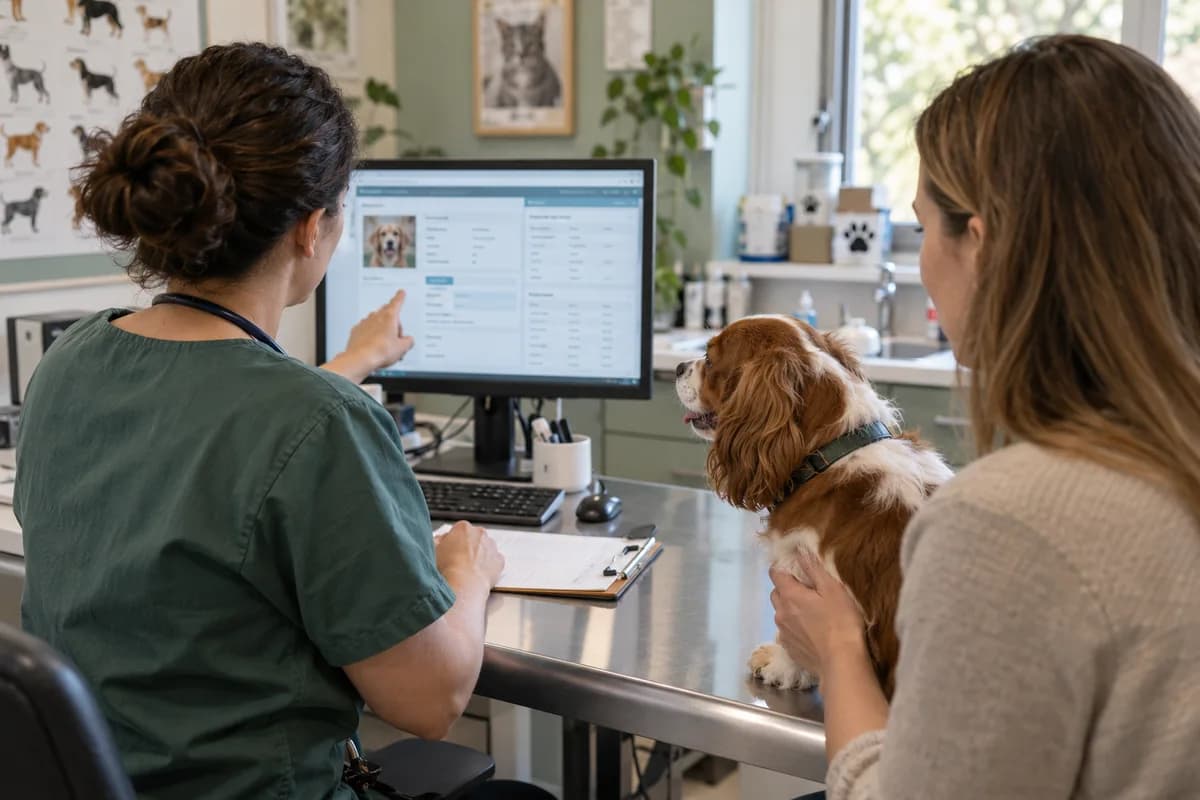
A pet owner logs in to see past vaccinations, invoices and the next due date for each animal. A request for an appointment goes to reception. Lost vaccination cards stop being an issue.
Bring the records the workflow depends on.
- Customer contacts
- Available documents
- Access rules
Outputs to check
- Customer account view
- Document-access record
- Customer request and response history
Follow the client portal workflow.
Use this sequence to compare your current process with the proposed module. Agree the owner, permission and exception at each step.
Who uses the module, and who approves?
Keep responsibilities distinct even when one person holds more than one role.
Decide how exceptions are handled.
These business rules belong in configuration and testing. A normal transaction alone does not demonstrate that the workflow is ready.
Can this work independently?
The portal needs approved customer-account data and login access. Financial documents come from invoicing or accounting, either through imports or agreed connections. Online payment and support-ticket creation are separate handoffs; customer access does not grant editing rights over the ledger.
Systems and records it connects with
- Invoice management: Issued invoice references, line amounts and outstanding balances.
- Receipts management: Recorded customer payments and invoice allocations.
- Ticket management: Numbered requests, ownership and resolution history.
- Payment gateways and bank transfers: Payment references and reconciled settlement or bank evidence.
Configure, test and introduce the workflow.
- We list the documents and actions you want to expose. You decide what stays internal. A written view of the portal pages comes back.
- Customer records are matched to login holders. You supply contact names, and we return a trial import to check. Logo, colours and domain are applied. You get a private link to try the portal as a client would.
- A small group goes in early. Their notes on wording and missing documents come back to you as a short list. Invitations go out in groups. Your accounts desk learns the reply screens, and phone requests for copies fall away as clients get used to the page.
Check the result before rollout.
Apply these checks to a sample from the agreed workflow, then repeat with an exception. Keep the expected result beside the test record.
- Customers cannot view other accounts.
- Balances reconcile with the ledger.
- Requests retain submission dates.
How the business operates.
A pet comes back for years: the puppy course, a fever, a dressing, then a booster every year after that. All of it is the practice, and all of it lives on a card in the owner’s drawer.
The records that hold the operation together.
- Appointments. Book appointments for every vet and staff member, with confirmations, reschedules and reminders before each visit.
- Pet records. Keep one record per animal with owner, breed, age, visits, diagnoses and lab test results, searchable by pet, owner or breed.
- Prescriptions and treatment notes. Record prescriptions and ongoing treatments on the pet’s record, so the next vet sees what was given and why.
- Vaccination and deworming reminders. Record vaccination and deworming dates for each pet, and remind owners about boosters, flea treatment and yearly check-ups.
Operational bottlenecks to check
The history walks in and out with the owner
The card is at home, so the vet prescribes from what the owner recalls, and the earlier dose, weight and reaction are lost. Safe dosing is harder.
Booster doses are missed
A pup’s course and the yearly booster both depend on somebody calling in the right week, and the second dose quietly never happens. The pet loses protection.
How work flows across this business
This module sits within a wider operating process. Use the sequence to identify the other teams and records affected by a change.
1. Booking
The owner books by phone or online, and the slot appears on the right vet’s calendar. A reminder is sent the day before.
2. Check-in
Reception finds the record by the pet’s name, the owner’s name or the breed. Past visits, treatments and vaccinations are on screen before the consultation.
3. Consultation
Diagnosis, treatment, prescription and the vaccination given are saved on the pet’s record. Lab results are attached to the same visit.
4. Billing
Consultation, procedures and medicines go on the invoice at your rates. Payment is recorded, and any balance stays tracked.
5. Stock
Medicines and vaccines are tracked with their expiry dates. Low stock raises an alert, and the order to your supplier is raised from the same screen.
6. Reminders
An SMS or email reaches the owner before the next vaccination, deworming, flea treatment or check-up falls due.
Industry reports to connect with
- Revenue by service and by vet
- Day-wise appointments and missed visits
- Vaccinations and deworming due this week and this month
- Stock near expiry and below reorder level
Questions before implementation.
When should veterinary clinics consider client portal?
Use when customers repeatedly request copies, statements or account updates. Customers need their own financial records or updates.
What should we bring to the requirements discussion?
Bring anonymised examples of Customer contacts; Available documents; Access rules. Show who creates, checks and changes each record. Use only records from an activity that meets the suitability conditions above.
Does this replace our existing business software?
The starting point is your current system and the gap you need to close. Give customers controlled access to account documents and requests. Configuration, a connected module or a custom build are evaluated against that gap before a replacement is proposed.
What is outside this module?
Payments, signing and identity connections need separate scope confirmation.
How are scope, price and rollout decided?
The proposal follows a review of your records, user roles, branches and existing software. Data migration, connections, training and support are scoped separately where needed. Customers cannot view other accounts. Use this check when reviewing the first working version.
Related functions for veterinary clinics.
Discuss client portal for your business.
Tell us which workflow needs attention and which systems your team uses. The next step is a requirements discussion and a written scope.
What happens after you share your requirements
- We review your brief and the systems you already use.
- We clarify the workflow, missing information and the work to consider first.
- The proposed scope sets out the deliverables, responsibilities and dependencies.
- Review the scope and commercial terms before deciding whether to proceed.
Start with your requirements
Describe your current process, the people involved and the change you need. Start with the details you know; we can clarify the rest together.
Share your requirements