Build a food plant system around your ingredient lots, your recipes and your recalls.
A food plant is judged on one question after something goes wrong: which lot, which batch and who received it. Everything else in the system exists to answer that question quickly.
Ingredients arrive in lots with dates. Recipes turn them into batches. Batches are packed into cases that go to distributors and shops. Each step has a record, and the records rarely connect.
A food system from GullySystem could link the ingredient lot to the batch, the batch to the pack and the pack to the customer. Shelf life and stock rotation would sit on the same chain.
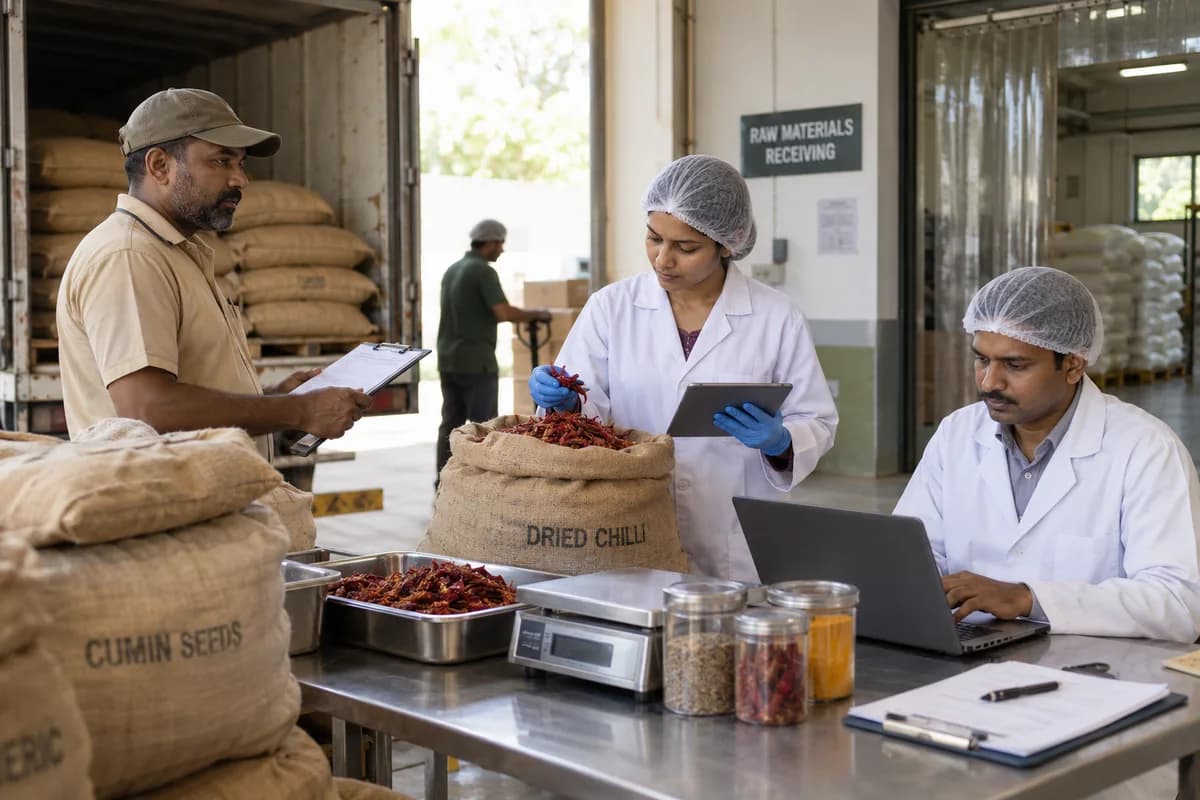
Food businesses we could build for.
A rice mill selling by the bag and a snack maker selling by the case buy, mill and pack differently. Both still need a lot trail, so the system is built around each one’s actual yields and pack sizes.
- Spice manufacturers
- Rice mills
- Flour mills
- Packaged food manufacturers
- Snack manufacturers
- Bakery product manufacturers
- Frozen food manufacturers
- Food ingredient manufacturers
- Pulse and lentil mills
- Edible oil units
- Sauce and pickle makers
- Ready mix and spice blenders
- Confectionery makers
- Cold storage operators
- Contract food packers
- Export-focused food processors
The modules, and what each one covers.
Nothing here is a fixed package. Each module is built, left out or changed to match how your organisation already works.
Ingredient and raw material receipt
Raw material is received by weight, checked, and given a lot number before it is used.
- Supplier and vehicle
- Quantity received against delivery note
- Moisture, foreign matter and quality grade
- Sample taken and result
- Accepted, held or rejected
- Lot number and receipt date
- Best-before or harvest date
- Storage location
- Supplier test certificate
Supplier and farmer sourcing
- Supplier approval and review
- Farmer or aggregator source
- Origin and crop year
- Rate by grade
- Advance and settlement
- Supplier rejection history
- Allergen declarations from suppliers
Recipes and formulations
A recipe is a quantity per batch with a tolerance. It also carries allergen and label information.
- Product and recipe version
- Ingredients and quantities
- Yield expected and loss allowed
- Allowed substitutions
- Allergens present
- Process steps and times
- Nutritional values per pack
- Recipe change approval and date
- Cost per kilogram of finished product
Production batches
- Batch number and date
- Recipe version used
- Ingredient lots consumed
- Quantity of each issued
- Line and shift
- Operator and supervisor
- Output quantity against expected
- Process temperature and time readings
- Waste and rework
- Batch closure
Milling and process yields
Mills measure by yield. How much rice, flour or dal comes out of a tonne of input decides the margin.
- Paddy, wheat or pulse intake
- Milling or grinding run
- Main product and by-product quantities
- Bran, husk, broken and powder
- Yield per lot
- Moisture before and after
- By-products sold or reused
- Mill machine hours
Cooking, baking, frying and freezing
- Oven, fryer and blast freezer cycles
- Temperature and time against recipe
- Oil change and quality
- Core temperature check
- Cooling and chilling record
- Cold chain reading
- Hold points before packing
Quality control and food safety records
Checks happen at receipt, in process, at packing and on stored stock. Each result is kept with its lot.
- Receipt and in-process inspection
- Metal detector and sieve checks
- Weight check records
- Microbiology and lab results
- Allergen changeover cleaning
- Sanitation and hygiene checks
- Pest control visits
- Non-conformance and corrective action
- Customer audit evidence
What counts as correct differs by country, so your own adviser confirms it before launch. The records are designed to match the scheme you work under, and the compliance itself remains with your own quality team.
Packing and labelling
- Pack sizes and packaging material
- Label content by market and language
- Batch and best-before printing
- Case and pallet build
- Packing line output
- Packaging material stock
- Label approval and version
- Rework and repack
Shelf life and stock rotation
Food stock is dispatched by expiry, not by arrival. The earliest expiry leaves first.
- Manufacture and expiry dates
- First expired, first out picking
- Stock by expiry band
- Near-expiry alerts
- Customer minimum remaining shelf life
- Quarantine and hold
- Write-off of expired stock
Cold storage and warehousing
- Warehouse and chamber layout
- Temperature records by chamber
- Pallet and bin location
- Goods in and out
- Stock by lot and expiry
- Cycle counts
- Third-party storage stock
Recall and traceability
- Complaint or incident
- Identify batch
- Ingredient lots used
- Other batches using them
- Customers who received it
- Stock still held
- Recall notice and closure
- Forward trace from ingredient to customer
- Backward trace from complaint to supplier
- Mass balance of recalled stock
- Recall drill record
Orders, distributors and dispatch
- Customer and distributor orders
- Stock allotted by expiry
- Picking list and dispatch
- Vehicle and temperature for chilled loads
- Delivery note
- Proof of delivery
- Returns of unsold or damaged stock
- Claims and schemes
Costing and wastage
- Cost per batch from ingredient lots
- Yield loss valued
- Packaging cost per unit
- Labour and power per batch
- Cost per case
- Price movement of key ingredients
- Margin by product and customer
Purchasing and stores
- Purchase requisition and order
- Goods receipt
- Ingredient and packaging stock
- Reorder levels by season
- Supplier invoices
- Stock count and variance
- Consumables and cleaning chemicals
Invoicing and exports
- Tax invoice in your tax rules
- Currency per customer
- Export documents and certificates
- Customer price lists
- Outstanding by age
- Credit notes for returns
One connected workflow, end to end.
Every stage below can sit in one system, so nobody re-enters what the last stage already captured.
- Supplier and sourcing
- Raw material receipt
- Lot approval
- Recipe and batch plan
- Production or milling
- In-process checks
- Packing and labelling
- Release and storage
- Order and picking
- Dispatch
- Invoice and collection
You do not have to replace everything at once.
Each phase is usable on its own, so the system earns its place before the next part is built.
- 1
Receipt, lots and recipes
Raw material receipt, lot numbers, quality checks, recipes and production batches.
- 2
Quality, packing and shelf life
Food safety records, packing and labelling, expiry dates and stock rotation.
- 3
Traceability, orders and dispatch
Forward and backward trace, distributor orders, first-expired dispatch and returns.
- 4
Costing, exports and reports
Cost per batch, yields, export papers, invoices and views for the owner and the quality head.
How a build actually runs.
- 01
Follow a lot through the plant
We trace one ingredient lot from the gate to a customer’s shelf, noting what is written down.
- 02
Fix the records that link
Lot, batch, pack and customer are set up as records that point at each other.
- 03
Fit the line
Screens suit a packing line operator with wet gloves, a lab technician and a warehouse picker.
- 04
Build the lot trail first
The batch and recall trace come before costing and reports.
- 05
Run beside the existing records
One product line works on the new records while the registers continue.
- 06
Carry stock forward
Opening stock is loaded by lot and expiry so rotation starts correctly.
- 07
Extend by line and market
More products, label formats and export markets are added as the plant is ready.
What you bring, and when.
The build moves at the speed of the answers. These are the things we ask for, in the order we ask.
- 01
Recipe cards, batch sheets and quality records
Send your recipe cards, a production batch sheet, a quality check record and a dispatch note. Include how shelf life is marked on labels. Screens grow out of these.
- 02
Production, quality and stores
The floor, the quality lab and stores each name someone for questions. Yield figures may differ between shifts. The plant head says which counts.
- 03
Yield norms, hold triggers and near-expiry handling
Standard yields, the point at which a batch is put on hold and how near-expiry stock is handled need an answer. Screens wait on these. The people on the floor try them as they arrive.
- 04
Lot-wise stock and open distributor orders
Raw material stock with supplier lots, finished goods by batch and open distributor orders are moved at go-live. Scales and packing lines get connected when readable. The plant head approves.
Systems we can put together for you.
- Ingredient receipt and lot systems
- Recipe and formulation management
- Batch production records
- Mill yield and by-product tracking
- Quality and food safety record tools
- Packing and label management
- Shelf life and first-expired stock systems
- Cold storage records
- Recall and traceability tools
- Distributor and dealer order portals
- Batch costing and wastage analysis
- Food stores and purchase systems
- Export documentation software
- Multi-plant food platforms
Questions owners ask before starting.
What is custom food processing software?
This is a system written for one plant’s ingredients, recipes, packs and customers, not a stock factory package. Lot traceability and shelf life are where packages usually stop fitting, since expiry drives every pick.
How far can a batch be traced to customers?
As far as the customer, if lots are recorded at receipt, in the batch and at dispatch. The trace can then run forward to customers and backward to suppliers.
Will it suit mills as well as packed food plants?
Yes. Yield, by-products and bagging suit mills, and recipes and batches suit packed food. They share the lot and stock records.
Does it make the plant compliant with a food standard?
No. The software keeps the records a standard asks for. Compliance remains with your own quality and regulatory team.
How are allergens kept apart?
Allergens are held on each ingredient and recipe. Changeover cleaning is recorded between products.
Will dispatch follow expiry?
Yes. Picking can follow the earliest expiry first, and a customer’s minimum remaining shelf life can be applied.
Do scales and metal detectors feed it?
Where a device exports readings, they can usually be brought in. This is reviewed against your equipment during design.
Who sets up our label formats?
Label formats with batch and best-before dates are configured per product and market, then checked on your own printers.
What if several plants share one system?
Every plant holds its own lots and batches. Head office reads them together.
How do we begin?
Share a recipe, one batch record and a recent dispatch list. We then describe what would be built and in what order.
How we work with this trade.
Ready products for this work.
If one of these fits, it is cheaper and faster than building from scratch. We will say so.
Build a food plant system that answers the recall question.
When a complaint arrives, the first call is to the plant: which batch, which ingredients, which customers. The answer should not depend on who is on shift.
Send one recipe, a batch record and a dispatch list for the same week. The written reply explains how the trace would run and which piece comes first.
Tell us how your food processing and milling companies runs today.
We will tell you what can be digitised, what can be connected, what is worth automating, and what you should leave alone.
What happens after you share your requirements
- A senior engineer reads your answers. Nobody phones first.
- Within one business day you get a written note: what we understood, what we would start with, and the questions we still have.
- If it fits, a proposal follows with the order of work, what we need from you and what you receive at each step.
- No call is booked and nothing is paid until you have read the note. Your details stay with us.
Start with your requirements
Seven short steps that tell us what you need. A senior engineer reads them before anyone gets in touch.
Share your requirements