Build a textile and garment system around your styles, your lots and your lines.
Every export order starts as a buyer’s style with sizes and colours. It ends as cartons on a container, and in between it passes through fabric, cutting, sewing, finishing and packing.
Each stage keeps its own sheet. Fabric stock is in one file, the cutting plan in another and line output on a whiteboard. Shortages show up when a line stops.
A system built for you would hold the order, the style and the lot together. Yarn, fabric, cut pieces and packed cartons would all be counted against them.
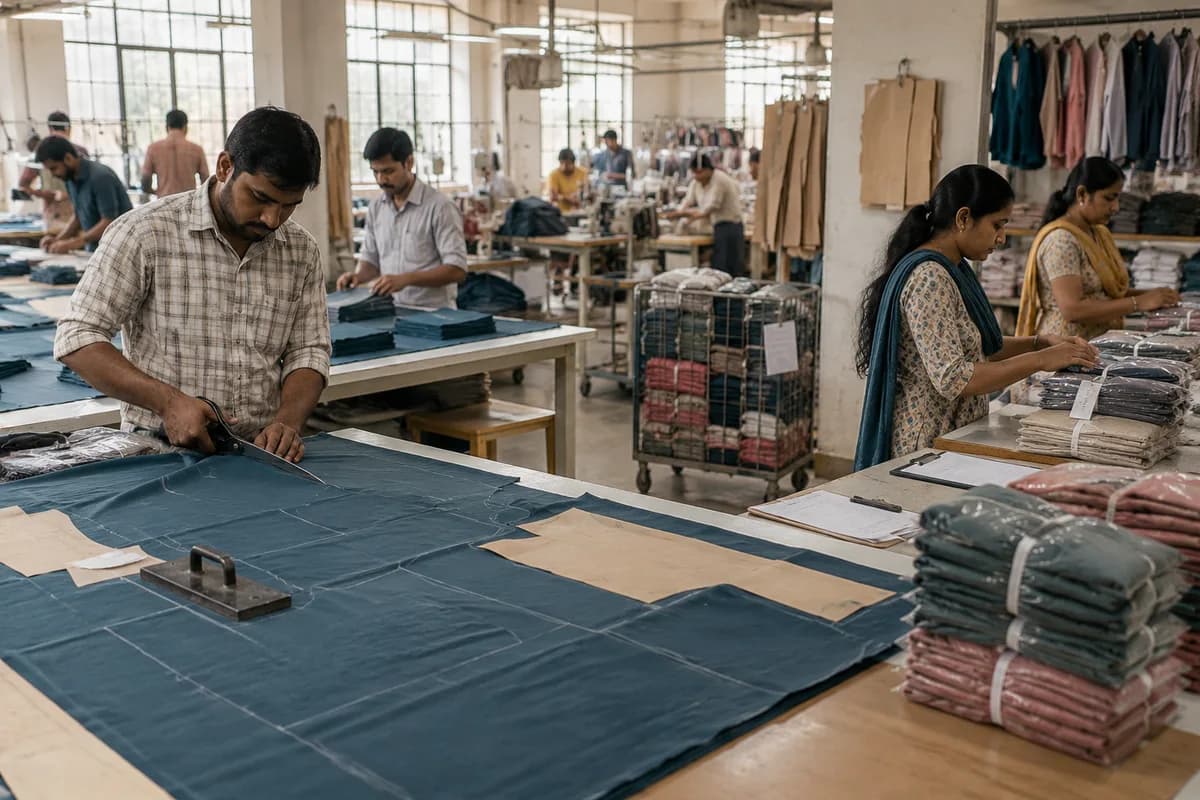
Textile and garment businesses a system can be built for.
A spinning mill counts in kilograms and yarn counts. A garment factory counts in pieces by size and colour. A processor counts in metres and shades. The system follows the unit that your trade counts in.
- Apparel manufacturers
- Export garment factories
- Knitwear and hosiery units
- Uniform manufacturers
- Fabric weaving mills
- Knitted fabric manufacturers
- Yarn spinning mills
- Textile dyeing and processing units
- Printing and finishing units
- Technical textile manufacturers
- Home textile manufacturers
- Towel and bedding makers
- Embroidery and trims suppliers
- Job work units for cutting and stitching
- Merchandising and sourcing houses
The modules, and what each one covers.
Nothing here is a fixed package. Each module is built, left out or changed to match how your organisation already works.
Buyers, styles and orders
An order is entered once as a style with its size and colour breakdown, and every later stage reads from it.
- Buyer and brand
- Style number and description
- Size and colour matrix
- Order quantity with tolerance
- Delivery date and ship mode
- Sample approval status
- Price per piece and currency per buyer
- Buyer purchase order reference
- Revisions to the order
- Order-wise cost sheet
Samples and development
Samples go through several rounds before a buyer approves a style.
- Development sample request
- Proto, fit and pre-production samples
- Buyer comments by round
- Pattern and marker version
- Fabric and trim used
- Sample cost
- Approval record
- Lab dip and strike-off approvals
Bill of materials and trims
Each style lists its fabric, thread, labels, buttons, zips and cartons, with consumption per piece.
- Fabric consumption per size
- Trims list with supplier
- Thread and elastic
- Labels and hang tags
- Poly bags and cartons
- Wastage allowance
- Requirement by order
- Shortfall against stock
Yarn, fibre and fabric purchase
Purchases are placed against orders, with lots kept apart so shades do not mix.
- Purchase order against an order
- Supplier and mill master
- Yarn count, blend and lot
- Fabric width, weight and shade
- Goods receipt and inspection
- Shade band and shrinkage test
- Return to supplier
- Price and payment terms
Spinning and yarn production
Mills record each stage from blowroom to packing, by machine and by count.
- Mixing and blend plan
- Carding, drawing and combing
- Spinning frame and shift output
- Count and strength test
- Winding and doffing
- Waste by stage
- Yarn lot assigned
- Production per spindle
Weaving and knitting
Looms and knitting machines run to programs and to a delivery date.
- Beam preparation and sizing
- Loom allotment and efficiency
- Knitting machine, gauge and diameter
- Fabric roll record
- Greige fabric inspection
- Defect points per roll
- Machine downtime
- Grey stock by roll
Dyeing, printing and finishing
Processors work from shade cards, recipes and batches, and returns for re-dyeing are common.
- Shade card and recipe
- Dye and chemical consumption
- Batch card with machine
- Pre-treatment and dyeing steps
- Printing screens and rollers
- Finishing: stenter, calender, compacting
- Shade matching result
- Re-dye and re-process record
- Water and effluent record
A re-dyed lot keeps its link to the first batch, so the cost of the second attempt is visible against the order.
Fabric inspection and storage
Rolls are inspected and stored by lot, shade and width.
- Four-point or similar inspection
- Defects marked on the roll
- Shrinkage and colour fastness results
- Roll length and weight
- Rack location
- Lot and shade grouping
- Issue to cutting by roll
- Balance fabric
Cutting and marker planning
Cutting is where most fabric is won or lost, so the plan and the actual are compared.
- Marker plan and efficiency
- Lay and ply count
- Cutting order by size and colour
- Cut quantity by bundle
- Bundle ticket with numbering
- Fabric used against plan
- End bits and returns
- Shade segregation within a lay
Sewing lines and bundles
Bundles move to lines, and output is counted at each operation or at the line end.
- Line allocation by style
- Operation bulletin
- Operator skill and allotment
- Bundle issue and receipt
- Hourly output and targets
- Rejection and rework
- Piece-rate or incentive record
- Line balancing view
- Work in progress by line
Outside processes and job work
Embroidery, washing, printing and stitching are often sent to outside units.
- Job work order and rate
- Pieces sent by size and colour
- Delivery note and vehicle
- Received quantity and rejections
- Shortage and deduction
- Job worker bill
- Delay against line plan
- Wash recipe and approval
Quality control and inspection
Inline checks, end-of-line checks and buyer audits all read from the same defect list.
- Inline inspection
- End-of-line inspection
- Defect codes by operation
- Sampling plan and result
- Measurement against size chart
- Buyer or third-party inspection
- Pass, hold or re-check
- Corrective action by line
Finishing, packing and shipment
Packing follows the buyer’s ratio packs and carton marks, and shipment follows the booking.
- Pressing and thread cutting
- Ratio and solid packs
- Carton numbering and marks
- Packing list
- Pieces packed against order
- Shipment booking and container
- Commercial invoice and tax invoice
- Export paper checklist
- Short shipment record
Costing and merchandising
The merchant sees cost and delivery against the quote while the order is still running.
- Cost sheet by style
- Fabric, trim and conversion cost
- Actual against estimate
- Order profitability
- Payment terms and receivables
- Buyer-wise ageing
- Currency per buyer
- Commission and agent record
One connected workflow, end to end.
Every stage below can sit in one system, so nobody re-enters what the last stage already captured.
- Buyer enquiry
- Sample approval
- Order and bill of materials
- Yarn and fabric purchase
- Fabric production or processing
- Fabric inspection
- Cutting
- Sewing
- Finishing and packing
- Final inspection
- Shipment
- Payment
You do not have to replace everything at once.
Each phase is usable on its own, so the system earns its place before the next part is built.
- 1
Orders, styles and purchase
The buyer, style and size matrix, bills of materials, and purchase of yarn, fabric and trims against each order.
- 2
Fabric and processing
Yarn, weaving or knitting, dyeing and finishing records, with lots, shades and roll inspection.
- 3
Cutting, sewing and packing
Cutting plans, bundles, line output, outside work, inspection and packing against the buyer’s requirements.
- 4
Shipment, costing and reporting
Shipping papers, order-wise cost, receivables by buyer, and links to machines and counters on the floor.
How a build actually runs.
- 01
Walk one order
We follow a single style from fabric receipt to the container, and write down where each count is taken.
- 02
Learn what you count
A mill counts kilograms, a factory counts pieces, a processor counts metres. The design starts from that unit.
- 03
Design for the line
A supervisor entering output every hour needs a screen of three taps, so the screens are drawn with line staff.
- 04
Build the order first
The size matrix and bill of materials are built first, because cutting, sewing and shipment all read from them.
- 05
Pilot one line
One unit or one line runs on the system beside the existing sheets until the counts match.
- 06
Carry data across
Buyer lists, style master, fabric stock and open orders are moved in before the line starts.
- 07
Extend by unit
Processing, job work and further factories are added once the first unit is steady.
What you bring, and when.
The build moves at the speed of the answers. These are the things we ask for, in the order we ask.
- 01
Order sheets, tech packs and process cards
Share buyer orders, tech packs, bills of material, process cards and inspection reports. Yarn and fabric stock registers help. Design follows an order through your mill or factory.
- 02
Merchandiser, production head and quality lead
They speak for a stage each. Merchandising and production sometimes disagree. The factory head decides.
- 03
Wastage norms, job work rates and buyer rules
Wastage allowances, job work rates, buyer inspection rules and costing norms are decided during the build. Trim and fabric masters come too. Reviews are held module by module.
- 04
Open orders and stock by lot
Open orders with styles, fabric and trim stock and job work balances are carried over at launch. Share the export documentation formats up front. The managing director agrees to the move.
Systems we can put together for you.
- Order and style management systems
- Size and colour matrix tools
- Bill of materials and consumption planners
- Yarn and fabric purchase systems
- Spinning and weaving production trackers
- Dyeing batch and shade management
- Fabric roll inspection systems
- Cutting and marker planning tools
- Sewing line output boards
- Piece-rate and incentive calculators
- Job work and delivery note systems
- Quality and defect recording tools
- Packing list and shipment systems
- Order costing and profitability reports
- Buyer portals for order status
- Multi-unit textile platforms
Questions owners ask before starting.
What is custom textile and garment software?
It means records drawn around your own styles, lots, processes and counting units. Factories that stitch and units that dye need very different ones, and a single package rarely covers both.
Can it handle size and colour matrices?
Yes. Orders, cutting, bundles, packing and invoices all work in size and colour breakdowns, not in a single quantity.
Does it track fabric by shade and lot?
Yes. Rolls are held by lot, shade and width, so a lay in cutting does not mix bands.
We run piece-rate wages. Can the system calculate them?
It can, from bundle and operation records. The rate tables and rules come from your own wage practice and are reviewed during implementation.
Can buyers see order status?
If you wish. A portal can show sample approvals, production stage and shipment dates, with only the fields you choose.
Can a mill and a garment unit share one system?
Yes. Each unit has its own production records, while fabric and yarn move between them as internal transfers.
Does it support several currencies?
Yes. Currency is set per buyer, and invoices and receivables are shown in the buyer’s currency with your reporting currency beside it.
Can we start with only cutting and sewing?
Yes. Cutting and sewing are a workable first step, and orders, fabric and shipment are added after the lines are steady.
How we work with this trade.
Ready products for this work.
If one of these fits, it is cheaper and faster than building from scratch. We will say so.
Build a textile system that counts the way you do.
Fabric booked, fabric cut and fabric shipped as pieces should agree. When they do not, the gap deserves a name and a date.
Send one live order with its bill of materials and cutting plan. The written reply walks that order through every stage and says what is counted there.
Tell us how your textile and garment manufacturing companies runs today.
We will tell you what can be digitised, what can be connected, what is worth automating, and what you should leave alone.
What happens after you share your requirements
- A senior engineer reads your answers. Nobody phones first.
- Within one business day you get a written note: what we understood, what we would start with, and the questions we still have.
- If it fits, a proposal follows with the order of work, what we need from you and what you receive at each step.
- No call is booked and nothing is paid until you have read the note. Your details stay with us.
Start with your requirements
Seven short steps that tell us what you need. A senior engineer reads them before anyone gets in touch.
Share your requirements