Boat commissioning and handover for the yard
Before a new boat leaves the yard, a checklist covers fitting, testing, antifouling and cleaning. At handover the buyer signs, and photographs and the safety equipment supplied are kept on the boat’s record. That gives the yard proof of what left, and the buyer a record of what was handed over.
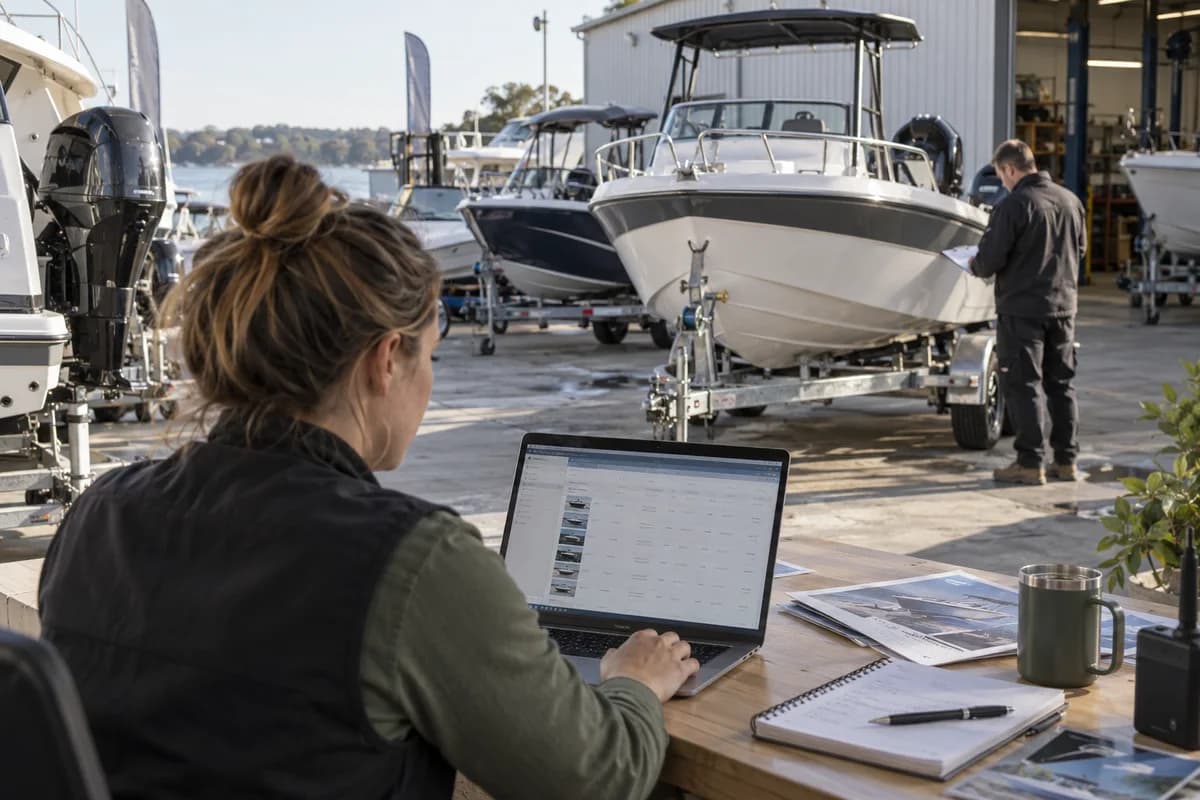
What commissioning and handover keep on record
A boat is not ready when it is sold. It is ready when every fitting is checked, every test passed and the buyer has signed. These four parts of the record stand behind that moment, and the yard keeps every one of them. Take them in turn.
Preparing a boat for the buyer
Commissioning takes place between a signed deal and the buyer’s arrival, and it is where the sale becomes a boat the buyer can use. These four moments show how the yard works through a boat. The record fills as the work is done.
Who signs off and who is shown the boat
Commissioning is the yard’s work. Sales and accounts depend on its result. Each person sees the part of the record that matters to them. Nobody has to ring the yard for a status.
Decisions to settle for commissioning
Every yard commissions boats in its own way, so the checklist should read as your yard does. Settle these four points with the yard manager and the principal before the first boat is signed off. Each takes a short talk.
How commissioning links to the sale
Commissioning starts when a deal is signed and ends when the buyer takes the boat. In between it reads from the quotation and stock. Afterwards it hands the boat on to warranty and service. Five links matter. They are listed below, with what each one carries across.
- The signed quotation supplies the options to be fitted
- Boat and engine stock gives serials and location
- Parts and accessories are issued to the commissioning job
- Service jobs and yard planning book the technician and slipway
- Warranty and registration records begin from the handover date
Where commissioning and handover stop
This feature records the work and the handover. It does not carry out the tests, inspect a hull or decide that a boat is safe. Those judgements stay with the qualified technicians and the yard manager. A yard that hands over a very small number of boats a year can use a printed checklist and a signed paper copy.
Frequently asked questions
Can different hull types have different checklists?
A sailing yacht and an outboard day boat need different steps, so each hull type can carry its own list. Your steps for fitting, antifouling, testing and handover are set up with you. The list follows the boat.
Where are handover photographs kept?
Photographs go on the boat’s record with the signed handover and the list of safety equipment supplied. They stay there. If a question arises later, the yard opens the record and shows the boat as it left.
What does the buyer sign at handover?
The buyer signs the handover record after a demonstration of the helm, bilge pumps and electrics. It lists the safety equipment supplied. Registration and warranty details are filed with the boat afterwards, so they travel with the boat.
Can the checklist show what is still to be fitted?
The options list from the signed quotation sits beside the checklist, so the technician sees which fittings are done and which remain. The yard manager sees the same view for every boat. It is a short list.
Does commissioning change when we add new options?
A new option is added to the price list and option packages. When a buyer chooses it, it appears on the checklist for that boat. If a new step is needed, ask GullySystem staff. They make the edit.
How this feature fits the system.
Boat Dealer Management Software: the parts that work with this feature, the trades that use it and the ways to put it in place.
Buyer records and enquiries
Enquiries from portals, shows and the showroom floor land in one list, tagged by source and by the boat the buyer asked about.
Lead ManagementSales pipeline
Deals sit on a board by stage, from viewing through sea trial to signed agreement, with a named salesperson and next step on each card.
Pipeline ManagementQuotations and options
A quotation is built from the price list and chosen option packages, and each revision remains on file beside the one the buyer signs.
Quote & Proposal ManagementTell us what you need.
Tell us what your team does today, where work gets stuck and what you want to change.
What happens after you share your requirements
- We review your brief and the systems you already use.
- We clarify the workflow, missing information and the work to consider first.
- The proposed scope sets out the deliverables, responsibilities and dependencies.
- Review the scope and commercial terms before deciding whether to proceed.
Start with your requirements
Describe your current process, the people involved and the change you need. Start with the details you know; we can clarify the rest together.
Share your requirements