Goods receiving and ticketing for department stores
Goods receiving checks every delivery against its purchase order in the stockroom. Short and damaged items are logged line by line, and barcode tickets are printed for the floor. Stockroom staff do the work at the dock. Buyers and finance read the result. It is the step that turns an order into stock.
What a goods receipt records
A receipt is the stockroom’s statement of what actually arrived. It sits against one purchase order and names each line delivered. Finance and buyers turn to it when a supplier queries a statement.
Receiving a delivery in the stockroom
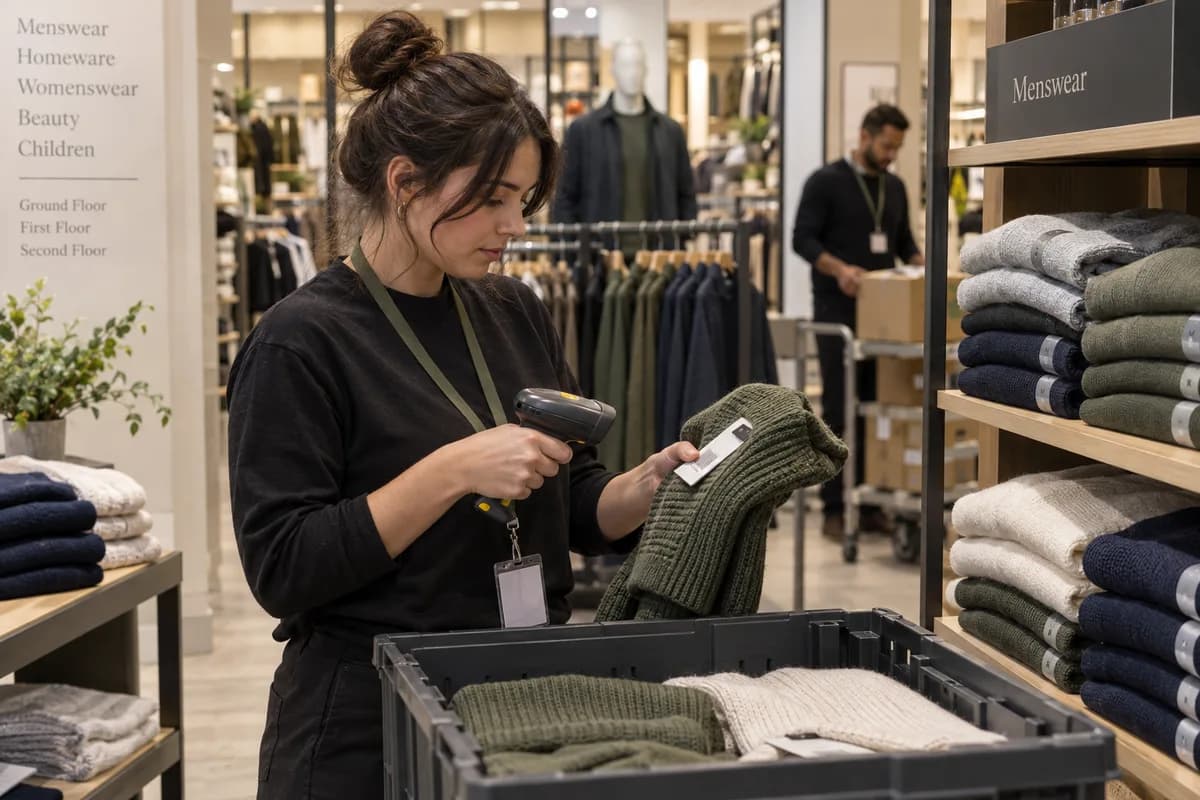
Deliveries arrive when the supplier’s van does, not when the stockroom is quiet. The team receives, checks, tickets and sends goods to the floor between opening and closing, with cashiers already selling. Four moments show the routine. Each one starts at the dock door.
Who uses goods receiving and what each sees
Receiving is a stockroom job, but other people read what it produces. Each role sees the part that bears on its own work. Set-up decides how far each screen goes.
Decisions before goods receiving goes live
Receiving habits are set by the people on the dock, so they should shape the record. These four choices are worth settling with the stockroom lead and the buying team. Nothing here is technical.
How goods receiving links to other features
Goods receiving sits between the buyer’s order and the shop floor. It takes what was promised from one feature and hands what arrived to the next. Its records are read closely by finance when a statement lands. It also feeds the stock count that cashiers sell from. Five links stand out.
- Season buying supplies the order each delivery is checked against
- Department and floor stock receives counted, ticketed units from here
- Transfers carry received goods from stockroom to shop floor
- Supplier accounts match each statement to these receipts
- Returns send faulty goods back to the supplier
Where goods receiving stops
This feature counts what arrives and prints the tickets. A person still opens the carton and judges the goods, because the system cannot inspect quality. It does not settle a dispute with a supplier. It does not pay a bill. Customs and duty on imports stay with the owner and an adviser. A store taking a handful of parcels a week can manage with a delivery note.
Frequently asked questions
Can part of an order be received later?
Each part is recorded as it lands, against the lines it covers. The rest stays outstanding on the order. Nothing needs to be re-keyed when the second van arrives, and the lines close as they are filled.
Where are short and damaged items recorded?
Both are logged against the order line on the receipt, with the item, the variant and the quantity. The buyer and finance read the same entry. A supplier query then starts from a written record.
Which printers and scanners does it work with?
Barcode scanners and receipt printers are among the connections listed for this product. Printer choice is agreed at scoping. The printer that produces floor tickets is named then, and the stockroom tries it before opening.
Does receiving change what the floor can sell?
Received stock sits in the stockroom count first. It reaches the floor count when the transfer to the floor is recorded. Cashiers see availability across floors, so they know what is held and where it is.
Who sees a shortage first?
The stockroom logs it at the dock, and the record is then visible to others. Buyers read it when planning a display. When the supplier’s statement arrives with the full amount, finance reads it too.
How this feature fits the system.
Department Store Management Software: the parts that work with this feature, the trades that use it and the ways to put it in place.
Department and floor stock
Each floor, display and stockroom keeps its own count of an item, and a transfer between them moves the stock without losing the trail.
Multi-Outlet StockSeason buying and purchase orders
Buyers raise orders against a department’s season plan, and each order tracks its delivery window and what the supplier still owes.
Purchase Order ManagementGoods receiving and ticketing
The stockroom receives line by line against the order, notes short and damaged items, and the receipt later matches the supplier’s statement.
Goods Receipt (GRN)Tell us what you need.
Tell us what your team does today, where work gets stuck and what you want to change.
What happens after you share your requirements
- We review your brief and the systems you already use.
- We clarify the workflow, missing information and the work to consider first.
- The proposed scope sets out the deliverables, responsibilities and dependencies.
- Review the scope and commercial terms before deciding whether to proceed.
Start with your requirements
Describe your current process, the people involved and the change you need. Start with the details you know; we can clarify the rest together.
Share your requirements