Business solutions for Valve manufacturers
Explore software for work such as “Gate, globe and check valves in cast steel and stainless steel”. Review each business function below, including when it fits and what to check before implementation.
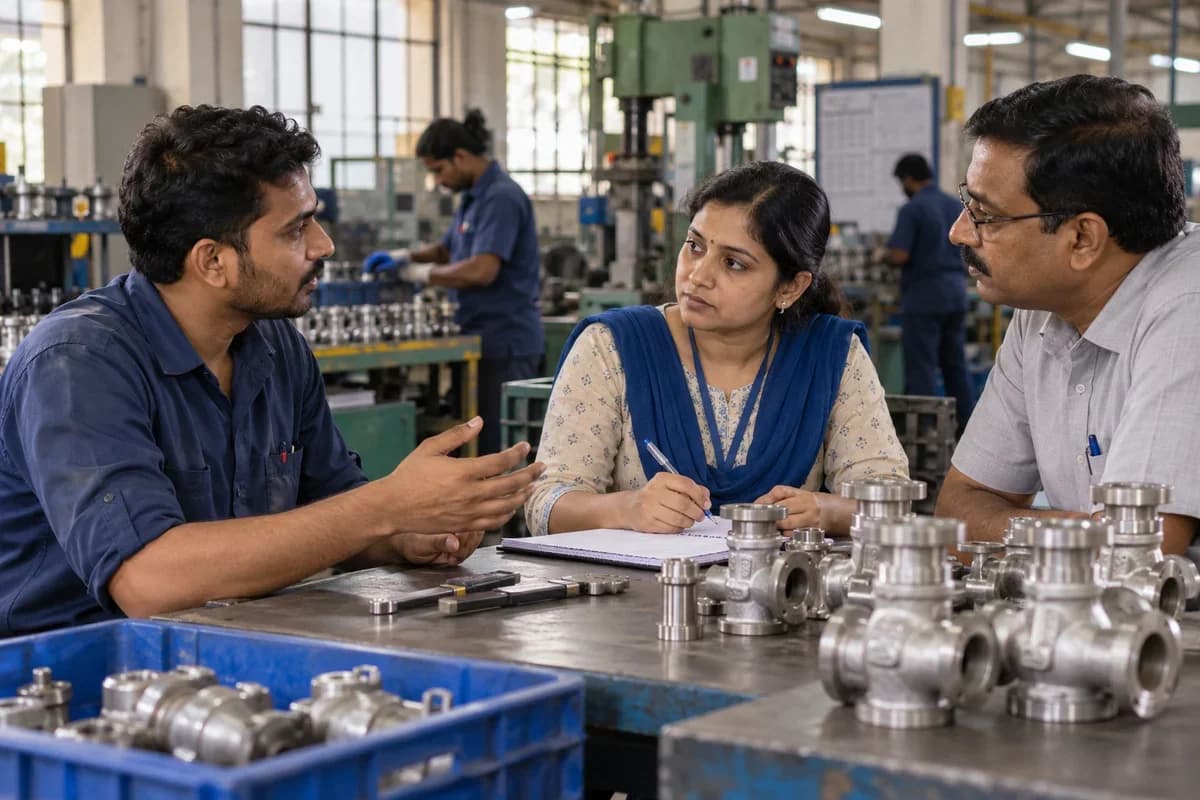
How the business operates.
Valve makers machine castings or forgings, fit seats, stems and packing, and pressure test every unit before it ships to a refinery, a water works or a plant builder. Gate, globe, ball, butterfly and check valves each carry a separate parts list, and a stem for one size is useless on the next class up. A buyer expects the serial to answer which heat, which test and which trim, years after installation and after the original order clerk has left. That is the job.
The records that hold the operation together.
- Enquiries and specification capture. Log enquiries with size, class, end connection, body material and trim, and file the specification sheet with the quotation so changes read against the original ask.
- Valve quotations. Price valves from castings, trim parts, boring and test hours, and keep each revision of the buyer’s request as its own version.
- Valve model register. Hold gate, globe, ball and check models by size and pressure class, each with its body, bonnet, stem and seat list, so a new order copies the right structure.
- Casting and forging receipt. Book each casting by heat number and mill test report against its purchase order, then tie it to the serials machined from it. A body without a heat is held.
- Machining records. Record bore, seat pocket and flange face dimensions per body, with the boring mill, the operator and the gauge used.
- Trim and packing issue. Issue stems, seats, discs, balls, gland rings and packing to each serial from stock, with the material code checked against the model. Wrong trim is stopped at the counter.
- Serial number control. Assign serials per valve or lot, then see each unit’s heat, trim, hydrotest and shipment on one screen.
- Shell and seat tests. Save test pressure, hold time and leakage per serial and route failures to lapping or rework with the cause noted. Retests sit beside the first result.
Operational bottlenecks to check
Casting heat is lost after machining
The foundry sends a material report for each pour, but once bodies are machined and stacked the heat number survives only on a paper tag. Tags fall off.
Test results sit on the bench sheet
Shell and seat pressure, hold time and leakage are written on a log at the test bench, and a buyer who asks for the certificate waits while someone finds the sheet.
Trim parts are mismatched
Stems, discs and seats of one size but different materials, such as carbon steel and 316 stainless, share a bin, so a valve is assembled with the wrong trim. Inspection notices late.
Nameplate data is retyped
Size, class, serial and body material are copied from the order to the plate by hand, and one wrong digit sends the whole lot back for rework. It happens.
Rework after test is not costed
Valves that weep are lapped and retested, but the hours land on the plant rather than the order, so the next quote for that size repeats the low figure. Margins thin.
Follow the work across teams.
This is a planning flow. Confirm the steps, owners and approval rules against your actual operation.
Roles and responsibility boundaries.
Reports your managers need.
- Valves by stage and serial
- Casting heats with valves built from each
- Shell and seat hydrotest results by serial
- Rework and retest count by leak cause
- Stem, seat and packing issued against balance
- Shipments by lot and crate
- Certificates issued by project
Connections to scope
- Test bench data import
- Accounting export
- Label printers
Confirm data access, record ownership and the exchange method for each connection. Inclusion here does not mean every connection is available in a standard package.
Setup decisions and adoption risks.
Use these requirements to plan phases, data migration and user training. Agree the release sequence after reviewing your current systems.
Limitations to settle before implementation
- A distributor that stocks and resells valves needs inventory software, not serial records of manufacture.
- Pump makers will find Industrial Pump Manufacturer Management Software closer.
Modules to consider first.
These functions connect to the operating model above. Confirm each one against the work your business actually runs.
Choose the operation you want to improve.
Use these activities to explain your scope. Your business does not need every function in the directory.
- Gate, globe and check valves in cast steel and stainless steel
- Ball and butterfly valves for process and water lines
- Building services valves for fire, HVAC and plumbing
- Actuated and control valves
- Approved vendor list registrations
- Distributor and trader supply
- Export enquiries
- Valve repair, testing and replacement
Explore the business functions.
Production, stock, fleet and recurring billing functions apply only where your business runs those activities. Read the suitability conditions on each page.
Manufacturing
Batch and Serial Tracking
Trace goods using batch identifiers or individual serial numbers.
View workflow and suitability →Bill of Materials
Define the materials and quantities needed for a manufactured item.
View workflow and suitability →Quality Control
Record specified inspections and the disposition of checked goods.
View workflow and suitability →Work Order Management
Track a production job from material issue to completed output.
View workflow and suitability →
Finance & Accounting
Procurement
Inventory Management
Start with the problem your team can describe.
Bring a sample record and show where information is copied, missed or waiting for approval. Scope the first useful change from there.
What happens after you share your requirements
- We review your brief and the systems you already use.
- We clarify the workflow, missing information and the work to consider first.
- The proposed scope sets out the deliverables, responsibilities and dependencies.
- Review the scope and commercial terms before deciding whether to proceed.
Start with your requirements
Describe your current process, the people involved and the change you need. Start with the details you know; we can clarify the rest together.
Share your requirements