Build a farm machinery system around your seasons, your dealers and your spare parts.
Farm equipment sells in a short window. Dealers order before sowing, the plant builds against that order book, and a breakdown in the field cannot wait for a part to be found.
The records that matter are spread out. Drawings sit with design. Cut lists sit with the fabrication shop. The dealer’s order sits in a sales file, and the spare parts list sits in a price book that nobody updates when a design changes.
GullySystem can design these records as one system around your products. A model would carry its drawing revision, its parts and its assembly steps. A dealer’s order would run on to the loading bay, and a bearing or blade in the spares shop would point back to the models it fits.
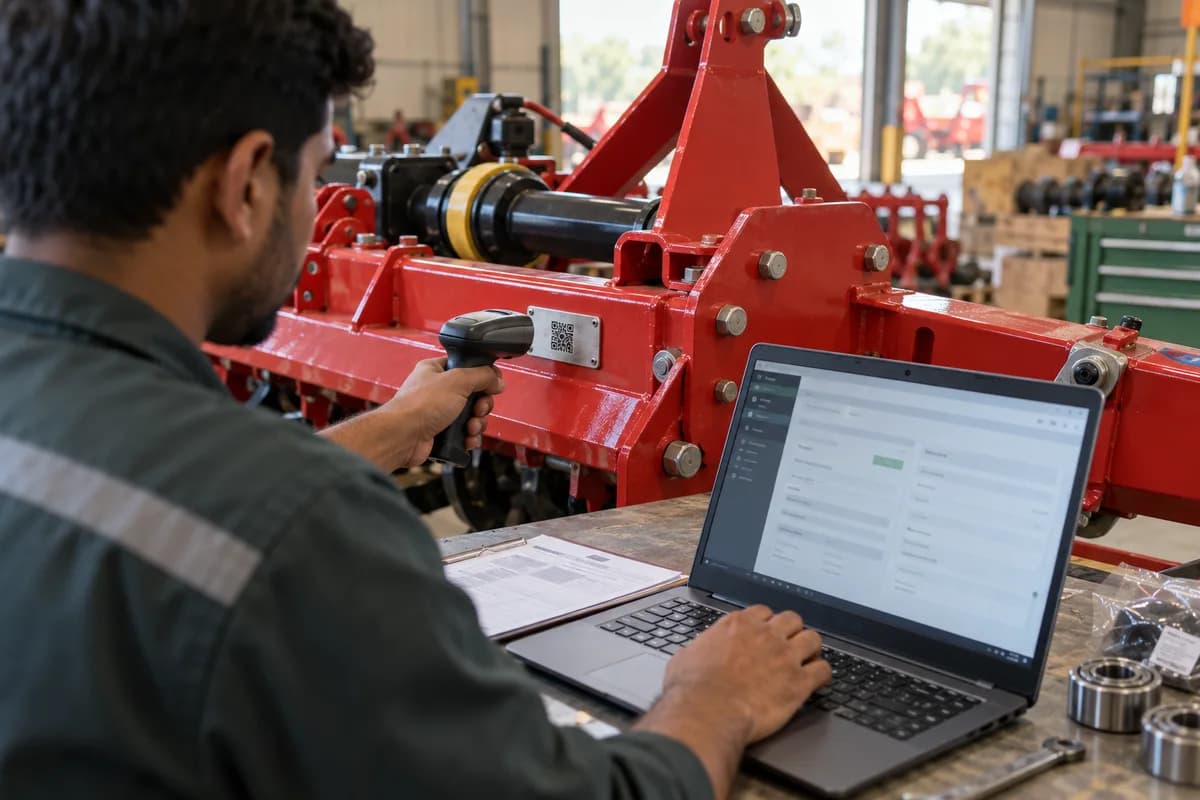
Equipment makers we can build for.
A plough maker, a pump manufacturer and a food processing machine builder share a shop floor style but not a product. The build follows what you make and who buys it. Dealers who only resell machines may fit the distributors page better. Workshops that repair tractors are closer to the automobile workshops page.
- Agricultural implement manufacturers
- Irrigation equipment manufacturers
- Tractor attachment manufacturers
- Farm machinery manufacturers
- Food processing machinery manufacturers
- Agricultural pump manufacturers
- Sprayer and power tool makers
- Thresher and harvester makers
- Drip and sprinkler component makers
- Grain dryer and storage equipment makers
- Dairy and milking equipment makers
- Poultry and livestock equipment makers
- Rotavator and cultivator blade makers
The modules, and what each one covers.
Nothing here is a fixed package. Each module is built, left out or changed to match how your organisation already works.
Models, drawings and revisions
Every implement has a drawing set. When a design changes, the shop floor and the spare parts desk both need the new revision.
- Model and variant master
- Drawing set with revision history
- Parts list per model
- Standard options and attachments
- Engineering change notices
- Region-specific versions
- Operator manual and parts catalogue link
- Retired models and their spares
Seasonal demand and the order book
Sales teams collect dealer orders before the season. Planners read the book to decide what the plant builds and when.
- Dealer pre-season order forms
- Order quantity by model and week
- Confirmed and tentative demand
- Capacity check against the plant
- Build to stock and build to order
- Allocation when demand exceeds output
- Schedule changes with reasons
Dealers, distributors and credit
Machines move through dealers who hold stock and pay on terms. Finance needs the credit position before a dispatch is released.
- Dealer master with territory
- Credit limit and security deposit
- Outstanding invoices by age
- Dealer stock and sell-out report
- Scheme and rebate terms
- Subsidy-linked sales where they apply
- Dealer-level claims
- Dealer visits and notes
Local requirements are agreed with your accountant before the software is switched on for live work. The paperwork a scheme needs is mapped with your team during design.
Raw material and bought-out parts
Steel plate, tube, castings, bearings, hydraulic fittings and engines arrive from different suppliers.
- Steel grade and heat reference
- Casting and forging receipts
- Bearing, seal and fitting stock
- Engine and motor receipts with serial numbers
- Incoming inspection
- Supplier rating by rejection
- Reorder levels for common parts
- Stores issue against work orders
Cutting, bending and welding shop
- Cut list
- Plasma or laser cut
- Bending
- Welding
- Straightening
- Fitting check
- Cutting plan with offcut reuse
- Welder identity per fabricated frame
- Weld inspection result
- Jig and fixture assigned
- Frame number stamped on completion
The stage names are placeholders. Your shop may have fewer or more, and the system follows yours.
Machining of shafts, hubs and blades
Rotating parts are turned, milled and drilled. They need the right tool, the right programme and an inspection reading.
- Machining routing per part
- Machine and operator log
- Tool and insert life
- Dimension readings on critical features
- Rework and rejection reasons
- Outside machining jobs
Heat treatment and coating
Blades, tines and discs are hardened. Frames are painted. Both steps sit outside the main line and often outside the plant.
- Heat treatment batch with furnace record
- Hardness test readings
- Outside processor delivery notes
- Shot blasting and priming
- Paint batch and shade
- Coating thickness checks
- Returns from processors with shortage
Assembly lines and final testing
Assembly follows the parts list for the model. Pumps, sprayers and gearboxes are tested before they leave.
- Assembly checklist per model
- Serial number allocation
- Hydraulic and pressure test readings
- Pump flow and head curve
- Gearbox run-in log
- Final inspection with photographs
- Rejected units sent back with the reason
Irrigation and pump product detail
Irrigation makers sell kits made of many small parts. Pump makers sell by duty point and motor rating.
- Kit composition and quantities
- Pipe, emitter and filter variants
- Pump duty point and head
- Motor rating and phase
- Field layout and design sheet
- Pressure test per batch
Finished goods and the yard
Large machines wait in a yard before a truck arrives. Someone has to know where each one stands.
- Yard location by serial
- Stock by model and colour
- Reserved against dealer order
- Loading and truck allocation
- Transit damage claims
- Ageing of unsold machines
Spare parts and the parts desk
A farmer with a broken machine rings the dealer, who rings the parts desk. The answer depends on knowing which model and year.
- Spare parts price book by model
- Part supersession when design changes
- Fast-moving spares stock
- Dealer spare orders
- Back-order tracking
- Parts exploded view link
- Emergency dispatch priority
Warranty and field service
Warranty claims arrive from dealers with a serial number and a description. Service engineers go out to the field.
- Warranty registration at sale
- Claim with photos and failed part
- Failed part return and inspection
- Approve, reject or part-pay decision
- Service engineer visit report
- Failure rate by part and supplier
- Free service and paid service split
Demonstrations and field trials
New implements are shown on farms. Feedback from those trials goes to design.
- Demo machine schedule
- Farm location and crop
- Operator feedback notes
- Issues raised for design
- Conversion from demo to order
Accounts, costing and exports
Each machine has a cost made of material, labour and bought-out parts. Exports add papers and currency.
- Cost sheet per model
- Labour and overhead allocation
- Tax invoice with your tax rules
- Export invoice and packing list
- Currency per customer
- Dealer ledger and receipts
- Margin report by model
One connected workflow, end to end.
Every stage below can sit in one system, so nobody re-enters what the last stage already captured.
- Dealer order
- Production plan
- Material issue
- Fabrication
- Machining
- Treatment and paint
- Assembly
- Testing
- Yard and dispatch
- Spares and warranty
You do not have to replace everything at once.
Each phase is usable on its own, so the system earns its place before the next part is built.
- 1
Models, orders and dealers
Model master, drawing revisions, dealer orders, credit positions and the invoice. The order book becomes something planners can read.
- 2
Shop floor and stores
Work orders, cut lists, machining, outside processes, stores issue and assembly checklists against the right revision.
- 3
Spares and warranty
Parts price book, supersession, dealer spare orders, warranty claims and returned failed parts.
- 4
Planning and analysis
Season planning from sell-out, yard ageing, failure reports by part and margin by model.
How a build actually runs.
- 01
Start with a model
We pick one implement and follow it from the dealer’s order form to the field. Every record it touches is listed.
- 02
Read the seasons
Past order books show how demand arrives. The planning screens are built around that shape.
- 03
Settle the parts list
Parts lists are often held in several versions. We agree which one is master and who may change it.
- 04
Build the floor first
Work orders, stores and assembly come before the dealer side, because they feed it.
- 05
Add the spares desk
The parts catalogue is linked to models and revisions, so supersession is recorded rather than remembered.
- 06
Test before the season
We aim to run the system through a quiet period first, then widen it as orders build.
What you bring, and when.
The build moves at the speed of the answers. These are the things we ask for, in the order we ask.
- 01
Drawing sets, dealer forms and the price book
Start by sending the implement drawing sets with their latest revisions, a dealer’s pre-season order form and the spares price book. Cut lists from the fabrication shop belong in the pile. Rough copies do the job.
- 02
Design, shop floor and parts desk
Design, fabrication and the spares desk each need a person who knows the work. They look at screens while they are drawn. When the shop and design hold different parts lists, the owner of the master list rules.
- 03
Credit, warranty and supersession rules
Dealer credit ceilings, deposit terms, warranty approval limits and the way a retired part is replaced in the catalogue need your decisions. They come up area by area. Users try the module on demonstration.
- 04
Dealer balances and machines in the field
Open dealer orders, balances, machine serial numbers and warranty registrations get carried across from your files. Management reads the invoice layout before it goes live. Sign-off rests with them.
Systems we can put together for you.
- Farm equipment manufacturing software
- Dealer order and credit systems
- Seasonal production planning tools
- Drawing and parts list control
- Fabrication shop tracking
- Assembly and testing records
- Yard and dispatch management
- Spare parts catalogue and desk software
- Warranty and failed part tracking
- Pump and irrigation kit configuration
- Dealer sell-out reporting
- Field service visit apps
Questions owners ask before starting.
Can the system plan production from dealer pre-season orders?
Yes. Orders by model and week feed a capacity view, and planners can see where demand passes what the plant can build.
How are spare parts linked to the model?
Each part is tied to the models and revisions it fits. When a design changes, the old part points to its replacement.
Can dispatch be held when a dealer is over the credit limit?
Yes. The credit position is checked at release, and an override by a named person is recorded.
Does it suit a pump or irrigation maker as well as an implement maker?
Yes. Pumps carry duty points and test curves, and irrigation kits carry parts by quantity. The records are shaped to the product.
Can warranty claims include the failed part?
Yes. The claim records whether the part came back, what inspection found and what was decided.
Will it work for exports?
Yes. Export invoices, packing lists and currency per customer can be held. Country rules are reviewed during implementation.
What about subsidy paperwork?
It can be held as documents against the sale. The format depends on the scheme and the country, and is reviewed with you.
Do dealers get access?
They can, through a restricted view of orders, stock, ledger and spares. What they see is decided by you.
How we work with this trade.
Ready products for this work.
If one of these fits, it is cheaper and faster than building from scratch. We will say so.
Build a system that is ready before the season starts.
A farmer buys a machine once and needs the dealer and the plant to answer for years. When the model, the revision and the spare part are one record, that answer is quick.
Bring last season’s order book and a parts list. We will show how a custom build would read them, and where a ready GullySystem product already covers the ground.
Tell us how your agricultural equipment manufacturers runs today.
We will tell you what can be digitised, what can be connected, what is worth automating, and what you should leave alone.
What happens after you share your requirements
- A senior engineer reads your answers. Nobody phones first.
- Within one business day you get a written note: what we understood, what we would start with, and the questions we still have.
- If it fits, a proposal follows with the order of work, what we need from you and what you receive at each step.
- No call is booked and nothing is paid until you have read the note. Your details stay with us.
Start with your requirements
Seven short steps that tell us what you need. A senior engineer reads them before anyone gets in touch.
Share your requirements