Build a consumer goods system around your SKUs, your batches and your retail orders.
Consumer products reach the shelf in large numbers and many variants. One kitchen item may come in six colours and three sizes, and each has a barcode, a carton and a retail price.
Behind those variants, the plant keeps separate records. Design holds the tooling and the specification. Stores hold resin, packaging and bought-out parts. The line holds batch sheets, and sales holds the orders from retail chains, distributors and online sellers.
GullySystem can design these records as one system around your own range. A SKU would link its parts, its tooling and its packaging. A batch would link to the orders it served, so a complaint or a recall can be followed both ways.
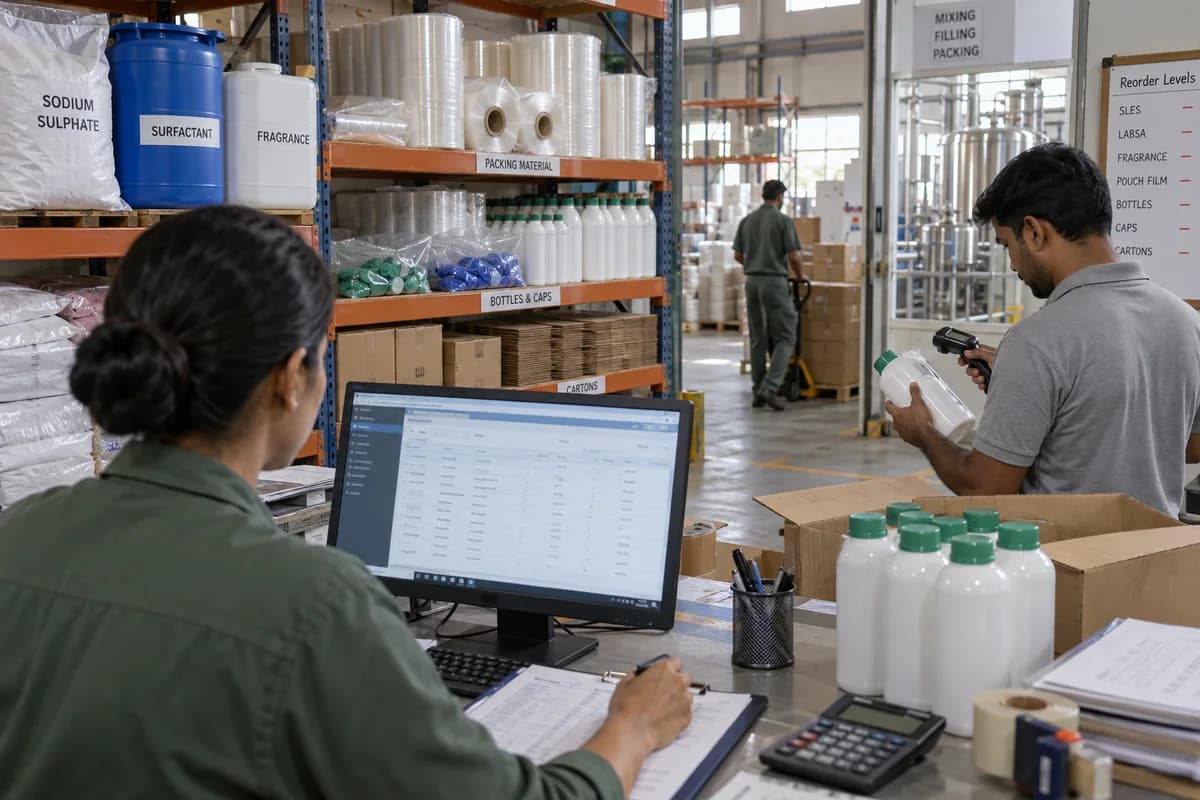
Consumer product makers we can build for.
A home appliance assembler, a household plastics moulder and a personal care formulator keep different records. The build follows what your plant makes. Brands that outsource every step may fit the brand owner products better. Food and beverage makers may fit the food manufacturing page, which covers shelf life in more depth.
- Home appliance manufacturers
- Kitchenware manufacturers
- Personal care product manufacturers
- Cleaning product manufacturers
- Household plastics manufacturers
- Toy manufacturers
- Stationery manufacturers
- Small electrical appliance makers
- Cookware and utensil makers
- Soap and detergent makers
- Candle and home fragrance makers
- Luggage and bag makers
- Plastic storage and container makers
- Cosmetic packaging fillers
The modules, and what each one covers.
Nothing here is a fixed package. Each module is built, left out or changed to match how your organisation already works.
The SKU master and product variants
A product is a family of SKUs. Each variant has its own code, barcode, pack size and price list entry.
- Product family and SKU
- Colour, size and pack variants
- Barcode and carton barcode
- Retail price and trade price
- Brand and private label versions
- Launch and discontinuation dates
- Country of sale and labelling language
- Product photographs and spec sheet
Bills of materials and formulations
Assembled goods use a bill of materials. Chemical and personal care goods use a formula with percentages held by weight.
- Bill of materials per SKU
- Formulation with ingredient quantities
- Revision history and approver
- Alternate ingredient or part
- Packaging bill: bottle, cap, carton
- Regulatory notes held against the product
- Scale-up from pilot to production batch
Labelling and ingredient rules differ by market. They are reviewed with your regulatory contact and not decided by the system.
Moulds, dies and tooling
Plastics and metal ware depend on tooling that costs a great deal and wears with use.
- Mould register with cavity count
- Shot count and service interval
- Mould location in the tool store
- Tool repair and maintenance history
- Customer-owned tooling
- Tool assigned to machine and product
Raw material and packaging stores
Resin, chemicals, fragrance, motors, elements, cartons and labels sit in different stores with different rules.
- Resin grade and colour masterbatch lots
- Chemical and fragrance lots with expiry
- Motors, switches and cords
- Printed carton and label stock
- Incoming inspection and approval
- Hazardous goods storage flag
- Reorder levels for fast parts
Production planning
Planners balance retail demand, machine time and material. Sudden orders from chains disturb the plan.
- Demand from orders and forecasts
- Machine and line capacity
- Material check before release
- Work order per SKU and batch size
- Colour change sequencing
- Short-run and long-run split
- Promotion-driven peaks
Moulding, forming and component shops
- Material drying
- Injection moulding
- Trimming
- Decoration
- Inspection
- Parts bin
- Machine, mould and material per shift
- Cycle time and rejects
- Colour batch matching
- Regrind use limits
- Operator count and output
Metal pressing, stamping and spinning shops would have their own stages in place of these.
Blending, filling and batch records
Cleaning and personal care products are made in tanks and filled into bottles. Each batch needs a record.
- Batch number and size
- Ingredients weighed with lot numbers
- Mixing time and temperature
- In-process pH and viscosity
- Filling line and fill weight
- Batch release by quality
- Retained sample location
Assembly of appliances and toys
Assembly lines fit motors, elements, boards and housings. Finished units are tested before they are boxed.
- Assembly station checklist
- Serial number or date code
- Electrical safety test reading
- Functional test pass and fail
- Rework loop with reason
- Child safety test on toys
- Sub-assembly stock
Quality control and complaints
Quality teams test samples and answer consumer complaints. A complaint should lead back to a batch.
- Incoming, in-process and final checks
- Sample test records
- Consumer complaint register
- Batch or date code lookup
- Root cause and action
- Retail chain quality audits
- Hold and release of finished lots
Packing, labelling and cartons
Packing carries the barcode that retailers scan. A wrong label can send a full pallet back.
- Inner and outer carton codes
- Retailer-specific labels
- Pallet build and pallet label
- Gift pack and multipack assembly
- Label approval per market
- Packing station count
Finished goods and warehousing
Finished stock is held by SKU, batch and location. Retail orders are picked from it in cartons or pallets.
- Stock by SKU and batch
- Location and pallet tracking
- First in, first out picking
- Reserved stock for chain orders
- Near-expiry list for dated goods
- Stock transfers to depots
- Cycle counts
Retail chains, distributors and online sellers
Each sales channel has its own price list, order format and delivery window.
- Retailer purchase order intake
- Distributor price lists and territories
- Marketplace seller orders
- Trade promotions and schemes
- Delivery appointment booking
- Chargebacks for late or short supply
- Customer-wise margin
Returns, damages and recalls
Goods come back from retail for damage, expiry and defects. Some returns must be traced by batch.
- Return authorisation and reason
- Credit note against the invoice
- Return inspection and disposal
- Batch-level recall search
- Customers and quantities affected
- Recall notification record
Costing, invoicing and accounts
Each SKU has a cost built from material, packaging, labour and overhead. Invoices follow the channel’s terms.
- Standard and actual cost per SKU
- Landed cost of imported parts
- Tax invoice with your tax rules
- Currency per customer
- Receivables by chain and distributor
- Margin by channel and by product
One connected workflow, end to end.
Every stage below can sit in one system, so nobody re-enters what the last stage already captured.
- Retail order
- Production plan
- Material issue
- Moulding or blending
- Assembly or filling
- Quality release
- Packing
- Dispatch
- Invoice
- Returns and recall
You do not have to replace everything at once.
Each phase is usable on its own, so the system earns its place before the next part is built.
- 1
SKUs, bills and orders
SKU master, bills of materials, formulations, channel price lists, orders and invoices for the sales and planning teams.
- 2
Plant and stores
Production orders, material lots, moulds, batch records, assembly tests and packing with the right barcode.
- 3
Quality and recall
Quality holds and releases, complaints, returns and batch-level recall searches in both directions.
- 4
Channels and margin
Retail chain orders, schemes, chargebacks, distributor stock and margin by SKU and channel.
How a build actually runs.
- 01
Pick a bestseller and a difficult SKU
We follow both through the plant, since the difficult one shows the edge cases the system has to hold.
- 02
Read the retailer demands
Labelling, delivery windows and chargeback terms of your biggest accounts shape the order screens.
- 03
Agree the batch rule
We settle what a batch or date code means for each product, so complaints can be traced.
- 04
Build the plant side first
SKUs, bills, production orders and stores come before channel features.
- 05
Tie in the warehouse
Handheld scanning at packing and picking connects batch records to dispatch.
- 06
Rehearse a recall
Before go-live, we ask the system to find every customer for one past batch and check the answer by hand.
What you bring, and when.
The build moves at the speed of the answers. These are the things we ask for, in the order we ask.
- 01
SKU sheets and bills of materials
Send the SKU list, bills of materials, packaging specifications and a few production reports. Mould and tooling registers help. Work begins from these.
- 02
Plant, stores and sales representatives
A production planner, a stores keeper and a channel manager take part. They put screens to the test. A works head chooses when their needs collide.
- 03
Standard costs, margins and scheme terms
Costing, distributor margins, wastage allowances and trade scheme rules need confirming along the way. Vendor and packaging masters are part of this. On delivery, a reviewer goes through the module.
- 04
Live stock by batch and recall data
Stock by SKU and batch, open orders and distributor balances arrive before go-live. Barcode printers and accounting software should be named at once. The managing director signs the cutover.
Systems we can put together for you.
- Consumer goods manufacturing software
- SKU and variant management
- Formulation and batch record systems
- Mould and tooling registers
- Appliance assembly and test tracking
- Packing and carton label software
- Retail chain order management
- Distributor portals
- Complaint and recall tracing
- Warehouse and depot stock systems
- Trade scheme and chargeback tracking
- Margin by SKU dashboards
Questions owners ask before starting.
Can one product have many colours and sizes?
Yes. The SKU master holds the family and every variant, each with its own barcode, carton and price entry.
How does a complaint lead back to a batch?
Through the batch number or date code, once it is recorded at production and printed on the pack. The search then goes from the code to the lots and customers.
Does it handle formulations as well as assembled goods?
Yes. A bill of materials suits assembly. A formula by weight suits blending. A plant with both gets both.
Can we keep a record of mould shot counts?
Yes. Shots are counted per run and compared with the service interval you set for each mould.
Can retailers send orders in their own format?
Often they can. What the chain actually sends decides how much can be read, and we review a sample order while implementing.
Will it support products sold in several markets?
Yes. Labelling language, price lists and currency per customer can be held per market. Regulatory rules are checked with you.
Can distributors see their own stock and ledger?
Yes, through a restricted portal. What they can see and do is set by you.
Is there anything ready we can start with?
Possibly. Our home appliance and kitchenware products cover part of this, and the custom build covers what is particular to your range.
How we work with this trade.
Ready products for this work.
If one of these fits, it is cheaper and faster than building from scratch. We will say so.
Build a system that knows every SKU you make.
A consumer brand lives on its shelf presence. When a retailer asks about a shortfall or a batch, the answer should come from the system and not from a phone call to the plant.
Bring a product list, a bill of materials and one retailer order. We will show how a custom build would join them, and say which parts our ready products already cover.
Tell us how your consumer products manufacturers runs today.
We will tell you what can be digitised, what can be connected, what is worth automating, and what you should leave alone.
What happens after you share your requirements
- A senior engineer reads your answers. Nobody phones first.
- Within one business day you get a written note: what we understood, what we would start with, and the questions we still have.
- If it fits, a proposal follows with the order of work, what we need from you and what you receive at each step.
- No call is booked and nothing is paid until you have read the note. Your details stay with us.
Start with your requirements
Seven short steps that tell us what you need. A senior engineer reads them before anyone gets in touch.
Share your requirements