Software Solutions for Brain Teaser Sellers
Brain teasers range from cubes and wooden interlocking puzzles to metal puzzles for collectors. Imports arrive in small lots with wide variety, so a store needs difficulty ratings, material fields, solution help and a rule for puzzles that have been taken apart.
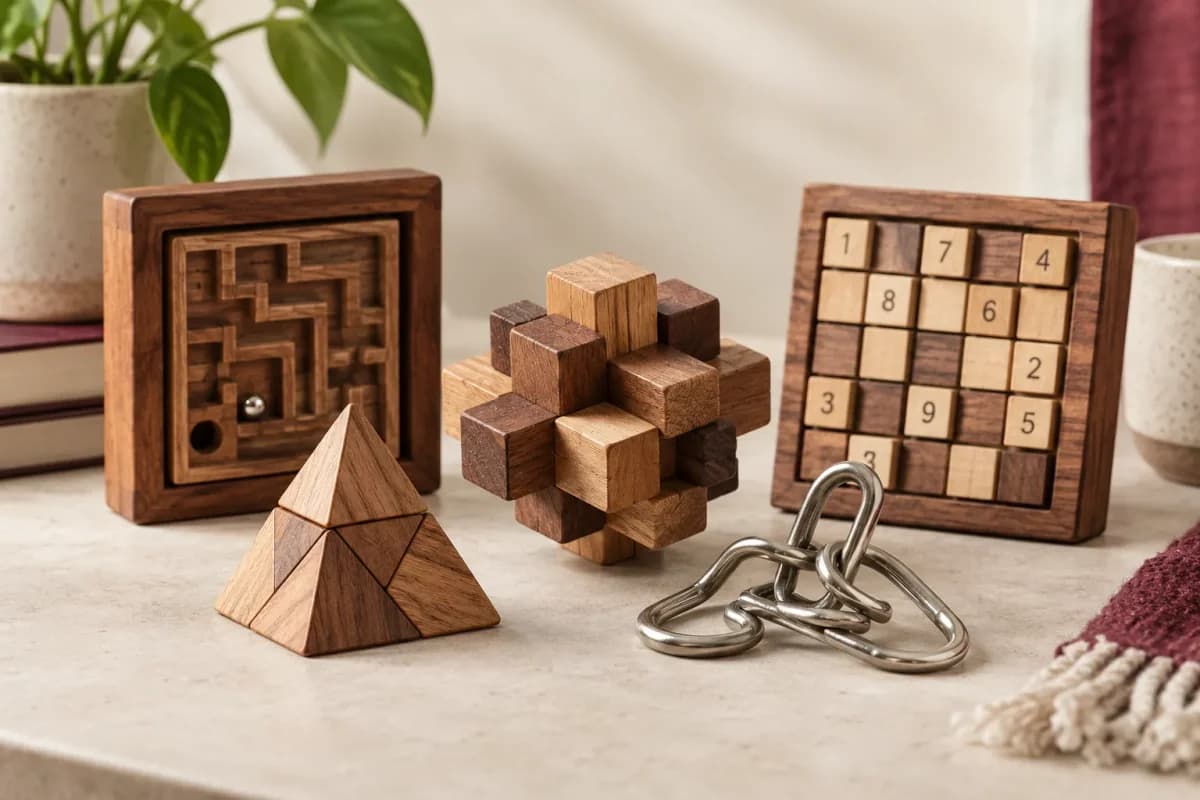
Sell mechanical and logic puzzles with their difficulty, material and hint support.
A mechanical puzzle comes in shapes from a cube to a burr. Collectors want difficulty and maker, and gift buyers want to know if it is solvable.
Collector-focused sellers
A seller imports small lots of metal and wood puzzles for enthusiasts.
Educational and gift sellers
A seller offers cubes and logic toys to parents, schools and gift buyers.
Marketplace sellers
A seller lists low-volume puzzles on marketplaces and a site.
The workflow for brain teasers.
- 1
List by difficulty and material
Each puzzle carries a difficulty rating, material, maker and a clear picture, with the size in hand.
- 2
Receive a small import lot
A lot arrives in small counts per puzzle, and each puzzle is checked and counted into stock.
- 3
Offer a hint or solution sheet
A buyer who is stuck asks for help, and a hint sheet is sent from the order record.
- 4
Dispatch with a care note
Small parts are packed to avoid loose pieces, with a note to the buyer about assembly state.
- 5
Handle a returned puzzle
A puzzle that was solved or taken apart is checked and priced according to your return rule.
The challenges, and what they cost.
What is specific to this trade.
These are requirements we would confirm in discovery. They describe what the solution may need to handle. They are not features that already exist.
- Difficulty and material fields applied to every listing
- Stock that copes with many titles of one to three units
- A rule on puzzles returned solved or taken apart
- Hint or solution sheets linked to listings, written by the seller or the maker
What we would build for brain teasers.
Chosen from the commerce capabilities this business needs, not a list of everything.
Who works in the system, and what each can do.
What it would connect to.
An integration is confirmed only after its API, access and scope are checked. A connection that updates on a schedule is described as scheduled, not real-time.
- A gateway account taking cards and UPI at checkout
- A courier for small parcels, linked after test bookings
- Marketplace listing tools, where each marketplace offers an API worth using
How the work runs, and what we need from you.
What you provide
- Your puzzle list with makers and difficulty
- Photos and hint sheets you can share
- Your rule on returns for solved puzzles
Fit the listing to many small lots
We make the catalogue quick to fill so a new puzzle is listed in minutes.
Test the return grading
A solved and a sealed return are both run through, to check the stock effect.
What you receive.
- Puzzle listing and stock structure
- Hint sheet delivery step
- Return grading steps
- Training for the stock keeper and support staff
How progress is judged.
Measures are agreed against your own baseline. We do not promise a result in advance.
- Returns refused or credited with no grade recorded
- Puzzles listed with no difficulty rating
Selling at home and abroad.
Small imported lots depend on the maker’s schedule and the shipping route. Duties on small consignments differ by country, so your adviser confirms them market by market.
The wider requirements for board games & puzzles are on the Board Games & Puzzles page.
Related subcategories.
Board Games & Puzzles E-commerce Software
Configured implementation
No existing GullySystem product runs a games and puzzles store. The storefront, catalogue and order flows are assembled on the platform you and we select in discovery. Trade ordering can draw on an existing wholesale product.
Attribute-rich listings, small-lot stock and a return grade are handled in the category solution, so a separate page would repeat it.
Read about the softwareExisting GullySystem products that apply
Test the order that does not follow the usual path.
Bring an awkward order or catalogue example to discovery and agree who handles the exception.
Puzzle attributes
Can the buyer verify the detail that determines whether this item fits?
For “Puzzle attributes”, compare one listing with its approved product record. Check the identifier, measurements and compatibility information, and agree who resolves missing or conflicting details before publication.
Background reading: Shopify: product details
Small-lot stock
Which location and stock state support the delivery promise?
Use “Small-lot stock” to follow an item moved between two locations. Distinguish stock on hand, stock already committed and stock still travelling before presenting an available quantity to a buyer.
Background reading: Shopify: inventory and locations
Questions about brain teasers e-commerce.
Can the store rate difficulty?
It shows the rating your editor enters. The rating scale is yours, so it is the same across the range.
Can we send the solution after purchase?
Yes. A hint or solution sheet can be linked to the puzzle and shared from the order, if you have the right to share it.
Does it handle puzzles returned taken apart?
It records the grade you assign and the credit you decide. Whether a puzzle can be put back together is a judgement for your staff.
Talk through your commerce requirement.
Share what you sell, where orders arrive and how you manage stock and fulfilment today.
- Your products and sales channels
- Your order and stock workflow
- The connections you need
Start with your requirements
Describe your current process, the people involved and the change you need. Start with the details you know; we can clarify the rest together.
Share your requirements