Software Solutions for Sneaker Brands and Resellers
Sneakers are sold in half sizes, in limited batches and to buyers who care about the box and the colourway code. Demand on release day can far exceed stock, and authenticity is a concern wherever pairs are resold. Sellers online need release management, per-customer limits, careful returns and traceable pairs.
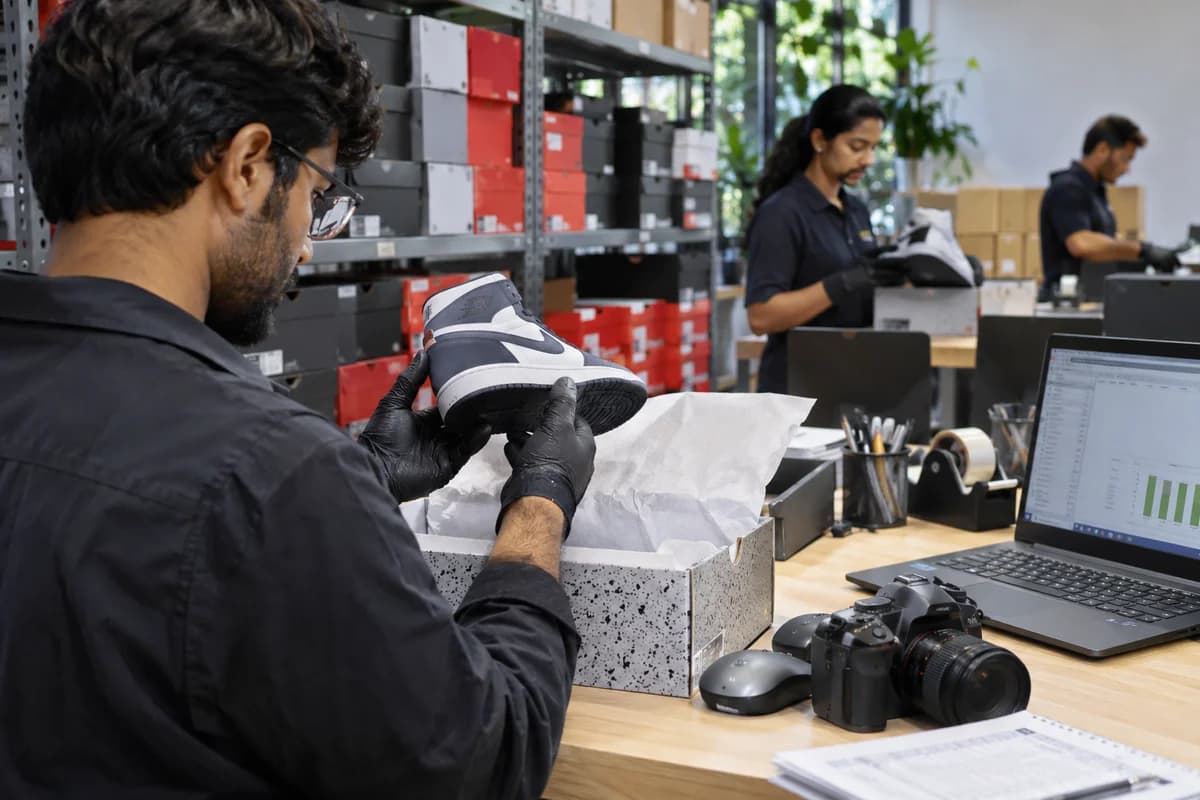
Run limited releases, protect authenticity and plan for high return rates.
A normal shoe store sells from a shelf. A sneaker release sells in minutes, to far more buyers than there are pairs, and a fair way to choose who gets a pair counts for as much as the stock itself.
Brands and boutiques with drops
A seller announces a release date, opens sales at a set time and sells out quickly.
Authorised multi-brand retailers
A retailer sells regular and limited pairs, and needs to tell buyers which is which.
Resale and consignment sellers
A seller lists pairs from other owners, so each pair needs its own record and proof of origin.
The workflow for sneakers.
- 1
Release announced and scheduled
A date, a time and a stock count are set. Subscribers are told, and a countdown runs on the product page.
- 2
Sale by queue or draw
Buyers join a queue or enter a draw, depending on the seller’s rule. Each is limited to one pair, and repeat accounts are watched for.
- 3
Pair reserved for payment
A winner has a short window to pay. A pair not paid for goes to the next in line.
- 4
Verified pack and ship
The box label and style code are matched to the order. Resale pairs are photographed and the record is saved.
- 5
Returns and condition grading
Pairs come back with creased boxes or worn soles, and each is graded before it is resold.
The challenges, and what they cost.
What is specific to this trade.
These are requirements we would confirm in discovery. They describe what the solution may need to handle. They are not features that already exist.
- A way to sell scarce pairs by queue or draw, with one-pair limits
- Style codes and half sizes held for each pair
- Photographs at dispatch and on return for grading
- Provenance records for resale pairs
What we would build for sneakers.
Chosen from the commerce capabilities this business needs, not a list of everything.
Who works in the system, and what each can do.
What it would connect to.
An integration is confirmed only after its API, access and scope are checked. A connection that updates on a schedule is described as scheduled, not real-time.
- Payment gateways able to take a sudden burst of orders, as arranged with the provider
- Courier partners for tracked, insured parcels, once their terms are reviewed
- A bot-detection service, if one is chosen for the release page
How the work runs, and what we need from you.
What you provide
- Your release calendar and past demand
- Your rule for who may buy: queue, draw or first come
- How resale pairs are sourced and verified
Test the load
The release page is exercised with a burst of test traffic before any real drop.
Agree the fairness rule
The queue or draw rule is written down and shown to buyers before it is used.
What you receive.
- Release scheduling and queue or draw flow
- Provenance and photograph records
- Return grading flow
- Load-test report
How progress is judged.
Measures are agreed against your own baseline. We do not promise a result in advance.
- Releases completed without a checkout failure
- Returns of worn pairs, against your own baseline
Selling at home and abroad.
Releases are global, with buyers in different time zones and currencies. Duties on branded footwear differ by country, so an adviser should review each destination before a pair ships.
The wider requirements for footwear are on the Footwear page.
Related subcategories.
Sneaker E-commerce & Release Management Software
Custom software solution
Standard commerce platforms are built for steady selling, not a release that sells out in minutes, so the release engine and the pair records are built to order. Nothing is described as available before it is accepted.
Read about the softwareTest the order that does not follow the usual path.
Bring an awkward order or catalogue example to discovery and agree who handles the exception.
Demand exceeds stock
Which location and stock state support the delivery promise?
Use “Demand exceeds stock” to follow an item moved between two locations. Distinguish stock on hand, stock already committed and stock still travelling before presenting an available quantity to a buyer.
Background reading: Shopify: inventory and locations
Returns of worn pairs
Are the physical return, replacement and refund separate decisions?
For “Returns of worn pairs”, use a partial return from an order containing several items. Agree what is inspected, what becomes sellable stock again, and which amount or replacement is owed before closing the case.
Background reading: Shopify: returns, exchanges and refunds
Questions about sneakers e-commerce.
Can the system stop bots from buying pairs?
Not completely. Limits, queues and detection tools reduce it. No tool removes it entirely, and the choice is made with you.
Can the site handle a sudden surge?
A release page can be built and load-tested for a surge you expect, within the limits of the hosting you choose. We say plainly what that limit is.
Can it prove a resale pair is genuine?
No. It stores the evidence you collect, such as photographs and receipts. Judging authenticity is a person’s decision.
Talk through your commerce requirement.
Share what you sell, where orders arrive and how you manage stock and fulfilment today.
- Your products and sales channels
- Your order and stock workflow
- The connections you need
Start with your requirements
Describe your current process, the people involved and the change you need. Start with the details you know; we can clarify the rest together.
Share your requirements