Software Solutions for Drum and Percussion Sellers
A drum kit is a set of parts chosen by size, finish and brand. Shells, stands, pedals, cymbals and heads are priced separately and sent in several cartons. Electronic kits and percussion add their own modules and cables. This page covers how drum sellers run online and what the software must hold.
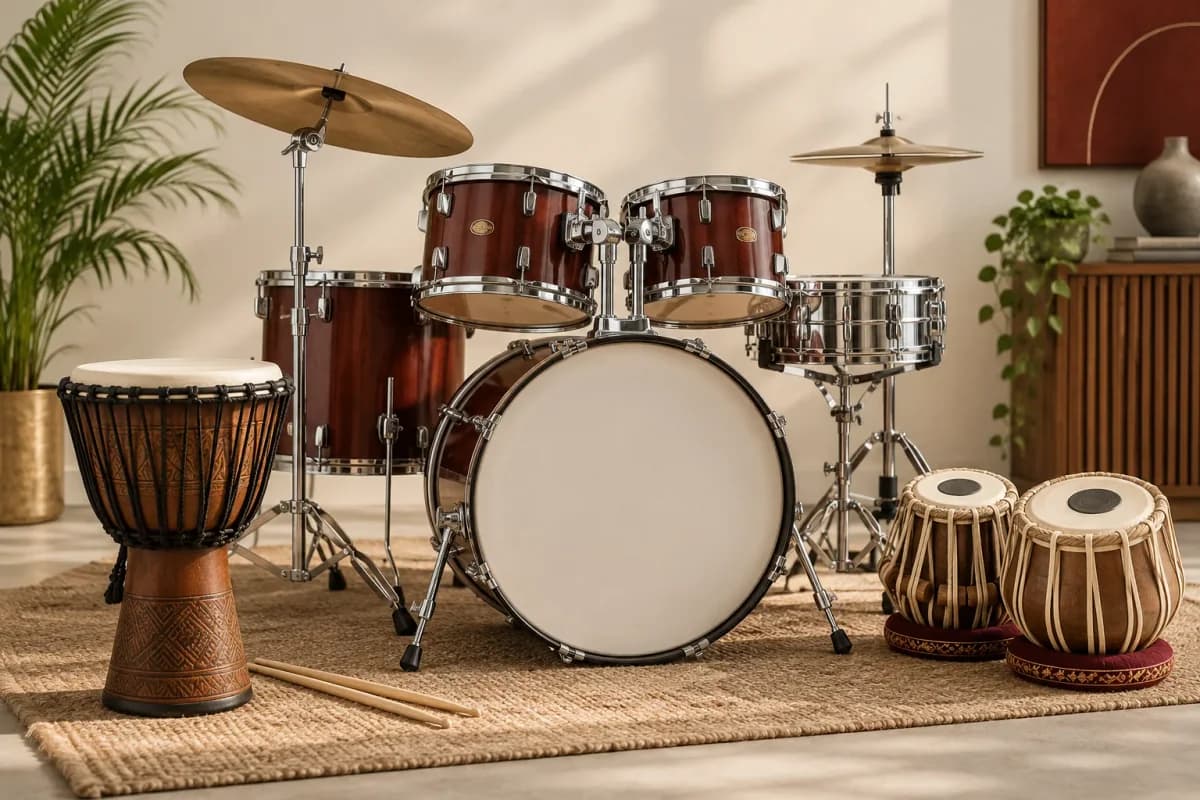
Let a buyer build a kit from shells, hardware and cymbals, then ship it as one order.
A buyer rarely wants a kit as one stock item. They want a five-piece in a certain finish with their own cymbals and a stool they already like.
Shops that sell kits and parts
A shop sells complete kits and individual shells, hardware and cymbals through one catalogue.
Percussion specialists
A seller deals in hand drums, cajons and orchestral percussion, from small to odd-shaped items.
The workflow for drums.
- 1
Kit assembled online
The buyer chooses the shell sizes, finish, hardware and cymbals, and the basket shows what the set will include.
- 2
Cymbals picked individually
Each cymbal is a single piece, photographed and weighed, and held for one buyer.
- 3
Cartons counted and labelled
A kit leaves in several boxes. Each is labelled and counted against the order before the carrier collects.
- 4
Delivery to an address that can take it
The delivery address, the floor and the lift are checked, since a multi-carton order is large.
- 5
Missing or damaged parts
A buyer reports a short carton, and the packing record shows what was in each one.
The challenges, and what they cost.
What is specific to this trade.
These are requirements we would confirm in discovery. They describe what the solution may need to handle. They are not features that already exist.
- Kit builder rules that list the parts of a chosen set
- Packing records per carton
- Compatibility between shell sizes, heads and hardware
What we would build for drums.
Chosen from the commerce capabilities this business needs, not a list of everything.
Who works in the system, and what each can do.
What it would connect to.
An integration is confirmed only after its API, access and scope are checked. A connection that updates on a schedule is described as scheduled, not real-time.
- Your counter billing and stock system, linked as far as its export allows
- Pickup requests and labels for light parcels, where the carrier publishes a usable interface
- A gateway account carrying UPI and cards, with fees and limits read first
How the work runs, and what we need from you.
What you provide
- Your kit configurations and their parts
- How cymbals are weighed and listed
- Your packing method for large orders
Parts list first
We list every part of a typical kit, because the kit builder can offer only what that list contains.
Try one kit end to end
One kit is built, ordered, packed and delivered before more are added.
What you receive.
- A kit builder structure and parts rules
- Single-piece listing for cymbals
- A numbered-carton packing record
How progress is judged.
Measures are agreed against your own baseline. We do not promise a result in advance.
- Orders with a carton missing on arrival
- Cymbals sold twice
Selling at home and abroad.
Large cartons attract different freight conditions in different countries, and some shells or cymbals may be made with materials that need declaration. A freight forwarder should check each destination before it is offered.
The wider requirements for musical instruments are on the Musical Instruments page.
Related subcategories.
Musical Instrument E-commerce & Store Management Software
Configured implementation
No GullySystem product sells instruments online. The shop front rests on commerce software selected with you during discovery, while the counter may use a retail product we already run where its features fit.
Part-by-part pricing, bundles and carton-level packing sit within the category solution, and the kit builder is a configuration of it.
Read about the softwareExisting GullySystem products that apply
Test the order that does not follow the usual path.
Bring an awkward order or catalogue example to discovery and agree who handles the exception.
Parts compatibility
Can the buyer verify the detail that determines whether this item fits?
For “Parts compatibility”, compare one listing with its approved product record. Check the identifier, measurements and compatibility information, and agree who resolves missing or conflicting details before publication.
Background reading: Shopify: product details
Kit builder
Does each sellable combination have the right stock and price?
Choose an example from “Kit builder” with more than one option. Check the selected combination, item identifier, available quantity and price through to the order, including a combination that should not be sold.
Background reading: Shopify: product variants
Questions about drums e-commerce.
Can a customer assemble a kit on the website?
Yes, within the options you define. The builder offers the choices you set and lists the resulting parts. Whether a combination sounds good is a call for the drummer.
Can cymbals be listed one by one?
Yes. Each cymbal can be a single-quantity listing with its weight and photographs, which suits buyers who want that exact piece.
Does it ship electronic kits as well?
It can list them with their modules and cables. Their power and compatibility details are held as fields you supply.
Talk through your commerce requirement.
Share what you sell, where orders arrive and how you manage stock and fulfilment today.
- Your products and sales channels
- Your order and stock workflow
- The connections you need
Start with your requirements
Describe your current process, the people involved and the change you need. Start with the details you know; we can clarify the rest together.
Share your requirements