Inspections and unit turnover for apartments
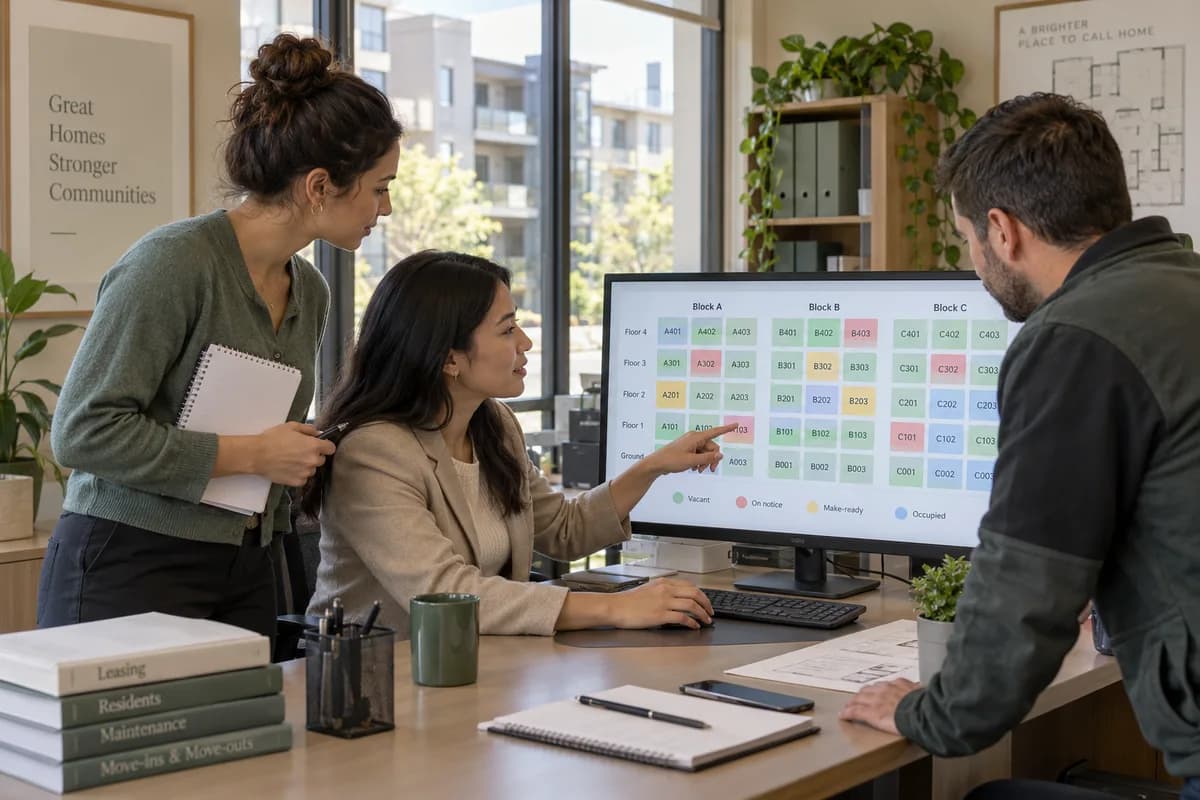
Move-in, move-out and routine inspections are recorded room by room with photographs and a defect list. When a household leaves, cleaning, repainting and repairs are scheduled in the gap before the next resident. The vacancy calendar shows how long the flat stays empty and why.
What an apartment inspection record holds
An inspection record belongs to the apartment, not to the resident. It outlasts every tenancy. Each visit adds a dated set of photographs and a defect list. Four parts make up the record, and each is read again at the next visit.
From move-out walk-through to the next resident
Turnover is a short race between one household’s departure and the next one’s arrival. Every day empty is a day without rent. The order of work is set by the record. Four moments follow a flat from the handback of keys to its next listing.
Who sees which inspection and what each does
An inspection touches the resident, the crews and the office, and each needs a different slice. The inspector captures facts. The office schedules. Crews work from the defect list. The owner reads how fast flats return to the market.
Inspection decisions to settle before set-up
Inspections are only useful if everyone follows the same pattern. Agree four points with the manager, the caretaker and a maintenance lead before the first walk-through. Each shapes what the record contains.
How inspections and turnover connect to other features
Turnover is the hinge of the tenancy cycle. It starts when a notice is served and uses defects from inspections to raise repairs. It ends when the flat is vacant and ready to list. Five links below show where the work flows in and out.
- Vacant status and dates come from the unit register
- Move-out notice from leases starts the checklist
- Defects become work orders for each trade
- Photographs from the walk-through back every deposit deduction
- Leasing agents read ready dates from turnover
Where inspections and turnover stop short
The record keeps what was seen, photographed and signed. It does not judge fair wear against damage, and it does not set the cost of a repaint. Those judgements stay with the manager, the owner and the adviser. Required safety checks are theirs too. One let flat can be inspected on paper. Paper is enough there.
Frequently asked questions
Are move-in photographs kept for the move-out comparison?
They are filed against the apartment, not the resident, so they are waiting when the household leaves. The move-out defect list is set beside them, room by room. Both versions can be shown to the resident.
Can the resident sign the walk-through form?
The signed walk-through form is filed against the apartment. Inspector and resident both sign. The copy joins the record, so whoever opens the apartment later sees what both agreed at the door, with the date and the photographs.
How are cleaning and repainting scheduled between residents?
Tasks are listed with a person and a date, in sequence. These tasks appear in the vacancy calendar, so the gap between households is visible. Late tasks are easy to spot and chase. Owners see where days are lost.
What is a routine inspection used for?
A routine inspection checks an occupied flat on a set pattern. Photographs and a defect list are added, and any fault becomes a work order. Notice goes to the household beforehand. The visit is recorded.
How is turnover time measured?
Turnover days are counted from the day a household leaves to the day the flat is ready for the next resident. The report lists days by unit. Slow flats are named, and the reasons can be read.
How this feature fits the system.
Apartment Community Management Software: the parts that work with this feature, the trades that use it and the ways to put it in place.
Leasing pipeline
Every enquiry is logged with its source and the apartment asked about, so leasing agents see which prospects still need a viewing or referencing.
Lead ManagementLeases and renewals
Each lease is held with its term, rent, addenda and break clause, and tenancies expiring soon are listed so offers go out before notice.
Contract ManagementRent ledger and charges
Rent, service charges and metered utilities are raised monthly for every let apartment, with payments and credits set against the same ledger.
Subscription BillingTell us what you need.
Tell us what your team does today, where work gets stuck and what you want to change.
What happens after you share your requirements
- We review your brief and the systems you already use.
- We clarify the workflow, missing information and the work to consider first.
- The proposed scope sets out the deliverables, responsibilities and dependencies.
- Review the scope and commercial terms before deciding whether to proceed.
Start with your requirements
Describe your current process, the people involved and the change you need. Start with the details you know; we can clarify the rest together.
Share your requirements