Uniform and bulk orders for tailoring shops
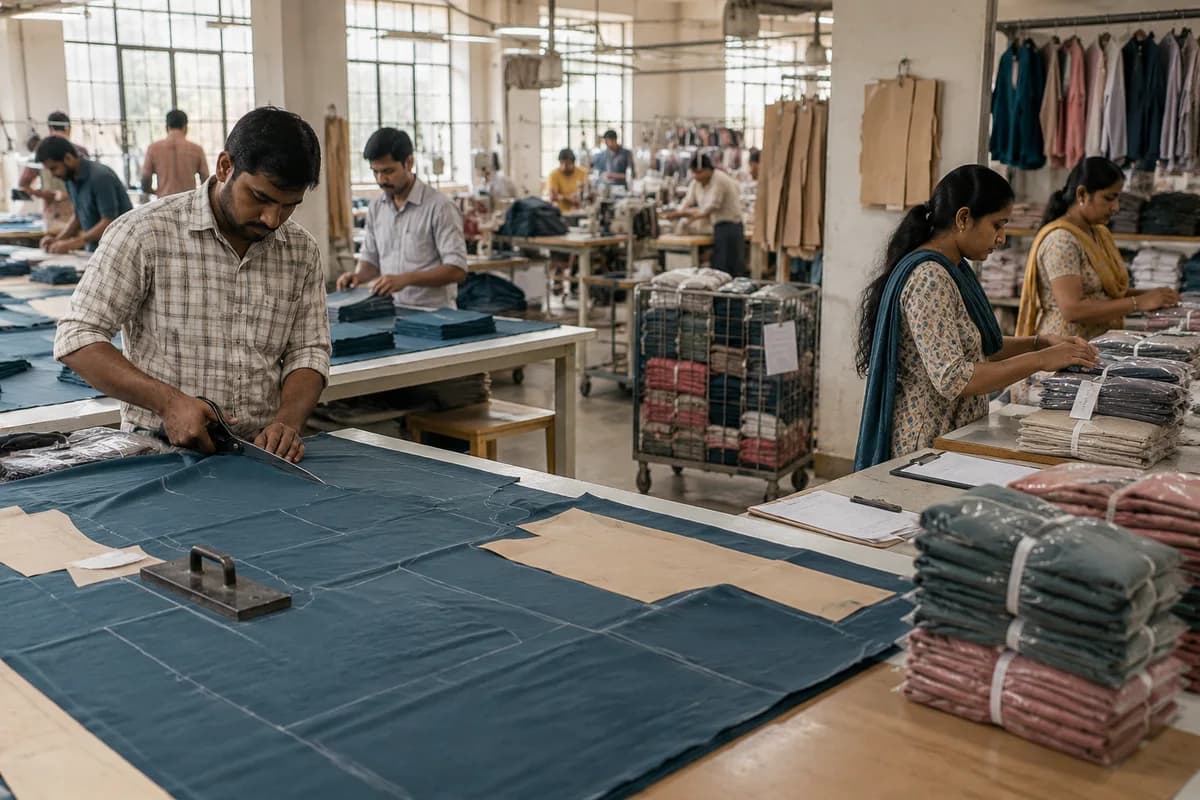
Uniform and bulk orders hold a school, hospital or company order as one parent order. This parent carries a size list, delivery batches and a single invoice at the end. Each uniform piece still passes through cutting and stitching, so the stitching room sees the work like any other garment.
What a bulk uniform order records
A bulk order is one contract with a crowd of small garments inside it. The parent holds what is common to the whole job. The pieces below it hold what is personal. Four parts of the record carry the load.
A uniform order from size list to last batch
Bulk work arrives as a pile of names and sizes and leaves as stacked parcels. Between the two, the shop must keep track of each piece without losing the whole. Four moments show how the work moves. Each is a plain step.
Who handles bulk orders and what each sees
A contract order touches the counter, the cutting table and the books, so each role sees a different face of it. Four people see this order. Each sees it differently. Access is agreed during set-up, as with any other record.
Decisions to settle before the first bulk order
Bulk orders bring the largest money and the largest risk into a shop, so agree the rules before the first one is accepted. Sit with the owner and the master cutter. Four decisions need an answer.
How bulk orders link to the shop
A bulk order borrows from nearly every other part of the shop. It books dates like an ordinary garment, uses the board for each piece and draws on the shelves for trims. Five links carry the parent order through to the final invoice. None is new work.
- Orders and delivery dates hold the batch dates and capacity
- Cutting and stitching board tracks every uniform piece
- Fabric and trims stock records cloth and buttons used
- Advances and receipts post part payments to the parent
- Billing and delivery slips print each batch slip and the invoice
Where uniform and bulk orders stop
A parent order holds a list, batches and one invoice. It does not price a contract, negotiate terms or check that the sizes match the wearers. Those tasks stay with the owner and the buyer. A shop taking a couple of uniforms from a neighbour can book them as ordinary orders instead. That is simpler.
Frequently asked questions
Can the size list come from the client’s own sheet?
Staff can enter it from the sheet the client sends. A sheet can also be brought across during set-up. Every name is then checked against the original sheet at the counter. Corrections are made before cutting starts.
How is a delivery batch invoiced?
A batch has its own delivery slip and its own part payment. The invoice is raised once, at the end. It lists every batch beneath the parent. Payment is against the contract, not loose pieces.
What happens if a wearer leaves before delivery?
The name and size can be removed or reassigned on the list, as long as the piece has not been cut. If it has, the shop decides what happens to it. A record stays on the parent either way.
Can one order mix several garment types?
A parent can list shirts, trousers, tunics and aprons together. Each type has its own sizes and its own piece rate. Mixing is routine. Batches can be arranged by type or by wearer group, whichever suits the client.
Can the client pay in stages?
Part payments are posted to the parent order as they arrive, each with its own receipt. The balance shows at every batch. Whether payment follows batches or dates is agreed with the client, outside the software.
How this feature fits the system.
Tailoring Shop Management Software: the parts that work with this feature, the trades that use it and the ways to put it in place.
Orders and delivery dates
Each garment is booked with its style notes, fabric source and promised day, and the counter sees how many pieces are already due on that day.
Order ManagementTrial fittings
Trial slots are held against the cutter and the order, so a customer arrives for a fitting when the garment is basted and ready to try.
Appointment SchedulingCutting and stitching board
Every open garment sits on the board by stage with its tailor and days left, from cut and tagged through stitching to pressing.
Work Order ManagementTell us what you need.
Tell us what your team does today, where work gets stuck and what you want to change.
What happens after you share your requirements
- We review your brief and the systems you already use.
- We clarify the workflow, missing information and the work to consider first.
- The proposed scope sets out the deliverables, responsibilities and dependencies.
- Review the scope and commercial terms before deciding whether to proceed.
Start with your requirements
Describe your current process, the people involved and the change you need. Start with the details you know; we can clarify the rest together.
Share your requirements