Business solutions for Institutional food suppliers
Explore software for work such as “College hostels, messes and PG operators”. Review each business function below, including when it fits and what to check before implementation.
How the business operates.
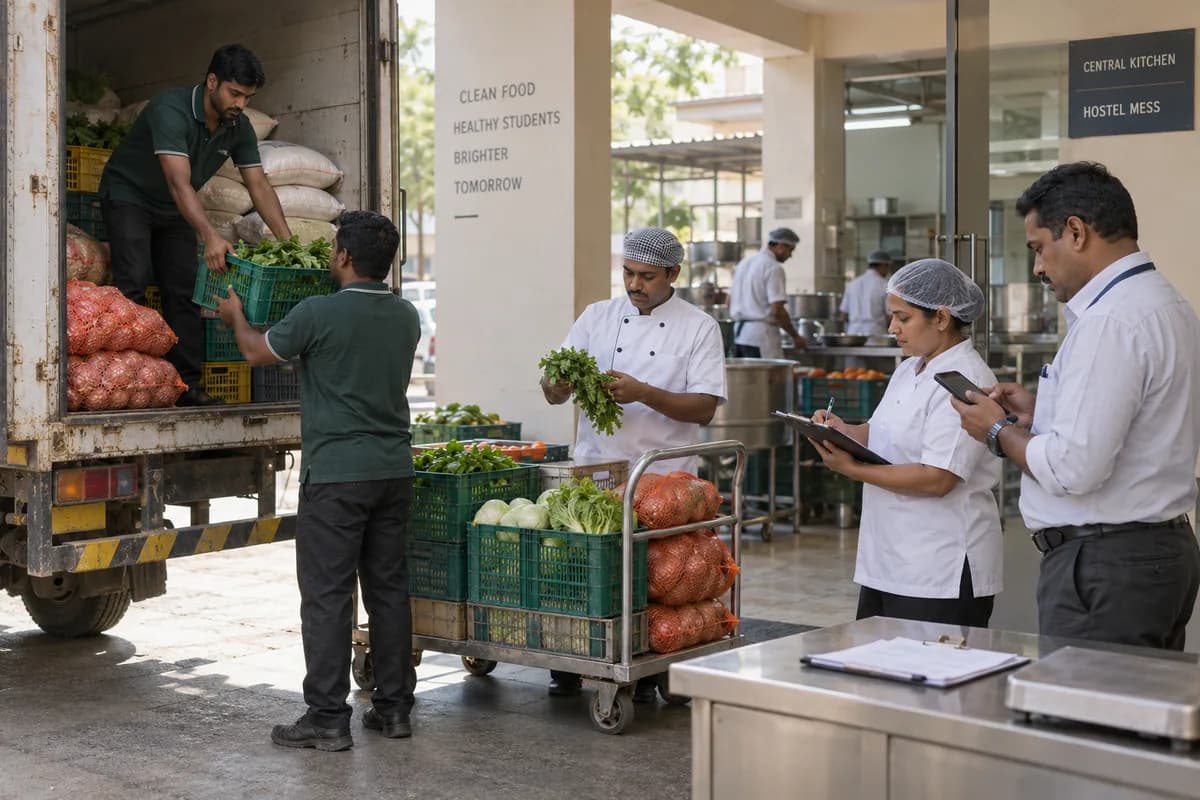
You supply the kitchen, not the shelf. Each hostel, hospital ward kitchen or caterer sends an indent, expects the sacks and crates at a fixed hour, and weighs them on its own platform scale before signing.
The records that hold the operation together.
- Institution, delivery location and authorised buyer
- Indent, standing requirement and effective rate contract
- Route picking and loading record
- Signed delivery note, weight difference and rejection
- Consolidated bill and supporting delivery references
Operational bottlenecks to check
Daily indents arrive by call, message and sheet
Calls, voice notes and photographed sheets all reach the order desk in different layouts, and one item is missed. The cook finds out at the gate.
Contract rates drift from billed rates
A rate agreed for a tender period lives in a letter, and bills are raised at the last price used. The customer’s auditor notices before you do.
Short supply and rejections are not recorded
A rejected crate of eggs at the gate is written on one copy of the delivery note. It never reaches the bill.
The monthly bill takes days to build
Signed delivery notes are matched with rate sheets by hand, one hostel at a time. Errors surface only in the dispute.
Credit runs past what was agreed
Institutions pay slowly and in lumps after budget sanctions, and nobody sees the outstanding while the next indent is packed. Dues keep growing.
Follow the work across teams.
This is a planning flow. Confirm the steps, owners and approval rules against your actual operation.
Roles and responsibility boundaries.
Reports your managers need.
- Indents and standing quantities awaiting supply
- Route shortages, rejections and delivery differences
- Delivered quantities against contract-rate versions
- Consolidated bills, deductions and outstanding balances
Connections to scope
- Institution ordering: authorised buyer indents and acknowledgements
- Accounting: supported deliveries, invoices and receipts
- Stock and route records: actual picks and returned quantities
Confirm data access, record ownership and the exchange method for each connection. Inclusion here does not mean every connection is available in a standard package.
Setup decisions and adoption risks.
Use these requirements to plan phases, data migration and user training. Agree the release sequence after reviewing your current systems.
Limitations to settle before implementation
- The buyer portal serves authorised institutional customers; it does not require a dealer network.
- Food acceptance and handling decisions remain with the responsible teams; billing software does not establish food safety.
Modules to consider first.
These functions connect to the operating model above. Confirm each one against the work your business actually runs.
Choose the operation you want to improve.
Use these activities to explain your scope. Your business does not need every function in the directory.
- College hostels, messes and PG operators
- Corporate and factory canteens, and the contractors who run them
- Hospital and nursing home kitchens
- School, trust and government hostel rate contracts
- Caterers and event kitchens
- Hotels, restaurants and cloud kitchens
- Central kitchens and meal-box companies
- Festival, Ramzan and wedding-season bulk orders
- Standing orders with one fixed delivery slot
Explore the business functions.
Production, stock, fleet and recurring billing functions apply only where your business runs those activities. Read the suitability conditions on each page.
Sales and Distribution
Credit Limits and Control
Apply customer credit terms and review orders that exceed limits.
View workflow and suitability →Dealer and Distributor Portal
Let channel partners view their terms and submit orders through a controlled account.
View workflow and suitability →Price Lists and Schemes
Apply dated price lists and promotional rules to eligible transactions.
View workflow and suitability →Sales Returns and Credit Notes
Record customer returns and link their financial and stock effects.
View workflow and suitability →
CRM
Inventory Management
Start with the problem your team can describe.
Bring a sample record and show where information is copied, missed or waiting for approval. Scope the first useful change from there.
What happens after you share your requirements
- We review your brief and the systems you already use.
- We clarify the workflow, missing information and the work to consider first.
- The proposed scope sets out the deliverables, responsibilities and dependencies.
- Review the scope and commercial terms before deciding whether to proceed.
Start with your requirements
Describe your current process, the people involved and the change you need. Start with the details you know; we can clarify the rest together.
Share your requirements