Software Solutions for Drinkware Sellers
Drinkware covers glasses, mugs, tumblers and insulated bottles. Buyers look at capacity and, for bottles, how long drinks stay hot or cold, and companies place branded gift orders. Sellers online need capacity fields, careful claim wording, printing orders and secure packing for glass.
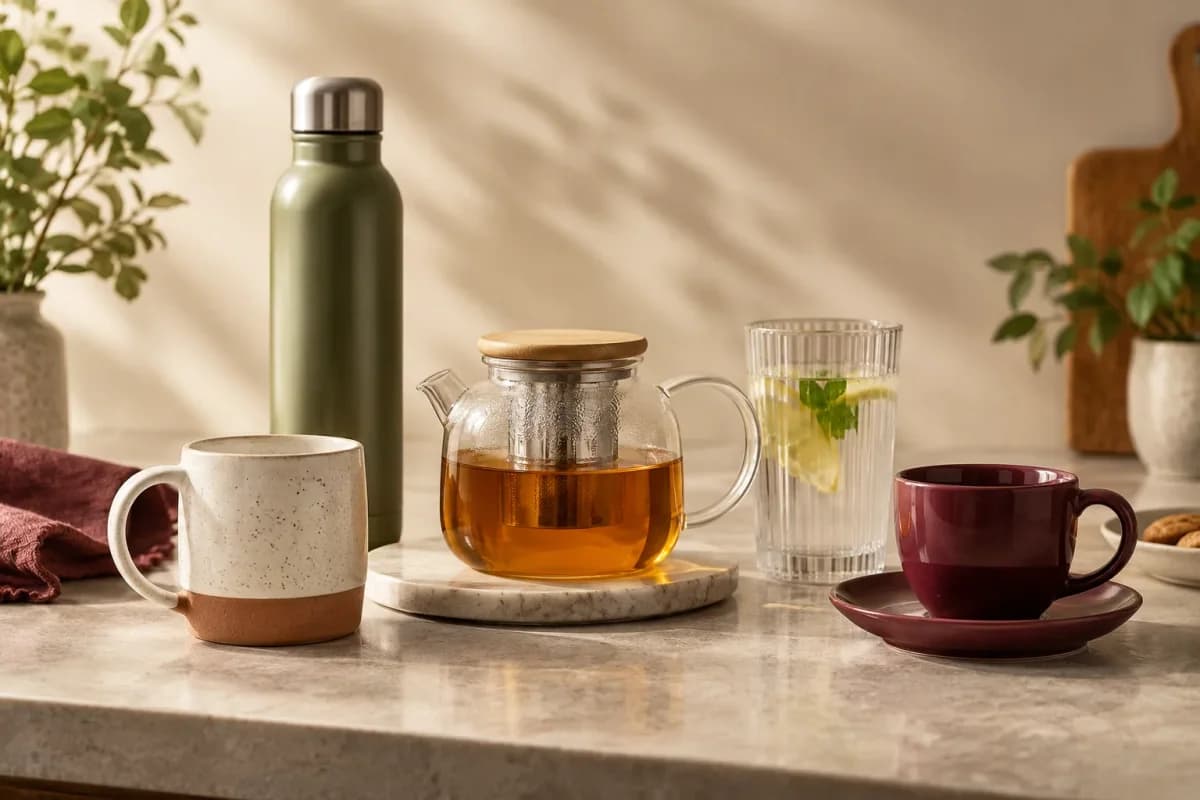
Sell glasses, mugs and bottles by capacity, and take branded orders in bulk.
A 500 ml bottle and a one-litre bottle may look alike in a photograph. Capacity belongs in a field, not in a caption.
Drinkware brands
A brand sells glasses, mugs and bottles from its site and marketplaces.
Corporate gifting suppliers
A supplier sells hundreds of bottles and mugs with a company logo.
Kitchen stores
A store lists drinkware beside dinnerware and sells pieces as gifts.
The workflow for drinkware.
- 1
Capacity and material fields
Each item states capacity, material and lid type.
- 2
Insulation claim wording
Hot and cold hours appear as the maker’s claim, with a note on how it was measured where that is known.
- 3
Personalised print or logo
A buyer or company adds text or artwork, sees a proof and approves it.
- 4
Packing glass
Glasses are packed in dividers, and bottles are protected against dents.
- 5
Bulk delivery and claims
A large order ships in cartons, and breakage is claimed against the carton record.
The challenges, and what they cost.
What is specific to this trade.
These are requirements we would confirm in discovery. They describe what the solution may need to handle. They are not features that already exist.
- Capacity and lid type as fields
- A proof step for logo and name printing
- Insulation hours quoted from the maker, not restated
What we would build for drinkware.
Chosen from the commerce capabilities this business needs, not a list of everything.
Who works in the system, and what each can do.
What it would connect to.
An integration is confirmed only after its API, access and scope are checked. A connection that updates on a schedule is described as scheduled, not real-time.
- Printing workshop job sheets, passed by file
- Checkout through UPI and cards for retail orders
- Couriers, once rates for glass cartons are reviewed
How the work runs, and what we need from you.
What you provide
- Your range with capacities
- How you word insulation claims
- Your printing methods and file requirements
Agree claim wording
We settle how insulation and leak-proof claims are worded, since they cause most complaints.
Run a logo order
A real corporate order goes through proof and approval, to find the gaps.
What you receive.
- A capacity and lid structure
- A logo order and proof flow
- A carton packing record
How progress is judged.
Measures are agreed against your own baseline. We do not promise a result in advance.
- Returns citing insulation or leaking
- Logo orders reworked after approval
Selling at home and abroad.
Drink sizes follow local habits, and bottle regulations on materials and labels differ between countries. Your adviser states what each market requires, and the catalogue carries it.
The wider requirements for kitchen & dining are on the Kitchen & Dining page.
Related subcategories.
Kitchen & Dining E-commerce & Product Catalogue Software
Configured implementation
Technical fields, set rules and the order flows are configured on a hosted platform that discovery will select, and the platform is left unnamed. An existing GullySystem dealer ordering product can serve makers who supply retailers.
Capacity fields, claim wording and logo orders fit the category catalogue and trade ordering.
Read about the softwareExisting GullySystem products that apply
Related services
Selling in a shop as well?
Test the order that does not follow the usual path.
Bring an awkward order or catalogue example to discovery and agree who handles the exception.
Capacity and material fields
Can the buyer verify the detail that determines whether this item fits?
For “Capacity and material fields”, compare one listing with its approved product record. Check the identifier, measurements and compatibility information, and agree who resolves missing or conflicting details before publication.
Background reading: Shopify: product details
Questions about drinkware e-commerce.
Can the site state how long a bottle keeps drinks cold?
Yes, the maker’s own wording is quoted. Nothing is tested by the software, which only records what you choose to publish.
Can companies order bottles with a logo?
Yes, through a quotation and a proof. Printing is done by your workshop or a partner.
Can it limit orders of glass to a safe packing size?
Yes. A carton rule can cap quantity per box, and larger orders split across cartons.
Talk through your commerce requirement.
Share what you sell, where orders arrive and how you manage stock and fulfilment today.
- Your products and sales channels
- Your order and stock workflow
- The connections you need
Start with your requirements
Describe your current process, the people involved and the change you need. Start with the details you know; we can clarify the rest together.
Share your requirements