Software Solutions for Kitchen Tool Sellers
Kitchen tools are small, cheap and numerous: ladles, peelers, graters, whisks and measuring cups. Kitchen tools sell as gifts or as starter sets. Sellers online need bulk listing, bundles, bin-level picking and shipping rules that do not eat a margin of a few rupees.
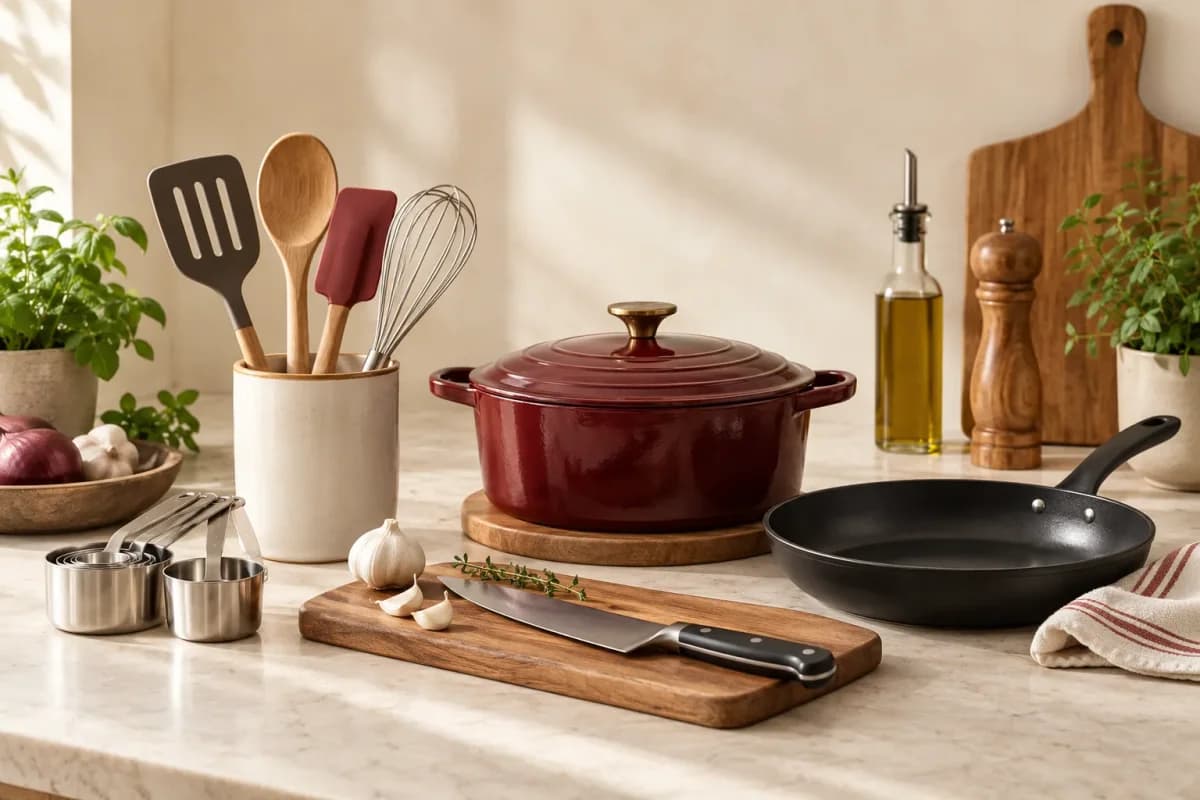
List thousands of small tools quickly, and bundle them without shipping at a loss.
A whisk and a peeler weigh little and cost little. Four of them in one parcel make money. One of them alone loses it.
Utensil and gadget sellers
A seller lists several thousand small items from its suppliers.
Home and gift stores
A store sells kitchen tools as part of a wider range of housewares and gifts.
Wholesalers
A supplier sells cartons of mixed tools to shops and market stalls.
The workflow for kitchen tools.
- 1
Bulk listing
Tools are listed from a supplier sheet with material, size and a photograph each.
- 2
Bundles and starter sets
A shopper picks a ready set or builds one, and stock falls for each piece.
- 3
Order merging
Several small items are packed in one parcel, and the carrier cost is shared across them.
- 4
Bin picking
Pickers work from a list ordered by shelf and bin, and small items are scanned or counted.
- 5
Returns of small goods
A returned tool is checked, cleaned if needed and restocked, or written off if the cost of handling is more than its price.
The challenges, and what they cost.
What is specific to this trade.
These are requirements we would confirm in discovery. They describe what the solution may need to handle. They are not features that already exist.
- Bulk import with a review before publishing
- A rule on minimum basket value
- Bin locations on the pick list
- Bundles that reduce stock per piece
What we would build for kitchen tools.
Chosen from the commerce capabilities this business needs, not a list of everything.
Who works in the system, and what each can do.
What it would connect to.
An integration is confirmed only after its API, access and scope are checked. A connection that updates on a schedule is described as scheduled, not real-time.
- Supplier sheets, imported by file
- Checkout through UPI and cards
- Courier aggregators, after rates for small parcels are reviewed
How the work runs, and what we need from you.
What you provide
- A sample supplier sheet
- Your shelf and bin layout
- Shipping rates for small parcels
Fix the import sheet
The columns are agreed once, because every later listing follows them.
Watch margin per order
Shipping and packing are recorded from the first orders, so the minimum basket rule can be set on facts.
What you receive.
- An import template with review
- Bundle rules
- A bin-sorted pick list
How progress is judged.
Measures are agreed against your own baseline. We do not promise a result in advance.
- Single-item orders that lost money
- Wrong picks per thousand orders, against your baseline
Selling at home and abroad.
Utensil names differ by region, so the same tool is searched for under local words. The catalogue holds alternate names to help search in each market.
The wider requirements for kitchen & dining are on the Kitchen & Dining page.
Related subcategories.
Kitchen & Dining E-commerce & Product Catalogue Software
Configured implementation
Technical fields, set rules and the order flows are configured on a hosted platform that discovery will select, and the platform is left unnamed. An existing GullySystem dealer ordering product can serve makers who supply retailers.
Bulk listing, bundles and bin picking fit the category catalogue and dispatch rules.
Read about the softwareExisting GullySystem products that apply
Related services
Selling in a shop as well?
Test the order that does not follow the usual path.
Bring an awkward order or catalogue example to discovery and agree who handles the exception.
Minimum basket and shipping rule
Can a partial delivery be distinguished from a completed order?
For “Minimum basket and shipping rule”, follow an example that leaves in more than one trip. Compare the quantity handed over with the quantity still owed before closing the order.
Background reading: ERPNext: delivery notes
Returns of small goods
Are the physical return, replacement and refund separate decisions?
For “Returns of small goods”, use a partial return from an order containing several items. Agree what is inspected, what becomes sellable stock again, and which amount or replacement is owed before closing the case.
Background reading: Shopify: returns, exchanges and refunds
Questions about kitchen tools e-commerce.
Can we list hundreds of tools in one upload?
Yes. A sheet in the agreed layout is uploaded, and missing sizes or photographs are caught in the review step.
Can the store set a minimum basket?
Yes. A value or item count can be required, and the shopper is told how much more is needed.
Can it print bin labels?
Only if label printing is scoped. A bin location is stored on each item, and a label layout is a small separate piece of work.
Talk through your commerce requirement.
Share what you sell, where orders arrive and how you manage stock and fulfilment today.
- Your products and sales channels
- Your order and stock workflow
- The connections you need
Start with your requirements
Describe your current process, the people involved and the change you need. Start with the details you know; we can clarify the rest together.
Share your requirements