Batch manufacturing records for herbal products
Batch manufacturing records follow a herbal batch from the first sieve to the last blend. Each stage notes the quantity in, the quantity out, the solvent recovered, the operator and the time. Yield is worked out as the batch closes, and spent plant material is counted rather than guessed. That record becomes the history of the batch.
What a herbal batch record keeps at each stage
A batch record is a running log of one product made once. It opens with the formula version and the lots drawn, then adds a line for each stage as the work is done.
Batch records through a day in the batch room
Work in the batch room goes stage by stage, and the record keeps pace. Four moments show a supervisor, operators and the quality team using it, from the first sack drawn to the final close. Entries go in as work happens.
Who writes in the batch record and who reads
Entry belongs to the people at the machines. Review belongs to supervisors and the quality team. Set-up decides who can enter a line, who can correct one and who can only read, and the four roles below follow that split.
Decisions to settle before batch records go live
A batch record is only as useful as the stages it asks for. Settle these four points with production and quality before the first live batch. Test them on one product first.
How batch records link to other features
The batch record is where other features meet. It takes the formula and the released lots in, and it hands finished quantity, yield and the lot history on to the next step. Quality, stock, labels, dispatch and tracing all read from it. Five links stand out.
- Formulations supply the version and scaled quantities for each batch
- Quality testing receives the closed batch for release
- Stock by lot and bin takes in the finished quantity
- Labels and barcodes print from the batch number and expiry
- Batch tracing follows the record forward to customers
Where batch records stop
The batch record logs what operators enter. It does not weigh, measure or time anything by itself, apart from scale input where a weighing scale is connected. It cannot tell you whether a stage was done properly. That judgement stays with supervisors and quality. Procedures, licences and regulator rules stay with the owner and an adviser. A very small unit with one product may manage on a paper register.
Frequently asked questions
Can an operator correct a figure after saving it?
That is a set-up decision. A supervisor may be allowed to correct a line, or the batch may have to be reopened. Either way the choice is agreed with production and quality before the first live batch.
How is yield worked out for a batch?
Yield comes from the quantities in and out recorded at each stage, compared with the figure expected for the product. The sum is done for the operator. Spent plant material and solvent recovered show beside it on the closed batch, so the owner reads all three together.
Can one record cover drying through to filling?
Stages such as sieving, extraction, drying and blending are recorded on the batch, and finished goods are filled under its batch number. One number runs through. How stages are split between lines is agreed at set-up.
Does the record suit extract and powder batches alike?
Yes, with different stages. The stage list for each product is entered as your plant runs it. An extract carries solvent charged and recovered, while a powder carries sieving, milling and blending, each with its own quantities.
Who can see a batch that is still open?
Supervisors, stores and the quality team can read open batches, and operators enter their own stages. Sales see only whether the batch is finished. Views are set by role, and the exact split is settled at set-up.
How this feature fits the system.
Herbal Product Manufacturing Software: the parts that work with this feature, the trades that use it and the ways to put it in place.
Raw material intake and quarantine
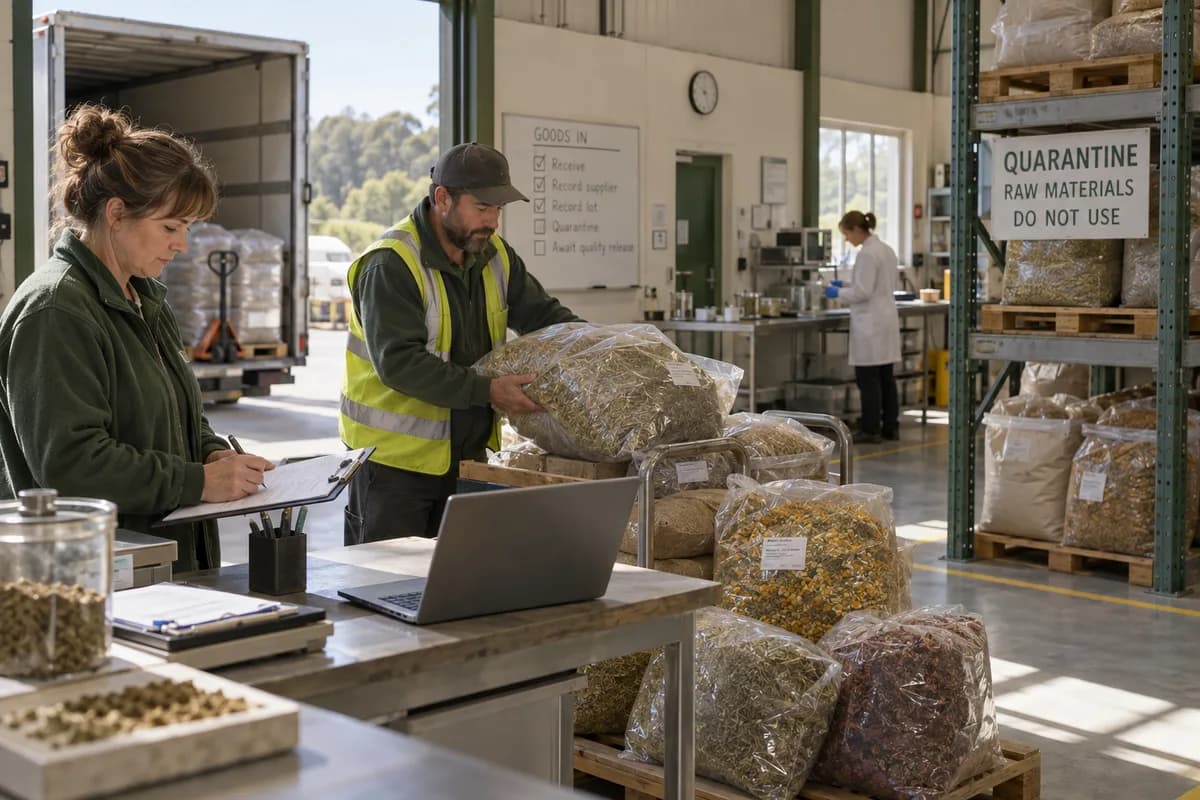
Each delivery is received against an order, logged by grower and lot, and held in quarantine until the quality team passes it.
Goods Receipt (GRN)Formulations
A formula lists every botanical and excipient with quantities and approved versions, and scales to the batch size before the mill is booked.
Bill of MaterialsBatch manufacturing records
Each batch records the lots drawn, the stages passed and the output, so a finished powder traces back to its roots and leaf.
Batch and Serial TrackingTell us what you need.
Tell us what your team does today, where work gets stuck and what you want to change.
What happens after you share your requirements
- We review your brief and the systems you already use.
- We clarify the workflow, missing information and the work to consider first.
- The proposed scope sets out the deliverables, responsibilities and dependencies.
- Review the scope and commercial terms before deciding whether to proceed.
Start with your requirements
Describe your current process, the people involved and the change you need. Start with the details you know; we can clarify the rest together.
Share your requirements