Manufacturing · Herbal Product Manufacturing SoftwareOne connected system for botanical intake, formulations, batches, quality release and distributor orders.
Manage a herbal product plant in one system. Roots, bark, leaf and rhizome arrive against an order, wait in quarantine until the quality team passes them, and are drawn against a formula for each batch. Finished powders, extracts and tablets carry a lot number and expiry date through stock, labelling and dispatch to distributors, pharmacies and shops.
- Formulas, botanicals, growers, mesh sizes and products entered as your plant works
- Stock lists, supplier records and open orders migrated
- Formula and product edits handled by GullySystem staff when asked
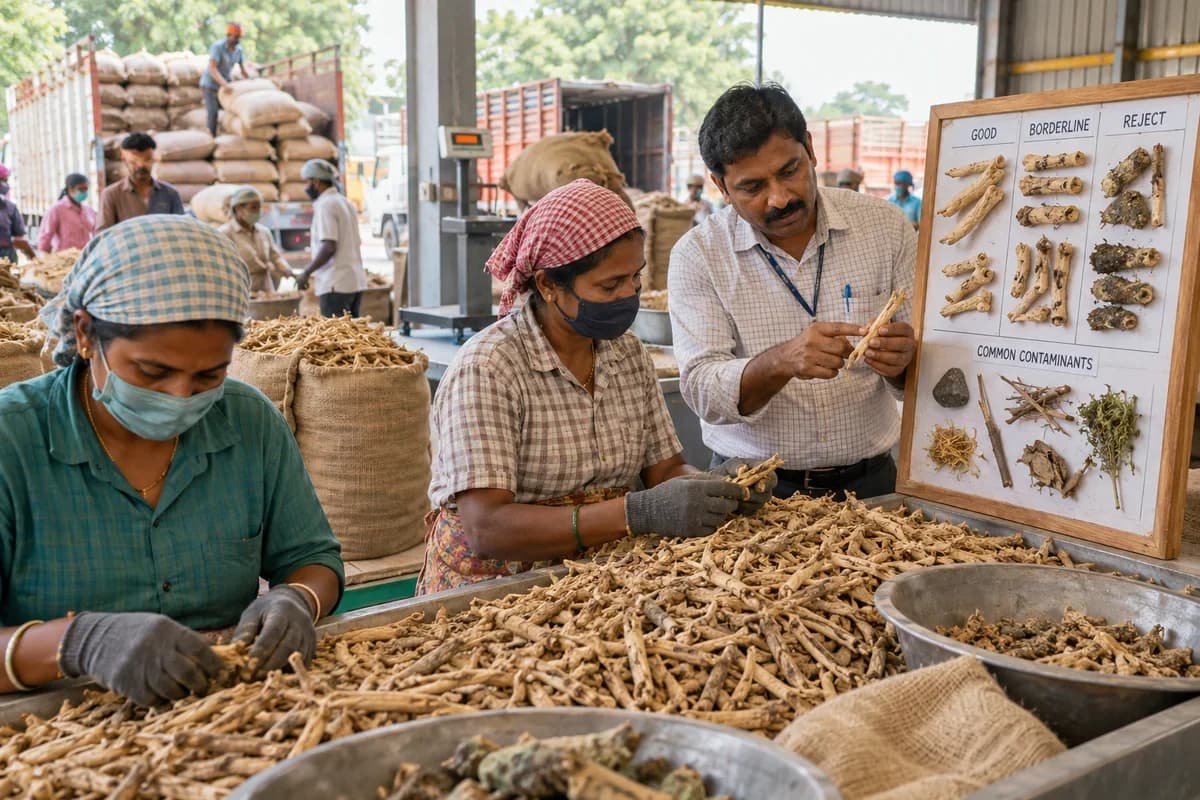
GullySystem configures this software for herbal product makers, from a single-line unit to a multi-site plant. Stores, quality, production, packing and sales teams work from it. Each lot of botanicals and each finished batch carries its assay results, formula, expiry date and customers. Stock is issued by expiry.
What goes wrong before the software.
How the work flows through it, step by step.
- 1
Receipt and quarantine
Botanicals are received against an order, logged by grower and lot, weighed and held in quarantine with a sample drawn.
- 2
Testing and release
The quality team checks identity, moisture, ash and heavy metals, records each result and marks the lot released, held or rejected.
- 3
Batch planning
Production picks a formula, scales it to the batch size and reserves released lots in expiry order.
- 4
Manufacturing
Each stage, from tray dryer to hammer mill, extraction and ribbon blender, records quantities in and out, the operator and the time. Yield is calculated.
- 5
Packing and labelling
Finished goods are filled under a batch number and expiry date, and labels are printed from the record.
- 6
Dispatch
Orders are picked from batch-tracked stock. Invoices and delivery notes carry the batch number.
What is inside.
Every module can be switched on, left out or changed to match how your team already works.
The business modules it is built from.
Each one is also available on its own, or inside a system built for you.
- Goods Receipt (GRN)
Each delivery is received against an order, logged by grower and lot, and held in quarantine until the quality team passes it.
- Bill of Materials
A formula lists every botanical and excipient with quantities and approved versions, and scales to the batch size before the mill is booked.
- Batch and Serial Tracking
Each batch records the lots drawn, the stages passed and the output, so a finished powder traces back to its roots and leaf.
- Quality Control
Identity, moisture and heavy metal checks are logged per lot and per batch, and each is marked released, held or rejected.
- Stock Tracking and Alerts
Stock is held by lot and bin with an expiry date, and alerts list botanicals that will expire soon or have run short.
- Vendor Management
Each grower or supplier has one record with the lots received, the rates agreed and quality notes built up over harvests.
- Job Work Management
Material sent to an outside maker and goods received back are tracked with quantities, dates and the batch they belong to.
- Barcodes and Labels
Batch number, expiry date and barcode print from the batch record, so what is on the label matches what is in stock.
How we would put it in.
Setup, data migration, integrations and anything built on top.
Explore moreBrowse business and AI solutions
Looking for another part of your workflow? Browse the modules by business function.
- Applicant Tracking (5)
- CRM (8)
- Finance & Accounting (10)
- Helpdesk (4)
- Human Resources (13)
- Inventory Management (5)
- Project Management (7)
- Manufacturing (6)
- Procurement (4)
- Sales and Distribution (6)
- Field Service (5)
- Statutory and Compliance (4)
- Retail and POS (4)
- Bookings and Appointments (3)
- Subscriptions (2)
- Assets and Fleet (4)
- Platform (6)
- Analytics (2)
- Documents (1)
- All business solutions
Tools it connects to.
Each connection is scoped for your own account, one data flow at a time.
One system, each person sees their part.
For stores
Receive botanicals, hold them in quarantine, issue them to the mill and keep lots in expiry order.
For the quality team
Sample and assay lots, record results, release or reject material and approve finished batches.
For production and packing
Follow the day’s batches, record each stage and print labels from the batch record.
For sales and the owner
Take distributor orders, check batch availability and read yields, spent plant material and expiring stock.
The numbers the owner asks for.
- Lots in quarantine, released and rejected
- Batch yield and spent plant material by product
- Stock by lot and bin with expiry dates
- Material shortages against planned batches
- Grower lots and certificate of analysis history
- Orders and dispatch by customer and batch
- Customers who received a given batch
Who this is built for.
- Makers of herbal powders, tablets and capsules
- Producers of herbal oils, tinctures, extracts and syrups
- Herbal tea and blend manufacturers
- Makers of herbal personal care products
- Contract manufacturers of herbal products
- Brands that sell through distributors and pharmacies
When it is not the right choice.
- A home-scale maker who blends to order can keep a notebook and a stock sheet.
- A plant that requires validated pharmaceutical systems will review those requirements with its advisers before choosing.
Adapted to your business before it goes live.
You are not handed a login and left to it. The product is set up around your records, your people and the tools you already use.
Works alongside
- Barcode and label printer
- Weighing scale input
- Accounting software export
- Email and SMS
- Online shop
- Courier and shipping labels
Checks to bring to your product demo.
Review these scenarios against the product configuration and record anything that still needs to be agreed.
Stock, lots and expiry
What happens to movements entered while a count is being checked?
For “Stock, lots and expiry”, choose a count date and trace the movements around it. Agree who investigates a difference before an adjustment changes the available balance.
Background reading: ERPNext: stock reconciliation
Formulations
What changes when a component or quantity is substituted?
Take one entry from “Formulations” and change an input in a test copy. Review the resulting material requirement and cost with the person who approves production.
Background reading: ERPNext: bills of materials
Questions owners ask before a demo.
Is this herbal software or general manufacturing software?
It is herbal manufacturing software. Quarantine, lot release, variable botanicals and expiry-led issue are built in, rather than added to a stock list.
How does it handle raw material that varies in strength?
Each lot carries its assay results, and the formula can scale quantities to the lot’s marker content. The rules for adjustment are set with your quality team.
Is a batch traceable to its raw materials?
Yes. Every batch notes which botanical lots went in, which links a finished product back to its growers and forward to the customers who received it.
Is the oldest stock issued first?
Yes. Stock is shown by lot with expiry dates, and issues suggest the earliest expiring lot that has been released.
Can it print labels?
Yes. Batch, expiry and barcode details print from the batch record. Wording required by your regulator is decided with you.
Does it replace our quality procedures?
No. It records tests, approvals and batch history. Your own procedures and licences define how quality is run, and these are reviewed during implementation.
Can it handle contract manufacturing?
Yes. Material sent out, finished goods received and the quantities returned are tracked against the batch they belong to.
Can we import our current stock?
Yes. Lists of botanicals, lot balances and growers are read in, and the storekeeper reconciles them against the bins before live use.
What does it cost?
Plant count, the staff across stores, production and quality, and whether scales, label printers or an online shop are connected set the figure. Current stock and supplier lists brought in take effort. Formulation and batch record screens built from one of your products precede any price, and the quotation then separates the modules.
Does a very small herbal unit need this?
Possibly not yet. With few products and little raw material, a register may do. A walk-through can say so plainly.
How soon could the batch room be on it?
The opening modules decide this. Raw material intake with quarantine, formulations and batch manufacturing records go first, as the batch room relies on them hourly. Quality release, labels, distributor orders and recalls arrive afterwards. Staging is discussed once priorities are clear.
What does the herbal unit pull together beforehand?
Formulation sheets, intake and quarantine registers, a finished batch record and the stock list with expiry dates. Add a distributor order and a label sample. Production, quality and stores each need someone sitting in when layouts are reviewed. Scale and printer models are listed for the hardware link.
Wondering what it would cost? Share your requirements and an engineer will come back with a scope.
Every part, on its own page.
Each page covers one part of the system: what it records, who uses it and what it hands on.
- Raw material intake and quarantine for herbal plants
- Herbal formulations with approved versions and scaling
- Batch manufacturing records for herbal products
- Quality testing and release for herbal lots and batches
- Stock by lot, bin and expiry for herbal makers
- Grower and supplier records for herbal botanicals
- Planning herbal batches against orders and stock
- Contract manufacturing and job work for herbal makers
- Herbal product labels and barcodes from the batch record
- Distributor orders and batch-tracked dispatch for herbal products
- Batch tracing and recalls for herbal manufacturers
Built for.
The trades this product is set up for. Pick yours to see how the work runs there.
See Herbal Product Manufacturing Software set up around your records.
Tell us how you run things today. An engineer reads it and writes back with what fits as it is, what would need changing, and what we would start with.
What happens after you share your requirements
- We review your brief and the systems you already use.
- We clarify the workflow, missing information and the work to consider first.
- The proposed scope sets out the deliverables, responsibilities and dependencies.
- Review the scope and commercial terms before deciding whether to proceed.
Start with your requirements
Describe your current process, the people involved and the change you need. Start with the details you know; we can clarify the rest together.
Share your requirements