Quality testing and release for herbal lots and batches
Quality testing and release is the gate between a herbal lot and the shop floor, and again between a finished batch and the dispatch bay. Identity, moisture, ash, heavy metals and microbial checks are logged by the quality team. Each result attaches to the lot or batch, which is then marked released, held or rejected.
What a herbal test record and decision keep
Every test result belongs to a lot or a batch, and every decision belongs to a person. The record keeps both, so a certificate of analysis can be read back from it later by anyone with access.
Testing and release through a working week
Testing is steady work with sharp deadlines, because production waits on a result. Four moments show the analyst, the supervisor, the planner and the owner at the point where a decision is made. Results go in as they are read.
Who enters results and who sees decisions
Testing is the quality team’s work, but the outcome is read across the plant. Set-up decides who can enter a result, who can change a status and who can only see it. Each role below sees a different slice.
Decisions to settle before testing goes live
Test lists and limits belong to the quality team, not to the software. Release must mean one thing. Settle four points with that team before any lot is entered, so every screen shows the same meaning.
How testing and release connect to other features
Quality sits across the chain. It takes samples from intake lots and finished batches, and it hands a status to stock, planning and dispatch. Results also flow back to the supplier file and to formulations when marker content is entered.
- Raw material intake holds each lot until a decision
- Batch records close and pass to testing
- Stock by lot and bin shows the current status
- Supplier and grower records collect seasonal quality notes
- Distributor orders draw only from released batches
Where testing and release stop
This feature records results and decisions. It does not run a laboratory, read instruments or decide whether a result is acceptable. Limits, methods and release rules come from your quality procedures and your regulator. Judging a borderline result stays with a qualified person. A plant that sends every sample to an outside laboratory may need only the status and the filed certificate.
Frequently asked questions
Can we record tests for lots and finished batches?
Both are covered. Checks are logged per lot for botanicals and per batch for finished goods. Each has its own list, such as identity and moisture for roots and microbial checks for powders. Lists follow your specifications.
Who decides the limits for each check?
Your quality team does. Limits such as a moisture ceiling or marker content come from your own specifications and are entered during set-up. GullySystem staff change them whenever asked, but never choose them for you.
What does a held status do?
Held is for waiting. A held lot or batch stays in stock but is not offered for issue or dispatch until a decision is entered. The reason shows beside the status, such as a further check pending.
Can an analyst release the lot they tested?
Whether one person may test and release is a rule set before live use. Some plants want a second person to release, and others allow the analyst. Your quality procedure decides. The system records who did which.
Does a rejected lot vanish from the records?
No. It stays with its grower, results and reason. That history is what the grower file reads from, so a source that keeps sending damp roots shows up across seasons, with every failed lot listed.
How this feature fits the system.
Herbal Product Manufacturing Software: the parts that work with this feature, the trades that use it and the ways to put it in place.
Raw material intake and quarantine
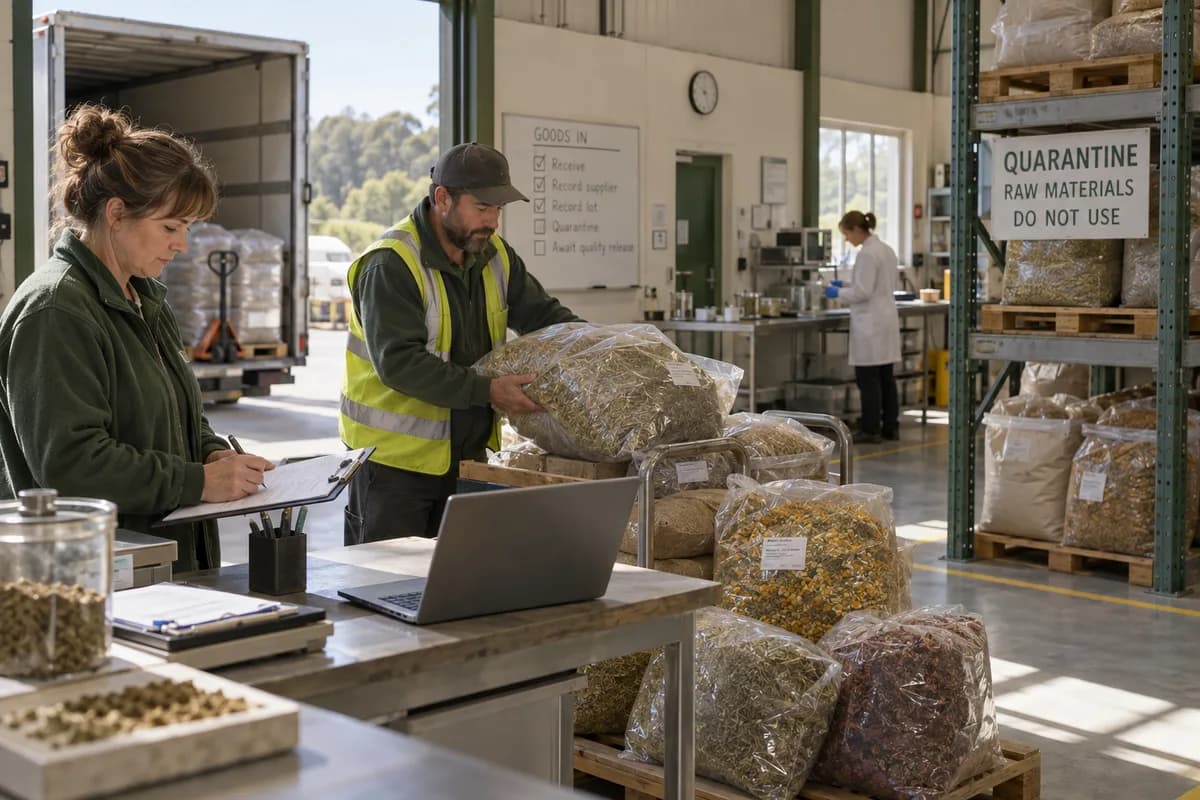
Each delivery is received against an order, logged by grower and lot, and held in quarantine until the quality team passes it.
Goods Receipt (GRN)Formulations
A formula lists every botanical and excipient with quantities and approved versions, and scales to the batch size before the mill is booked.
Bill of MaterialsBatch manufacturing records
Each batch records the lots drawn, the stages passed and the output, so a finished powder traces back to its roots and leaf.
Batch and Serial TrackingTell us what you need.
Tell us what your team does today, where work gets stuck and what you want to change.
What happens after you share your requirements
- We review your brief and the systems you already use.
- We clarify the workflow, missing information and the work to consider first.
- The proposed scope sets out the deliverables, responsibilities and dependencies.
- Review the scope and commercial terms before deciding whether to proceed.
Start with your requirements
Describe your current process, the people involved and the change you need. Start with the details you know; we can clarify the rest together.
Share your requirements