Stock by lot, bin and expiry for herbal makers
Stock, lots and expiry shows what a herbal plant holds, lot by lot and bin by bin, with the expiry date beside each balance. Stores see which lots are released and which are not. Issues suggest the earliest expiring released lot, and alerts list botanicals that will expire soon or have run short.
What a stock record keeps for each lot
Stock is held as lots, not as a single figure per botanical. Each lot carries its own balance, bin and expiry date. Finished goods work the same way. One botanical may have several lines, each with its own history and its own expiry.
Stock and expiry through a day in the store
Stores work from the stock list all day, and each task touches a lot. Four moments show the storekeeper, the owner and a stock check at work, from the first issue of the morning to the last count. Each one changes a balance. Each one also explains why.
Who reads stock and what each person sees
Everyone touches stock, but each person needs a different cut of it. Set-up decides who can issue, move or correct balances, and who can only look. Four views follow, one for each group.
Decisions to settle before stock goes live
A count that starts wrong stays wrong. Four decisions shape how stock works day to day. Take them before the opening balances are entered, with stores and quality in the room.
How stock links to the rest of the product
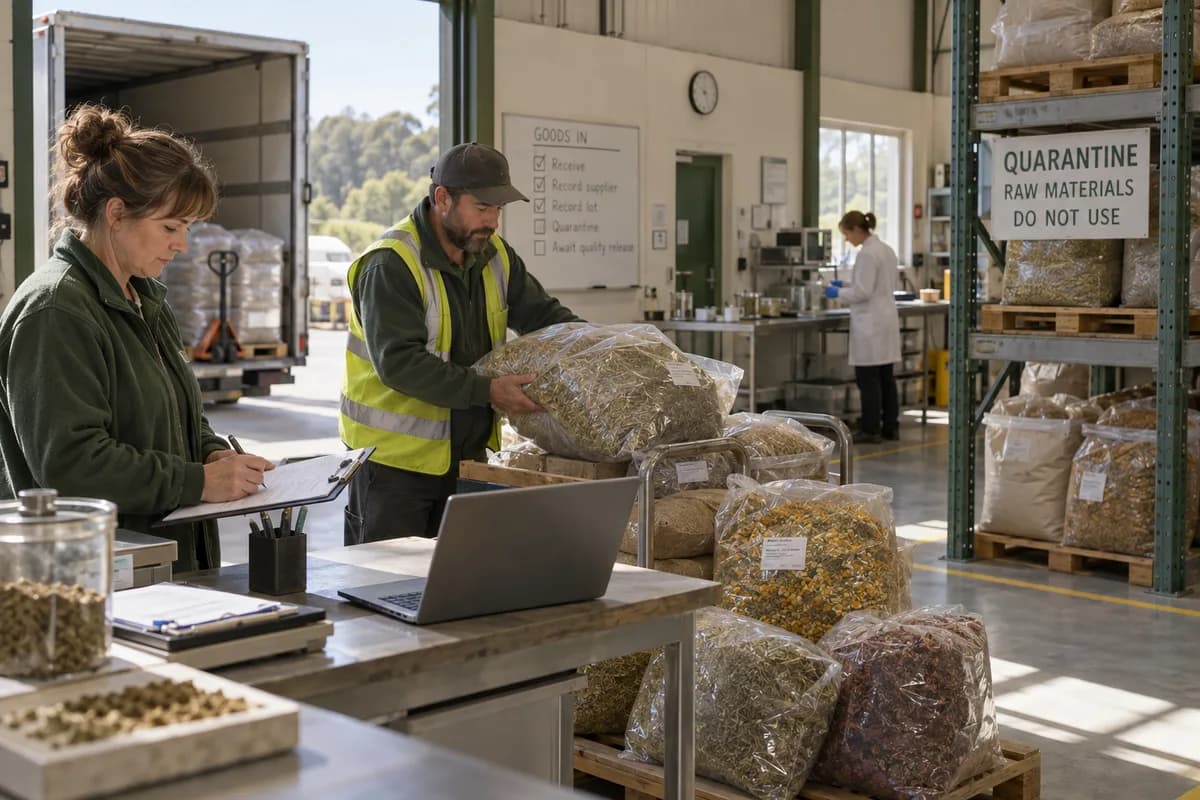
Shared by every feature, stock is the plant’s ledger. Intake adds to it, batches draw from it, finished goods arrive in it and dispatch takes from it. Status from quality decides what is available, and expiry decides the order of issue. Five links follow from that.
- Raw material intake adds quarantined lots to the list
- Quality testing moves lots between held and released
- Production planning reads released balance and expiry order
- Batch records take lots out and finished goods in
- Dispatch picks from batch-tracked stock by expiry
Where stock tracking stops
This feature shows stock and suggests the oldest released lot. It does not count the bins for you or know about material that was never entered. Valuation, tax treatment and write-off rules belong to the owner and the accountant. An accounting software export carries figures across. A small shop that blends to order can keep a stock sheet.
Frequently asked questions
Can a quarantined lot be issued by mistake?
Issues offer released lots only, so a quarantined or rejected lot is not suggested. A held lot is left out too. Whether anyone may override that, and who, is agreed with your quality team at set-up.
How are short-dated lots flagged?
Alerts list botanicals that will expire soon, and the stock list shows expiry beside every balance. Warning time is set with you. Short-dated lots can then be used first or planned into the next batch.
Can finished goods be tracked by lot as well?
Yes, by lot and batch. Finished powders, extracts and tablets carry a lot number and expiry date through stock, labelling and dispatch. Each carries its own number. A dispatch line then names the batch it came from.
What if the bin count and the book disagree?
Start by finding the cause. Whoever counted looks into the gap, then corrects the balance with a note. Who may do that is set at the start. Repeated gaps point to a bin or a habit worth a closer look.
Do bins need setting up before go-live?
Bins are entered with the opening stock, so each lot has a place from the first day. Keep the naming plain. Bay and shelf are enough. Your storekeeper helps shape it when layouts are reviewed.
How this feature fits the system.
Herbal Product Manufacturing Software: the parts that work with this feature, the trades that use it and the ways to put it in place.
Raw material intake and quarantine
Each delivery is received against an order, logged by grower and lot, and held in quarantine until the quality team passes it.
Goods Receipt (GRN)Formulations
A formula lists every botanical and excipient with quantities and approved versions, and scales to the batch size before the mill is booked.
Bill of MaterialsBatch manufacturing records
Each batch records the lots drawn, the stages passed and the output, so a finished powder traces back to its roots and leaf.
Batch and Serial TrackingTell us what you need.
Tell us what your team does today, where work gets stuck and what you want to change.
What happens after you share your requirements
- We review your brief and the systems you already use.
- We clarify the workflow, missing information and the work to consider first.
- The proposed scope sets out the deliverables, responsibilities and dependencies.
- Review the scope and commercial terms before deciding whether to proceed.
Start with your requirements
Describe your current process, the people involved and the change you need. Start with the details you know; we can clarify the rest together.
Share your requirements