Grower and supplier records for herbal botanicals
Supplier and grower records give each source of botanicals one file. It holds contact details, the rates agreed over time, every lot received and the quality notes built up across harvests, such as moisture or adulteration. Stores, quality and the owner read the same file before buying, receiving or rejecting a delivery.
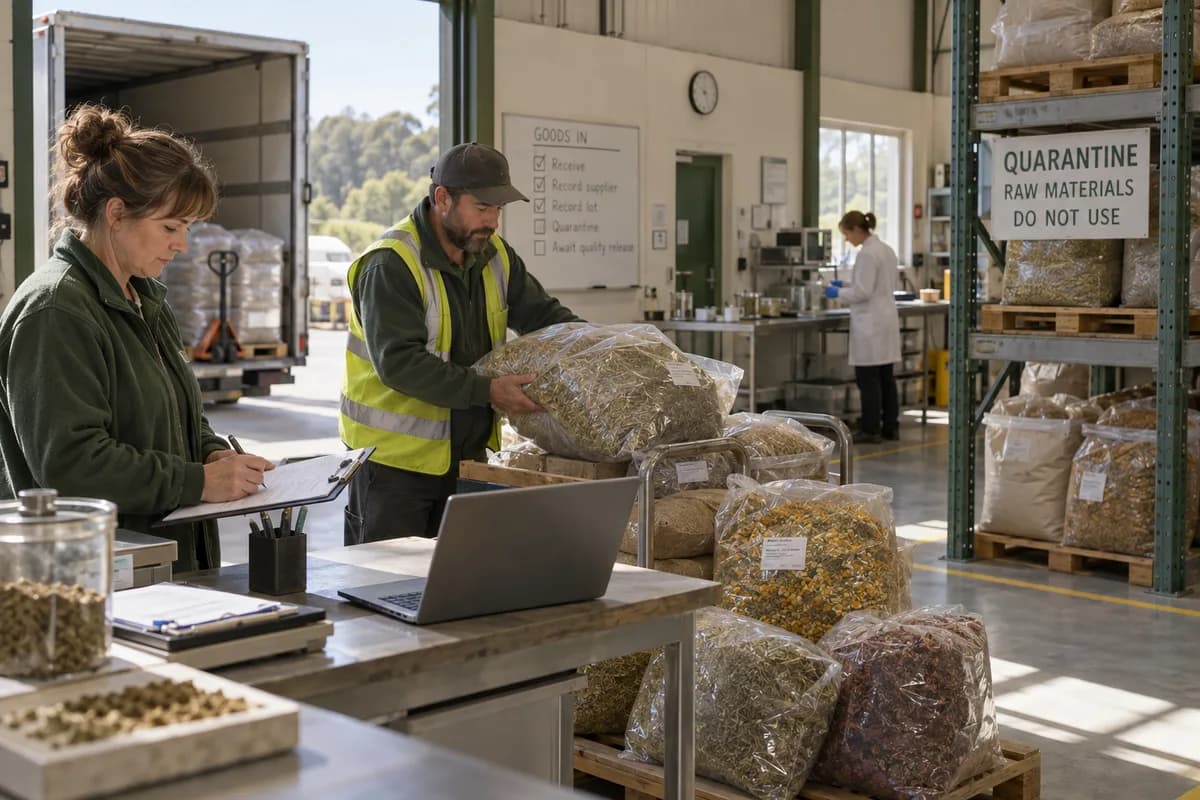
What a grower file keeps over the seasons
A grower file starts as a name and an address and grows with every delivery. It becomes the memory of the plant’s dealings with one source, from the first sack to the latest harvest. Four kinds of entry build it.
Grower records through the buying year
Buying follows the harvest. Use comes in bursts. Four moments show a buyer, a storekeeper, an analyst and the owner each working with it across a season. Each moment adds a line to the file, and none is typed twice.
Who uses grower records and what each sees
Rates are commercially sensitive. Access is set with care. Four roles read the file for different reasons, and set-up decides who may see price history at all, or only the notes.
Decisions to settle before grower files are built
A source list that grows without rules fills with duplicates. Rules come before records. Four decisions keep the file clean from the first day. Settle them with the owner and whoever does the buying.
How grower records link to other features
A grower file is fed by other features and feeds them in turn. Intake attaches lots, quality adds results, and notes written at the gate collect on the same page. Later, batch tracing walks back to the source.
- Raw material intake attaches each lot to its source
- Quality testing adds results to the grower history
- Stock by lot and bin shows the source of each lot
- Batch tracing follows a finished batch back to growers
- Accounting software export carries purchase figures across
Where grower records stop
This feature remembers. It does not rate a grower by itself, audit a farm or negotiate a price. It does not hold contracts or pay anyone. Fair rates, supplier approval and visits to growers are the owner’s call. Payments and accounts belong to the accountant. A plant that buys from a handful of regular growers may manage with a contact sheet.
Frequently asked questions
Can one grower supply several botanicals?
Yes, one file covers all. Each lot is received under its own botanical, and rates are stored per botanical. Ashwagandha root and turmeric rhizome from the same farm therefore keep separate price histories, so a change to one rate never overwrites the other.
Where do adulteration notes come from?
People write them. Stores note what they see at receipt, and quality adds findings from testing. Each note carries a date and the lot it relates to. Nothing is scored automatically, and nothing is added unless a person types it.
Can price history be hidden from some staff?
Yes, by role. Who sees rates is a set-up choice. Stores and production can work without them, while the owner and whoever does the buying can read the full history for every source, season by season.
Do we need a record for each small collector?
That is your choice. Small collectors can share a grouped source if you never need to trace back to one person. A single named source gives the sharpest trace if a lot fails, and the cost is one more record to keep.
What happens to a source we stop buying from?
The file stays. Its lots, results and notes remain readable, so a trace still reaches that grower, however old the lot. You choose whether the source stays on the list for new orders. Nothing already recorded is removed.
How this feature fits the system.
Herbal Product Manufacturing Software: the parts that work with this feature, the trades that use it and the ways to put it in place.
Raw material intake and quarantine
Each delivery is received against an order, logged by grower and lot, and held in quarantine until the quality team passes it.
Goods Receipt (GRN)Formulations
A formula lists every botanical and excipient with quantities and approved versions, and scales to the batch size before the mill is booked.
Bill of MaterialsBatch manufacturing records
Each batch records the lots drawn, the stages passed and the output, so a finished powder traces back to its roots and leaf.
Batch and Serial TrackingTell us what you need.
Tell us what your team does today, where work gets stuck and what you want to change.
What happens after you share your requirements
- We review your brief and the systems you already use.
- We clarify the workflow, missing information and the work to consider first.
- The proposed scope sets out the deliverables, responsibilities and dependencies.
- Review the scope and commercial terms before deciding whether to proceed.
Start with your requirements
Describe your current process, the people involved and the change you need. Start with the details you know; we can clarify the rest together.
Share your requirements