Raw material intake and quarantine for herbal plants
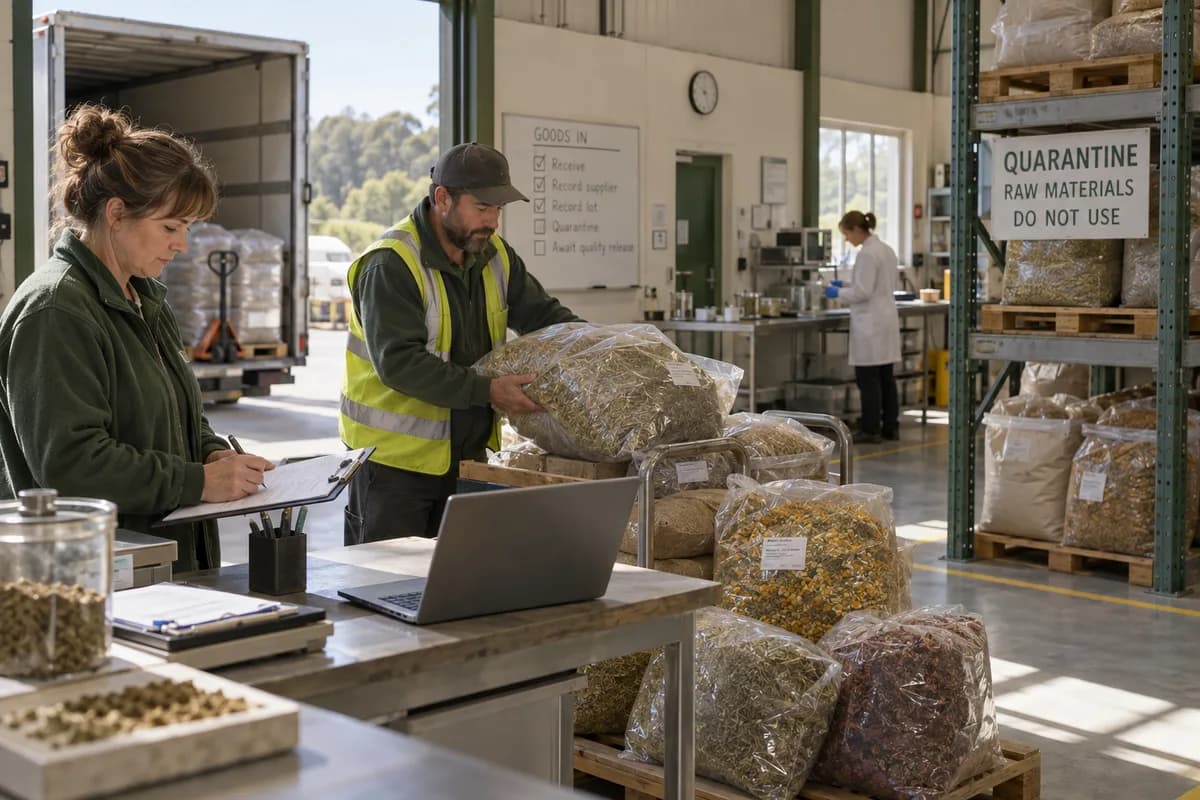
Raw material intake and quarantine is where a herbal plant first meets its botanicals. Stores receive roots, bark and leaf against an order, record the grower and lot, weigh each delivery and draw a sample. Once received, it waits in quarantine until the quality team passes it. Production draws only released lots.
What an intake record keeps for each botanical lot
Each delivery becomes one intake record. That record names the botanical, whether root, bark, leaf or rhizome, and ties the lot to the order and the grower. It stays with the lot through quarantine, testing and every batch that later draws from it.
Intake and quarantine through a working day
A delivery at the gate sets off a short chain of tasks across stores and quality. Each task has a place in the record. The lot moves from the vehicle to the quarantine bay and then to a decision without a paper chase. Four moments show how.
Who handles intake and what each role sees
Intake touches four groups, and each reads the same lot record for a different reason. Set-up decides which fields each person can change. The views below show what each one looks at first.
Decisions to settle before intake goes live
Intake rules are easier to set before the first delivery is entered than after mixed records pile up. Four decisions need an owner each. Stores and quality should both be present when they are made.
How intake links to the rest of the plant
Intake is the first step in a chain, so the rest of the product reads from the lot it creates. The lot record hands its status to quality, its balance to stock and its grower to the supplier file. Five links follow. Later batches draw from it and carry its number forward.
- Quality testing records results against the lot received here
- Stock by lot and bin shows the quarantined balance
- Supplier and grower records collect condition notes from each lot
- Formulations draw only released lots into a batch
- Batch records name the intake lot of every ingredient
Where intake and quarantine stop
This feature records and holds. It does not test the sample. Analysis is done by your quality team, who enter the results. Your specifications, legal limits and any view on a grower’s reliability stay with the owner and quality. Payment to the grower stays with the accountant. A plant that takes in a few sacks a month may find a notebook enough.
Frequently asked questions
Does quarantine stop a lot being used in a batch?
Production reserves released lots, so a quarantined lot is not offered for a batch. Release is a separate step. It stays on the quarantine list until the quality team enters a decision. Exceptions, if any, are agreed with your quality team at set-up.
Do we need to weigh every sack at the gate?
That is your procedure. The record holds a weight for the delivery, and a connected weighing scale can send its reading in. Whether every sack or only a sample is weighed is agreed with stores at set-up.
What happens to a lot that fails a test?
The quality team marks it rejected and types the reason. The record stays. It keeps the grower and every result, so a later delivery from the same source can be judged against it. Return or disposal of the sacks is decided by the owner.
Can lots already in the store be entered?
Yes, with a check. Lot balances and grower names are brought in from your registers or current software. The storekeeper then checks each balance against the bin before live use. Lots with missing details are marked as you decide.
Can stores see test results for a lot?
Visibility is a set-up choice. Stores must at least see whether a lot is quarantined, released or rejected. Whether they also see single readings such as moisture or ash is agreed with your quality team at set-up.
How this feature fits the system.
Herbal Product Manufacturing Software: the parts that work with this feature, the trades that use it and the ways to put it in place.
Raw material intake and quarantine
Each delivery is received against an order, logged by grower and lot, and held in quarantine until the quality team passes it.
Goods Receipt (GRN)Formulations
A formula lists every botanical and excipient with quantities and approved versions, and scales to the batch size before the mill is booked.
Bill of MaterialsBatch manufacturing records
Each batch records the lots drawn, the stages passed and the output, so a finished powder traces back to its roots and leaf.
Batch and Serial TrackingTell us what you need.
Tell us what your team does today, where work gets stuck and what you want to change.
What happens after you share your requirements
- We review your brief and the systems you already use.
- We clarify the workflow, missing information and the work to consider first.
- The proposed scope sets out the deliverables, responsibilities and dependencies.
- Review the scope and commercial terms before deciding whether to proceed.
Start with your requirements
Describe your current process, the people involved and the change you need. Start with the details you know; we can clarify the rest together.
Share your requirements