Hospice care plans by discipline
A hospice care plan is written by several disciplines and read by all of them. This feature keeps goals and instructions for nursing, aide care, social work and spiritual care in one plan, with each change dated and attributed. Nurses, aides, social workers, chaplains and the on-call nurse all open the current version.
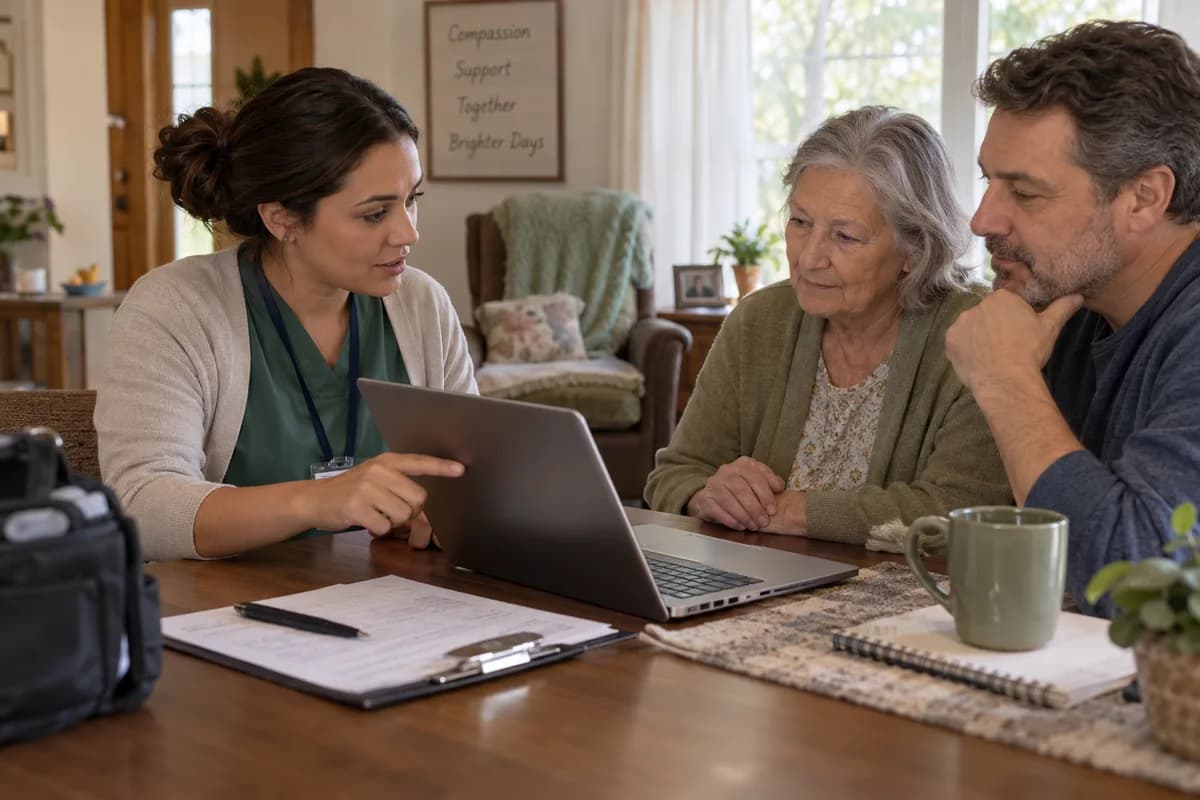
What a discipline-based care plan holds
The plan is a set of sections, one for each discipline, sitting under a single patient. Each section has its own goals, instructions and review date. Together they replace separate files. Those files used to meet only at the team meeting.
Using the plan on an ordinary hospice day
A plan is judged by whether it is open at the right moment. These scenes show how each discipline reads it and adds to it. A change made in one place is seen by the others. No phone call is needed.
How each role reads and writes the plan
Every role has a part of the plan it may edit and a part it may only read. This keeps the document trustworthy. Nobody has to wonder whose instruction they are following.
Care plan decisions to settle before launch
The layout of a plan follows your service’s habits, so the rules are yours to set. Agree them with clinical leaders before staff start writing. Clear rules save arguments later.
How care plans feed hospice work
This feature sits between the patient record and everything done in the home. It takes history and wishes from the record. Then it hands instructions to the people who act on them, and its changes reach the on-call phone as quickly as the office desk.
- Reads history, allergies and wishes from the patient record
- Gives visit scheduling the tasks each discipline must do
- Shows the on-call nurse the current symptom plan
- Carries medicine instructions to medicines and comfort kits
- Supplies goals and changes to team review lists
Where the care plan stops
The plan records goals and instructions. It does not decide them, and it does not check that a dose is safe or that a goal is clinically sound. Those judgements belong to the nurse, the doctor and the other disciplines. Nor does it replace the conversation at the bedside. A service with one nurse and one patient can keep a notebook, though a shared plan helps once a second discipline is involved.
Frequently asked questions
Can each discipline edit only its own section?
If your service wants that rule. Nurses edit nursing, aides tick their own tasks, and social workers and chaplains edit their own notes. Everyone reads the rest. The rule is set by role during configuration and can be changed.
How do we know who changed an instruction?
Every change is dated and carries the name of the person who made it. The earlier wording stays visible. A nurse reading the plan can see what changed, when it changed and who wrote it, without asking anyone.
Will the on-call nurse see a change made today?
The on-call nurse opens the same record. Changes saved in the office appear straight away, with nothing to send. The symptom plan is shown first, so the person answering at night reads the latest wording.
Can we use our own care plan layout?
Your own sections and headings are used. GullySystem staff set up the layout with your clinical leaders and advisers. They change it on request when your forms are revised, and the content stays your decision.
Does the plan remind us to review it?
Each section carries a review date. Plans past that date appear on a list. The clinical director or the nurse case manager opens it. The interval is chosen by your service, not by the system, and may differ by discipline.
How this feature fits the system.
Hospice Management Software: the parts that work with this feature, the trades that use it and the ways to put it in place.
Visit scheduling
The day’s nurse, aide and social work visits are placed against staff by area and need, and missed visits are flagged to the coordinator.
Technician SchedulingAdmission, consent and certification
Signed consent, certification and first orders are stored on the patient record, each with the date it must be renewed.
Document ManagementEquipment loans
Every bed, mattress and oxygen unit has its own entry showing which home it is in, when it was delivered and when it was last inspected.
Fixed Asset RegisterTell us what you need.
Tell us what your team does today, where work gets stuck and what you want to change.
What happens after you share your requirements
- We review your brief and the systems you already use.
- We clarify the workflow, missing information and the work to consider first.
- The proposed scope sets out the deliverables, responsibilities and dependencies.
- Review the scope and commercial terms before deciding whether to proceed.
Start with your requirements
Describe your current process, the people involved and the change you need. Start with the details you know; we can clarify the rest together.
Share your requirements