Hospice patient and family record
The patient and family record holds everything a hospice team needs to know about one person and the people around them. History, diagnosis, medicines, allergies, advance wishes and caregiver contacts sit together. Nurses, aides, social workers, chaplains and the on-call nurse open the same page, and each sees what suits their role.
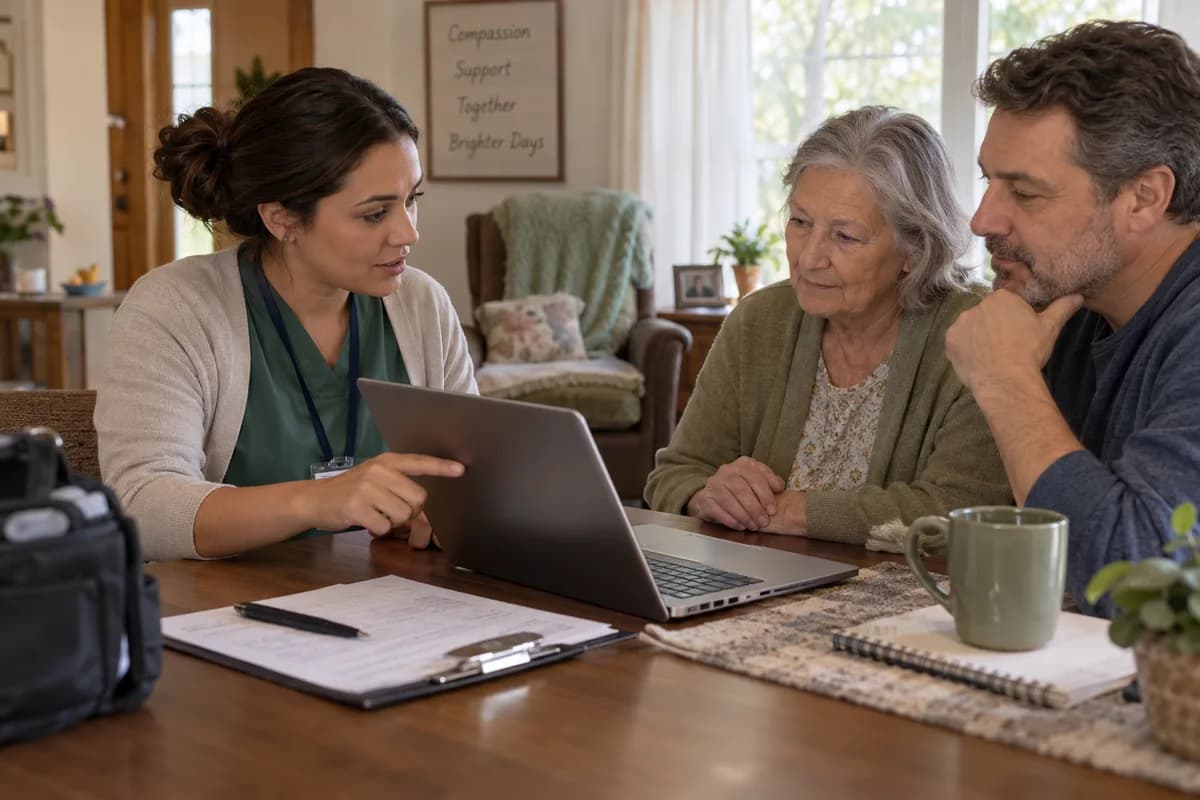
What a hospice patient record contains
This page is built around the person, not the visit. It opens at admission and stays current until the family has been supported after a death. Each is dated, and each change carries the name of the person who made it.
One record read at different moments
People open the record for different reasons, in different rooms. Some read it before a visit, some in a car outside a home, and some at night with a call in progress. Each moment shows what the page must do.
What each role sees on the record
Not everyone needs every line. Access follows the role, so sensitive notes reach clinicians while care tasks reach aides. One document is shown differently to each reader, and no one is asked to ignore what they should never have seen.
Choices to settle for the patient record
Rules decide how useful this page becomes. Settle a few points before staff start typing. They affect trust in the page, and they are easier to agree now than after a disagreement about who changed a medicine.
How the record feeds the other features
The patient record is the page every other feature reads from or writes to. It receives the case from referral intake. Then it serves the plan, the visit, the medicines and the team. Its links are the reason a single entry is enough for each person.
- Takes contacts and diagnosis from accepted referral intake
- Receives signed consent and certification dates at admission
- Gives care plans by discipline the history and wishes
- Shows the on-call nurse medicines and caregiver first
- Hands family contacts to bereavement support after a death
Where the patient record stops
The record holds what staff enter. It does not decide anything clinical. Choosing a dose, judging a symptom or interpreting a wish stays with the doctor, the nurse and the family. Legal questions about who may speak for a patient belong to the family’s adviser. A solo practitioner with a handful of palliative patients can keep a clinic file instead, though a shared record helps once a second team visits.
Frequently asked questions
Can the record replace our existing clinical file?
That choice is yours. The record can hold history, medicines and orders, or sit beside your clinical system. The decision is made during implementation, with your clinical leaders, and the source for medicines is named so staff do not guess.
Will a volunteer see a patient’s diagnosis?
No, unless your service decides otherwise. Volunteers see care tasks, preferences and caregiver contacts. Clinicians see history, medicines and wishes. The split is set by role when the system is configured and can be changed later on request.
How are advance wishes shown to the on-call nurse?
They sit near the top of the record. The wishes are written in the patient’s words with the date they were discussed. The on-call nurse reads them before phoning the family back, along with current medicines.
Can we record more than one family contact?
Add every person the family names. Each contact has a relationship, phone number and a note on when to call. One is marked main caregiver, and another may hold authority to decide for the patient.
What stops two people overwriting each other’s notes?
Each entry is dated and carries a name. A change adds a new line and does not erase the old one. The nurse can see who changed a medicine and when, and the earlier entry stays readable on the record.
How this feature fits the system.
Hospice Management Software: the parts that work with this feature, the trades that use it and the ways to put it in place.
Visit scheduling
The day’s nurse, aide and social work visits are placed against staff by area and need, and missed visits are flagged to the coordinator.
Technician SchedulingAdmission, consent and certification
Signed consent, certification and first orders are stored on the patient record, each with the date it must be renewed.
Document ManagementEquipment loans
Every bed, mattress and oxygen unit has its own entry showing which home it is in, when it was delivered and when it was last inspected.
Fixed Asset RegisterTell us what you need.
Tell us what your team does today, where work gets stuck and what you want to change.
What happens after you share your requirements
- We review your brief and the systems you already use.
- We clarify the workflow, missing information and the work to consider first.
- The proposed scope sets out the deliverables, responsibilities and dependencies.
- Review the scope and commercial terms before deciding whether to proceed.
Start with your requirements
Describe your current process, the people involved and the change you need. Start with the details you know; we can clarify the rest together.
Share your requirements