Referral intake for hospice teams
Referral intake gives a hospice one place to log every call from a hospital ward, a family or a community nurse. Each entry holds the source, diagnosis, contact and urgency, and it stays open until the team accepts or declines. Intake staff, assessing nurses and the clinical director all work from it.
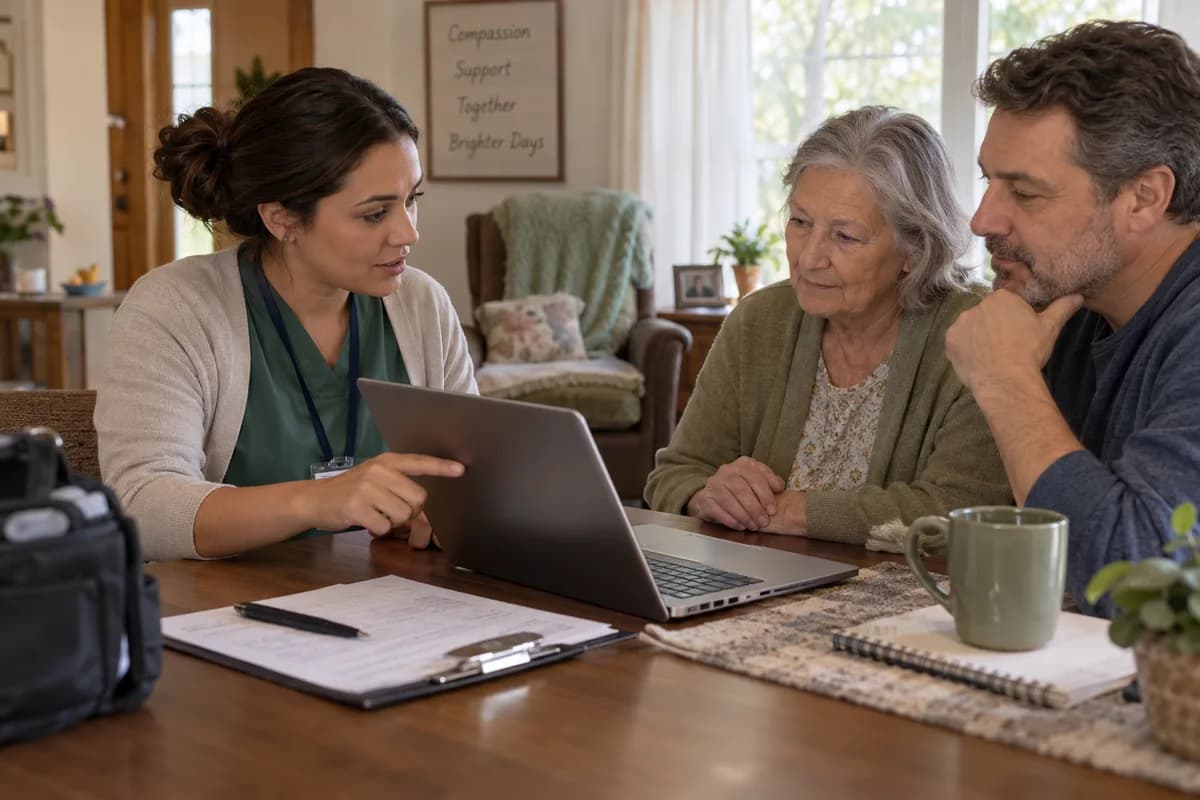
What a hospice referral entry keeps
Every referral becomes a dated entry the moment the call ends. The entry holds what the caller said, who took the call and what was agreed. The assessing nurse then starts from facts, not a scribbled note. Each call is stamped with date and time.
A referral through one working day
Referrals do not arrive at convenient times. A ward phones before a morning round, a daughter rings after work, and a clinic sends a letter late in the afternoon. Intake staff log each one as it comes and the open list shows what is waiting.
Who sees the referral list and what they do
Referrals are read by several roles, but each role needs something different from the same list. Access follows the role. A volunteer is not shown a diagnosis, while a nurse case manager sees every field needed for assessment.
Settling referral intake before set-up
A few choices shape how the referral list behaves from the first day. Settle them early. Agree them with the clinical director and the intake coordinator, because changing a status or a rule later alters how every open case is read.
How referrals join the hospice record
A referral is the start of a patient’s story with the service. Typing happens once, at intake. Accepted cases pass forward with their contacts and notes. Each later feature takes what it needs from the entry instead of asking the family again for the same details.
- Accepted cases pass to admission, consent and certification
- Contacts and diagnosis carry into the patient and family record
- Urgency sets the order of first visit scheduling
- Medicines named by the referrer reach the medicines list
- Counts of declined cases feed the director’s referral report
Where referral intake stops
Referral intake records and tracks calls. It does not decide who is suitable for hospice care, because that judgement stays with the assessing nurse and the medical director. Letters of reply are still written by a person. A small service taking a handful of referrals can manage with a diary, though a shared list helps once two coordinators take calls.
Frequently asked questions
Can intake staff log a referral taken by phone?
The coordinator opens an entry during the call. Source, diagnosis, contact and urgency are typed as the caller gives them. Any unknown field stays blank, and the nurse completes it at the assessment visit, dated and signed.
What happens to a referral we decline?
The entry is closed with a reason. It names the person who decided and the referrer who was told. It stays on the list of declined cases, so a later call about the same patient finds the history.
Can we see referrals waiting too long?
The open list shows the date each referral arrived and its urgency marking. Waiting cases sort to the top. The clinical director reads that list when planning the day, and intake staff read it each morning.
Does a referral become an admission by itself?
No, a person decides. A nurse or the director marks the referral accepted, and the case then passes to admission with its contacts and notes. The admission visit, consent and certification are recorded as separate steps.
Can we track which sources send us patients?
Each entry records its source. Referrals from wards, clinics and families can then be counted separately. The report shows referrals received, admitted and declined, and the team decides what the pattern means for its outreach work.
How this feature fits the system.
Hospice Management Software: the parts that work with this feature, the trades that use it and the ways to put it in place.
Visit scheduling
The day’s nurse, aide and social work visits are placed against staff by area and need, and missed visits are flagged to the coordinator.
Technician SchedulingAdmission, consent and certification
Signed consent, certification and first orders are stored on the patient record, each with the date it must be renewed.
Document ManagementEquipment loans
Every bed, mattress and oxygen unit has its own entry showing which home it is in, when it was delivered and when it was last inspected.
Fixed Asset RegisterTell us what you need.
Tell us what your team does today, where work gets stuck and what you want to change.
What happens after you share your requirements
- We review your brief and the systems you already use.
- We clarify the workflow, missing information and the work to consider first.
- The proposed scope sets out the deliverables, responsibilities and dependencies.
- Review the scope and commercial terms before deciding whether to proceed.
Start with your requirements
Describe your current process, the people involved and the change you need. Start with the details you know; we can clarify the rest together.
Share your requirements