Teardown reports for industrial repair inspectors
Teardown reports let an inspector record what a stripped motor, pump or gearbox actually shows. Each part gets its measured wear, photographs and a probable cause, such as a spun bearing race or a burnt coil. The estimator prices from those lines, and the customer can see what the quotation rests on.
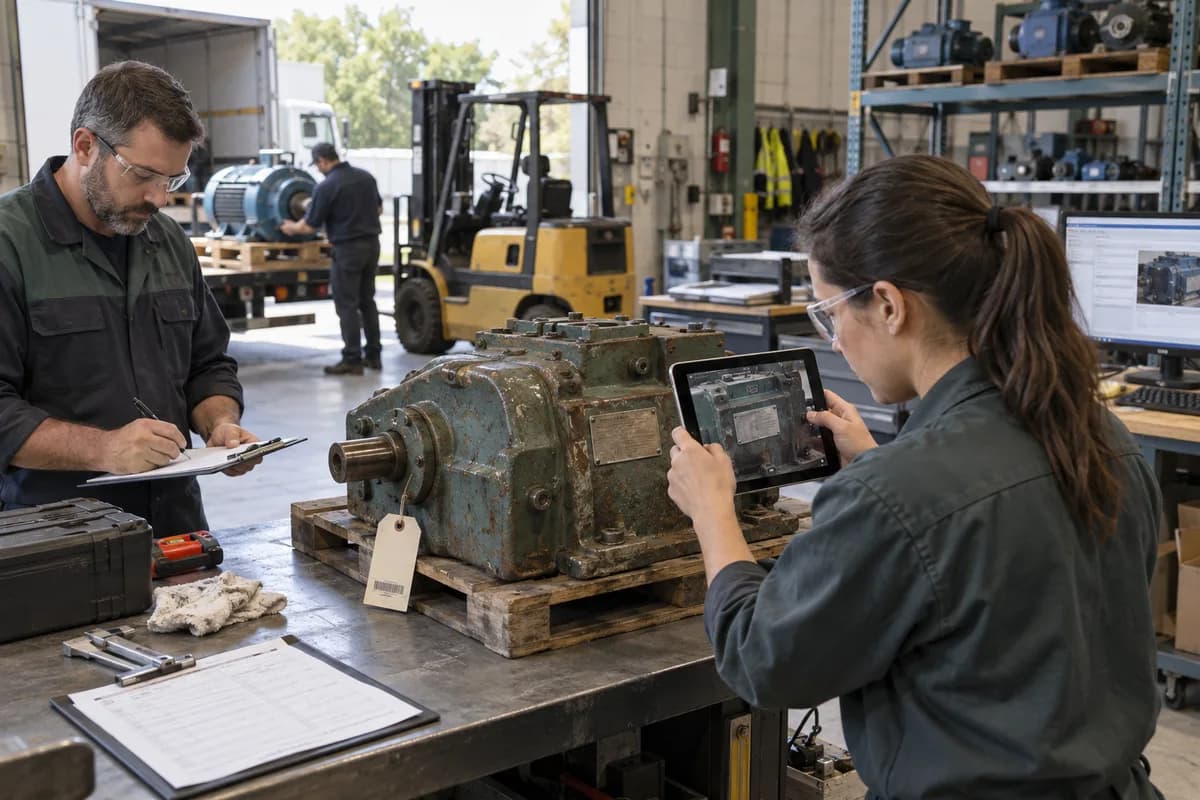
What a teardown report records, part by part
A teardown report is a list of parts, not a paragraph of opinion. Each line names a part, says how far it is worn, shows a photograph and states the probable cause behind it.
From strip to quotation across a working week
Write it while the unit is open. Notes made afterwards from memory miss readings, and a missed reading means a wrong quotation. Four moments in a working week show where the report is filled in, read and corrected by the people around the bench.
Who writes the report and who relies on it
One person writes each report. Four groups depend on it. Each looks for something different, and the record is arranged so every group finds its part quickly without asking the inspector.
Decisions to settle before teardown sheets go live
Sheets work only if inspectors fill them in the same way. A few rules agreed early keep reports comparable between units, between inspectors and between years. Agree them with the inspectors who fill in the sheets. Then write them down.
How teardown findings connect to the product
Teardown reports sit in the middle of the job, between the gate and the quotation. They take the unit’s identity and condition from receiving, and they hand their lines on to pricing, parts and testing. Each finding is typed once. Later desks read it and do not copy it.
- Takes nameplate data and arrival photographs from receiving and tagging
- Hands replace and repair lines to the quotation
- Tells stores which bearings and seals to expect
- Flags line boring or plating as outside work
- Gives test records the earlier readings to compare
Where teardown reports stop
The report records what the inspector measured and judged. It does not take readings by itself, so every figure is typed or chosen by a person. Whether a shaft can be rebuilt, and whether a repair is worth the cost, stay with the inspector and the customer’s engineer. A single bearing swap on a small unit needs only a note on the job. Those are human calls.
Frequently asked questions
Can I attach several photographs to one part?
Pictures attach to the part they show. A scored bore might carry a close-up and a wider shot. Add a picture per fault on the part, and agree with the inspector which photographs your customers expect.
What if more damage appears after the quotation?
The inspector adds the new finding to the report as a dated entry, with photographs and readings. A revised quotation follows. Each revision is kept. The customer approves the extra work in writing before the work on it begins.
Do pumps and motors share one teardown sheet?
A motor sheet asks for winding and journal readings, while a pump sheet asks for wear rings and sleeves. The sheets are built from your samples. Different item types never share one set of fields.
Can a returned unit show its earlier teardown?
Opening the unit by serial number brings up its earlier jobs and their reports. A pump back with the same seal failure shows what was found and replaced last time, so the inspector can compare.
Must every part carry a micrometer reading?
No. Your workshop decides which parts need a measured figure and which need only a mark. Journals and bearing seats deserve a number because the quotation depends on them. A fastener rarely does.
How this feature fits the system.
Industrial Repair Management Software: the parts that work with this feature, the trades that use it and the ways to put it in place.
Teardown reports
Each unit has a job card where the inspector records measured wear, parts to replace and the likely cause of failure.
Job CardsQuotations and approvals
A quotation is priced from the teardown lines using your labour, machining and part rates, with every revision kept and the approval noted.
Quote & Proposal ManagementRepair stages and bays
A repair moves through strip, repair, machining, assembly and test, and the board shows which bay and technician hold it now.
Work Order ManagementTell us what you need.
Tell us what your team does today, where work gets stuck and what you want to change.
What happens after you share your requirements
- We review your brief and the systems you already use.
- We clarify the workflow, missing information and the work to consider first.
- The proposed scope sets out the deliverables, responsibilities and dependencies.
- Review the scope and commercial terms before deciding whether to proceed.
Start with your requirements
Describe your current process, the people involved and the change you need. Start with the details you know; we can clarify the rest together.
Share your requirements