Finished Goods Dispatch for Manufacturers
Accepted pieces enter finished goods stock, and the dispatch is made against the buyer order they belong to. The challan and the invoice carry the same figures.
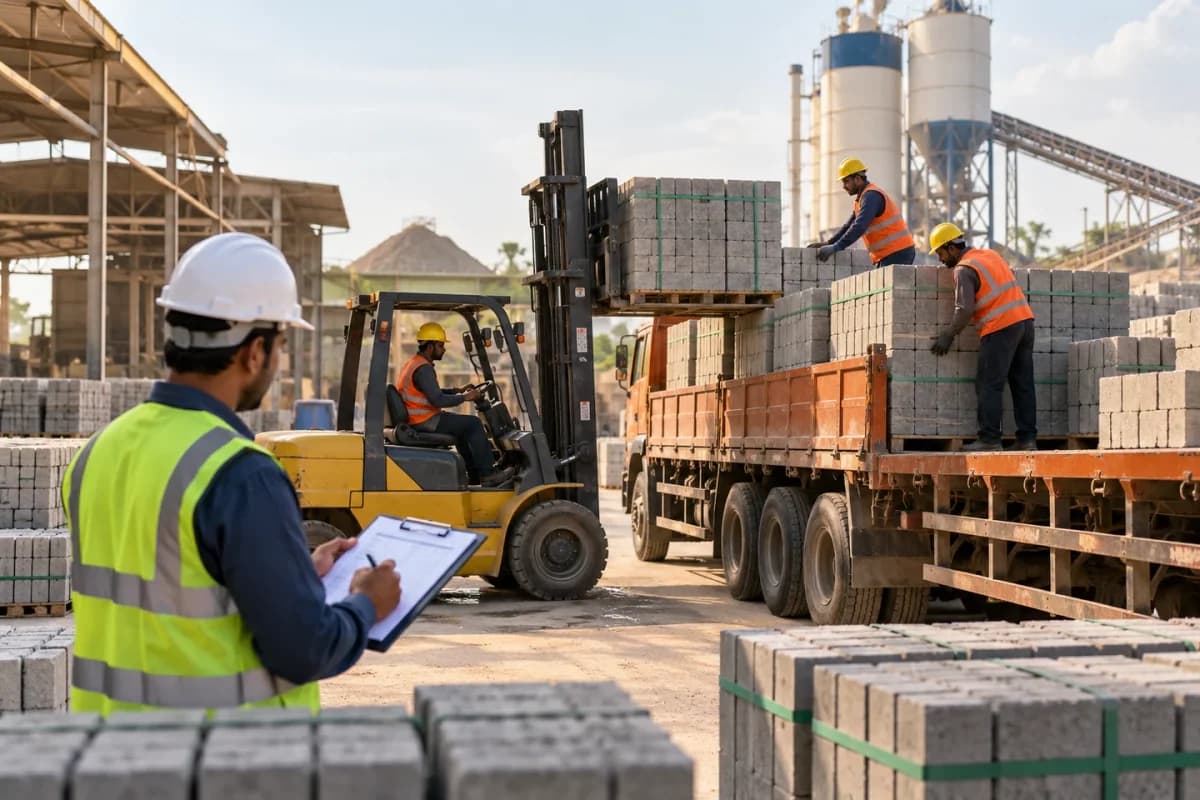
Into finished goods
Making the dispatch
Dispatch starts from the pending order. The person loading picks the order line, enters the quantity going out, and the system reduces finished stock and the pending quantity together. A delivery challan prints with part, batch, quantity, packing detail and vehicle number. A buyer who sends their own vehicle, and a buyer whose goods go by a transporter booking, are both handled on the same screen. A part dispatch leaves the balance open on that line.
Invoice and buyer account
What the client decides
- Challan and invoice numbering and the layout each must print in
- Whether a dispatch can exceed the ordered quantity
- Credit days and limit allowed to each buyer
- Who may raise a credit note against a returned lot
Papers that travel with the lorry
Indian dispatch paperwork has more than one document, and the rules differ by value and by whether a sale has happened.
Buyer rules that change the dispatch
Each large buyer has habits. One wants barcode labels on every carton. Another wants a certificate of conformity with each lot. A third accepts only dispatches booked into a delivery window. These rules are written in the purchase order, so the order is the place to read them. The system can hold the packing and label rule against the buyer and show it to the person loading. That does not remove the checking. It moves the checking to a screen the loader sees before the vehicle is loaded.
Slow points in dispatch to watch
- Finished stock counted before final inspection has cleared it
- A part load that closes the order line by mistake
- Invoices raised on a different day from the challan, so the buyer matches them wrongly
- Freight added after the invoice, with no credit or debit note to carry it
- Returned lots sitting in the yard with no entry
From the packing bay to the dock
At the end of the line, accepted pieces become stock, then a delivery, then an invoice. Each step is a short job at a different desk. Each step is short. Handoffs matter.
Questions to settle before rollout.
Use a representative scenario to decide what this part of the system must show and where review is still needed.
Making the dispatch
Can a partial delivery be distinguished from a completed order?
For “Making the dispatch”, follow an example that leaves in more than one trip. Compare the quantity handed over with the quantity still owed before closing the order.
Background reading: ERPNext: delivery notes
GST invoice
Can you explain the balance from its original documents?
Select a partly settled example in “GST invoice”. Ask for the invoice, allocated receipts and remaining balance to be shown together before agreeing the opening figures.
Background reading: ERPNext: outstanding invoices
Frequently asked questions
Can one invoice cover several challans?
They can. Dispatches made over a period to the same buyer can be billed together, where the buyer accepts that.
What about e-invoice and e-way bill?
The fields are held on the invoice and challan and can feed the portals your accountant uses. What applies to your turnover is for the client and the accountant.
Is a returned lot handled here?
A return comes back into stock or into a hold, and a credit note is raised once the owner approves it.
Can packing differ from one buyer to another?
Yes. Pieces per carton and labelling for each buyer are set up once, then used on every dispatch to that buyer. The clerk picks nothing by memory.
Is a challan enough to move goods?
For some movements it is, such as a job work send out or goods on approval. For a sale the tax invoice is raised too. Your accountant knows which applies to each movement.
Can labels carry a barcode?
A label or barcode can be printed for a carton or pallet, and a scanner can open the matching dispatch record.
How is a short shipment shown?
The line keeps its pending quantity. The next dispatch against the same order line brings it down further.
Can we catch a dispatch that was never billed?
Ask for a list of dispatches with no invoice yet during scoping. It is a simple check, and it stops a lorry leaving the gate unbilled.
How this feature fits the system.
Manufacturing Production Management Software: the parts that work with this feature, the trades that use it and the ways to put it in place.
Multi-level bill of materials and routing
Each part carries a multi-level material list and routing with drawing revisions, scrap allowance and the machine per stage, while sub-assemblies hold their own lists.
Bill of MaterialsWork orders and batch planning
Planners release a work order for a batch with a target date and see the load already queued on each lathe, press and stage.
Work Order ManagementWork orders and batch planning
Batch work orders are scheduled against machine and stage loads, so the planner sees where capacity is already taken before setting the next date.
Production PlanningTell us what you need.
Tell us what your team does today, where work gets stuck and what you want to change.
What happens after you share your requirements
- We review your brief and the systems you already use.
- We clarify the workflow, missing information and the work to consider first.
- The proposed scope sets out the deliverables, responsibilities and dependencies.
- Review the scope and commercial terms before deciding whether to proceed.
Start with your requirements
Describe your current process, the people involved and the change you need. Start with the details you know; we can clarify the rest together.
Share your requirements