Exchange and used bikes for motorcycle dealers
A rider who trades in an old motorcycle brings a second machine into the dealership. That bike needs its own file. This feature values that bike inside the booking and records its frame number and registration papers. It tracks workshop spend on tyres, chain and paint, then lists the bike for sale once the exchange deal closes.
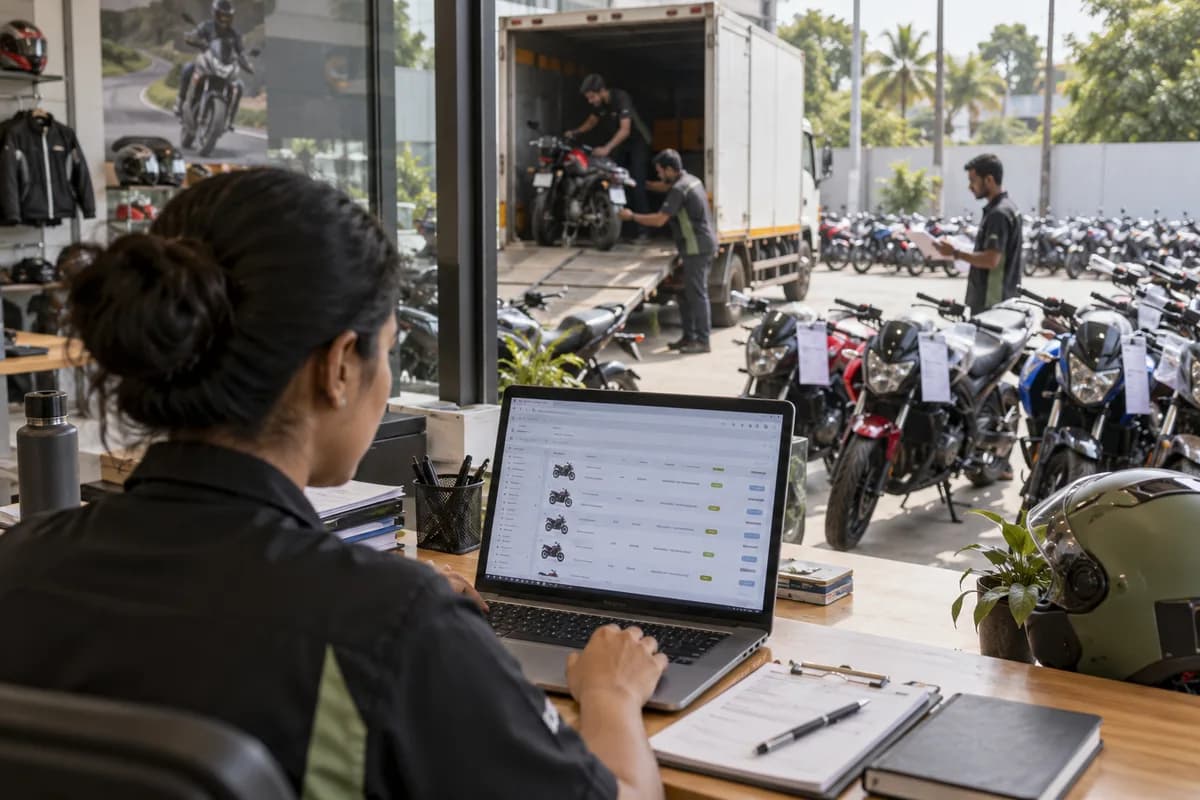
What an exchange bike record holds
A trade-in gets the same care as a new unit. Its identity is its own. It has its own identity, its own papers and its own costs. The valuation sits inside the new booking, and the used record that follows keeps the whole story together.
An old bike from counter to new rider
A trade-in moves through the showroom, the workshop and the used bike lot before it reaches a buyer. Each moment below shows who handles the record and which fields change. One unit is followed from valuation to sale. Watch the costs build.
How each role handles a used bike
Used bikes cross several desks. Each role reads a different slice of the record. The principal wants margin, the salesperson wants a value to quote, the workshop wants a job list, and accounts wants the papers and the cost.
Decisions to settle before trade-ins are loaded
Exchange deals carry risk for the dealer. Agree them with the showroom team and the principal. GullySystem staff then build them into the valuation screen, and later changes come from our side.
How used bikes link to other features
The exchange record starts life inside a booking and ends as a unit in used stock. Along the way it borrows from bookings, the workshop, the parts counter and receipts. It is a bridge. One sale ends and the next one begins from the same machine.
- Takes the exchange value from bookings and quotations
- Creates a used stock record like bike stock by frame number
- Receives repair spend from job cards and free services
- Draws tyres and chains from spare parts and riding gear
- Hands the sale to customer receipts and balances
Where exchange and used bikes stop
This feature values, records and tracks. It does not search market prices, confirm that a bike is free of loans or transfer ownership with an authority. Legal checks on a seller’s title stay with the dealer and an adviser. A dealer selling only a few used bikes a year can keep papers in a folder.
Frequently asked questions
Does the exchange value reduce the new booking?
The old bike is valued inside the booking, and the figure lowers the balance the rider sees. If the value is revised, the booking shows the change and who made it. Accounts reads one balance, not two.
Can I track money spent on an old bike’s tyres?
Each repair is added against the used bike, with parts issued from the counter and the mechanic’s time. The running total is on the record, so the dealer sees the full cost. Chains and tyres come from the counter list.
What happens if the rider’s papers are incomplete?
A missing registration certificate or insurance paper is written on the record. The deal can proceed, or wait, as the dealer decides. The gap stays visible. Once the paper arrives, it is ticked off and the date is kept.
Can used bikes appear on listing portals?
Listing portals appear among the integrations and need access from the dealer. Asking price, photographs and details are held on the used record. Where a link is not set up, details are copied across by hand. The record looks the same.
How is the used bike’s margin worked out?
The record holds the exchange value, the repair spend and the final sale price. The difference is shown on the closed record. Tax treatment of the sale remains a matter for your accountant. The software does not advise on it.
How this feature fits the system.
Motorcycle Dealer Management Software: the parts that work with this feature, the trades that use it and the ways to put it in place.
Bike stock by frame and engine number
Frame and engine stamps travel with the bike from the dispatch list into the invoice, the registration form and every later job card, so no digit is retyped.
Batch and Serial TrackingEnquiries and test rides
Walk-ins, manufacturer leads and listing enquiries join one list, tagged by source and by the model the rider asked to try on a demo bike.
Lead ManagementBookings and quotations
A quotation adds accessory kits, insurance and a loan scheme to the bike, and earlier revisions stay on file beneath the accepted one.
Quote & Proposal ManagementTell us what you need.
Tell us what your team does today, where work gets stuck and what you want to change.
What happens after you share your requirements
- We review your brief and the systems you already use.
- We clarify the workflow, missing information and the work to consider first.
- The proposed scope sets out the deliverables, responsibilities and dependencies.
- Review the scope and commercial terms before deciding whether to proceed.
Start with your requirements
Describe your current process, the people involved and the change you need. Start with the details you know; we can clarify the rest together.
Share your requirements